

The Midstream and Downstream Gas Infrastructure Fund (MDGIF) has leveraged ₦671 billion in public funds to attract about ₦1.6 trillion in private capital for 31 midstream and downstream gas projects across Nigeria.
The investments, which cover 205 infrastructure assets are expected to add about 475 million standard cubic feet (scf) of gas per day to the domestic market when fully operational.
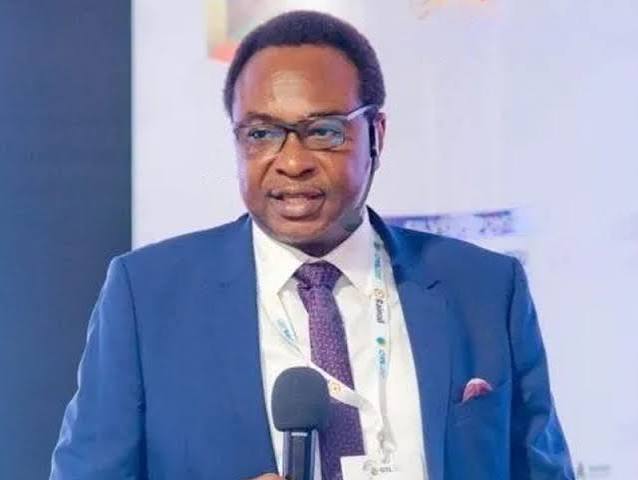
MDGIF Executive Director, Oluwole Adama, disclosed this on Thursday while delivering a keynote address, titled “Derisking Domestic Gas Infrastructure,” at the 2026 Annual Conference of the Association of Energy Correspondents, Abuja FCT (AECAF).
Adama, who was represented by the fund’s Director of Strategy, Research and Deal Origination, Engr. Elvis Duruji, said the mobilisation of private capital underscored MDGIF’s mandate to deploy public funds as a catalyst for investment in commercially challenging but strategically important gas projects.
He said the fund had mobilised private investment equivalent to about 2.4 times its own contribution by reducing risks that have traditionally discouraged investors from entering Nigeria’s midstream gas market.
“MDGIF has used its own fund to mobilise 2.4X of the private counterparties. We’ve been able to use the fund we have to reduce investment barriers, attracting more private investors to partner with MDGIF,” he said.
According to him, the projects in MDGIF’s portfolio could raise domestic gas availability by about 25 per cent if completed, based on current domestic production of approximately 1.9 billion scf per day.
“About 30 partnership projects and 205 ongoing infrastructure assets, when completed, will deliver about 475 million scf of gas per day into the domestic market,” he said.
Adama identified high financing costs, inadequate infrastructure, regulatory uncertainty and technical and commercial risks as major barriers to investment in the midstream gas sector.
He said MDGIF was established as a catalytic institution rather than a conventional funding agency, with the responsibility of absorbing part of the early-stage risks associated with gas projects and making them attractive to lenders and private investors.
READ ALSO:
- Mid-Sized Nigerian Firms Miss Out on $8bn Private Capital Inflow
- FG Seeks Sustained Oil, Gas Investment as NUPRC Reports Over $57bn Approved Projects
- NMDPRA Threatens to Sanction Oil and Gas Firms Operating without Permits
- NMDPRA Launches Digital Portal to Boost Transparency in Host Community Trusts
- NMDPRA Rejects Audit Report on MDGIF Under-Remittance
- Nigeria Tightens Oil Rules, Targets Annual Licensing Rounds
Gas Flare Projects
On gas flare commercialisation, Adama disclosed that MDGIF had partnered four flare-out awardees whose projects are expected to monetise 444 million scf of gas per day that would otherwise be flared.
The projects, he added, are also expected to eliminate about 2,845 metric tonnes of emissions daily.
He further disclosed that the fund had partnered 30 unincorporated joint ventures and one incorporated equipment leasing company, supporting 20 CNG mother stations, more than 80 CNG daughter stations and another 75 daughter stations through the leasing company.
Among the flagship interventions, Adama highlighted a 5 million scf-per-day mini-LNG plant being developed by Topline Limited in Delta State, which he described as Nigeria’s first indigenous mini-LNG project.
He said the project had spent three years seeking financing before MDGIF’s equity investment helped unlock an InfraCredit guarantee and move the project towards completion.
“That particular project had gone around looking for funds for three years but couldn’t secure any. After partnering with MDGIF, the facility is now expected to be commissioned within the next two to three months,” he said.
Other projects supported by the fund include CNG infrastructure across 20 universities, Ibile Oil and Gas in Lagos and Rolling Energy in Abuja.
Duruji said MDGIF’s long-term strategy was to absorb part of the early risks associated with gas infrastructure projects and convert them into bankable investments capable of attracting private capital.
“The missing link is vulnerability. MDGIF’s catalytic role is to price and absorb part of the early risk, turning uncertainty into bankability, bankability into private investment, and investment into operating gas infrastructure,” he said.
