

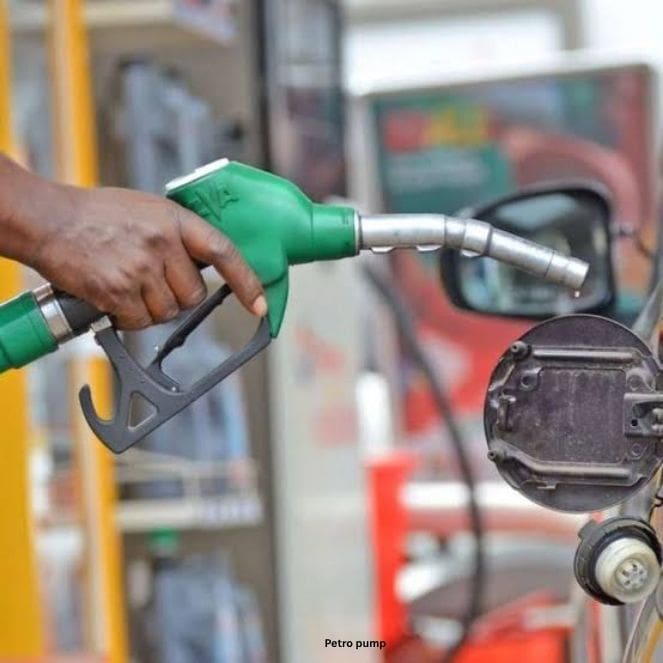
The average retail price paid by consumers for Premium Motor Spirit (PMS), also known as petrol, rose to ₦1,532.93 in April 2026.
Year-on-year, this indicates a 23.69 per cent increase compared to the ₦1,239.33 recorded in April 2025. Also, the average price reflects an 18.97 per cent increase from ₦1,288.54 in March 2026.
According to the latest PMS (Petrol) Price Watch released on Tuesday by the National Bureau of Statistics (NBS), the residents of Yobe State paid more for petrol as the state recorded the highest average retail price at ₦1,599.05. This is followed by Edo (₦1,595.74) and Bauchi (₦1,589.07).
Conversely, Niger, Sokoto and Katsina State had the lowest average retail prices for Petrol, at ₦1,403.89, ₦1,404.16, and ₦1,406.28, respectively.
Diesel Prices Surge by 50.16%
The average retail price of Automotive Gas Oil (AGO), also known as Diesel, paid by consumers, rose by 50.16 per cent from ₦1,648.08 litre recorded in March 2026 to ₦2,474.69 per in April 2026.
On a year-on-year basis, it increased by 43.67 per cent from ₦1,722.45 per litre recorded in the corresponding month of last year.
The NBS data on Diesel Price Watch shows that Nasarawa State had the highest average retail price of petrol (₦2,818.94), followed by Ebonyi State (₦2,754.06), and Taraba State (₦2,704.76).
However, the top three states that recorded the lowest average retail prices of diesel include Kebbi (₦2,180.28), Kogi (₦2,192.70), and Katsina (₦2,269.14).
Kerosene Nears ₦4,000 per litre
Similarly, the average retail price per litre of Household Kerosene (NHK) paid by consumers rose by 22.49 per cent to ₦2,976.94 in April 2026 from ₦2,430.38 recorded in March 2026.
On a year-on-year basis, the average retail price per litre of the product increased by 34.12 per cent from ₦2,219.69 in April 2025.
On a state-by-state basis, Sokoto recorded the highest average price of ₦3,965.10 per litre in April, followed by Kebbi with ₦3,808.75 and Lagos with ₦3,790.90.
“On the other hand, the lowest price was recorded in Bayelsa with ₦1,815.40, followed by Kogi with ₦1,982.02 and Yobe with ₦2,235.77,” the report added.
The report further stated that the average retail price per gallon of Household Kerosene paid by consumers in April was ₦13,396.23, indicating an increase of 22.49 per cent from ₦10,936.71 in March 2026. “On a year-on-year basis, this increased by 61.50% from ₦8,294.98 in April 2025.”
READ ALSO:
-
Consumers Groan as Cooking Gas Hits ₦1,600/kg, 12.5kg now ₦20,000 Amid Supply Squeeze
-
Petrol Imports Drop as Dangote Refinery Covers 91% Domestic Supply
-
Cross River Residents Spend More on Petrol in January – Report
-
Fight Over Fuel Imports Intensifies Between Dangote, Marketers
Analysts note that the continuous rise of petrol, diesel and kerosene prices in Nigeria is driven by a mix of recent global geopolitical shocks and long-standing domestic economic structural shifts.
Why Fuel Prices Continue to Rise
The tensions in the Middle East, involving the United States, Israel and Iran, have led to the closure of the Strait of Hormuz, where over 20 per cent of the world’s oil and gas supply passes daily, leading to a significant disruption in the global supply of energy products. This has forced global crude oil prices to jump above $100 per barrel, pushing up fuel prices in domestic markets.
As Nigeria’s downstream petroleum sector is largely deregulated, domestic pump prices are tightly bound to international realities. Because crude oil is the primary raw material for petrol, diesel, and kerosene, higher global crude oil costs immediately translate into higher refined product costs domestically.
High fuel prices have also heightened concerns about inflationary pressure on the economy. Consumer Price Index data released by the NBS show that Nigeria’s headline inflation rate has increased for two consecutive months after over eight months of deceleration. Recent data show that the headline inflation rate rose to 15.38 per cent in March and further increased to 15.69 per cent in April.
Analysts believe that the increase was largely driven by the continued pass-through effects of the domestic fuel price shocks and energy disruptions, which started in early March when the Iran war began with the attacks by the United States and Israel.
These have an impact on transportation and food costs in Nigeria.
Economic experts have warned that the country risks losing gains made with the drop in inflation if urgent measures are not taken to cushion the effects and also insulate the country from external shocks.
This is as the masses continue to grapple with the rising cost of living crisis.
They have called for efforts to build strategic crude oil and petroleum reserves and channel more efforts towards increasing local refining capacity to boost energy security drive.

Victor Ezeja is a Nigerian journalist skilled in producing insightful news analyses, feature stories, and interviews that simplify complex issues and drive informed public discourse. His work combines rigorous research, balanced reporting, and compelling storytelling to highlight developments shaping industries and society. Victor, who holds a Master's Degree in Mass Communication, specializes in energy, aviation, business, and economic reporting. He can be reached via @VICTOREZEJA on X