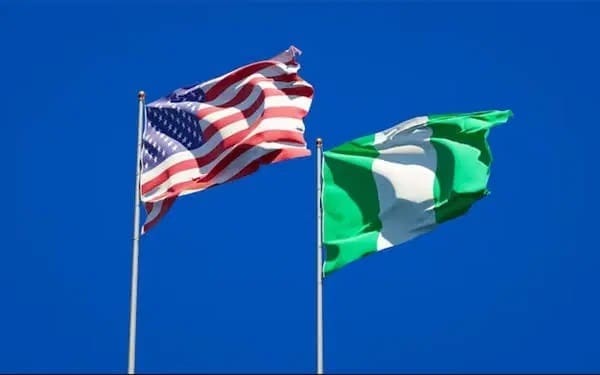
Nigeria could face a major funding gap if the United States withdraws all foreign assistance, potentially losing between $740 million and $790 million annually based on historical disbursement trends.
The development would end more than a decade of steady US financial support that has channelled almost $8.9 billion into the country since 2015.
Data from the United States Agency for International Development (USAID) on disbursements to Nigeria since 2015 shows that the US has provided about $8.9 billion in assistance to Nigeria between 2015 and July 2026.
Although the document refers to more than $8.8 billion in total aid over the period, adding the yearly disbursements results in approximately $8.9 billion.
Legislative Push to Cut Foreign Assistance
The figures come against the backdrop of a recent decision by the US House of Representatives to freeze aid to Nigeria.
Pinnacle Daily had reported that the U.S. House of Representatives last week passed a fiscal year spending bill, which contains a provision for cutting foreign assistance to Nigeria over alleged targeted violence against Christians and other minorities.
In a motion, House of Reps member representing Florida, Gregory Steube, called for an amendment to increase the withholding threshold for aid to Nigeria from 50 per cent to 100 per cent, emphasizing the need for Nigeria to address ongoing violence and persecution.
The lawmaker criticised the Nigerian government’s failure to protect religious minorities, such as Christians, and condemned the corruption and terrorism within the country.
“I rise in strong support for my amendment to increase the withholding threshold for assistance to Nigeria from 50% to 100% while keeping in place benchmarks that demand Nigeria take effective steps to address the violence and persecution that continue to devastate the country,” Steube stated in a video of the House session shared on social media.
“Nigeria has faced a horrific wave of violence that its corrupt government has failed to address for years, and especially in recent months, Christians and other religious minorities in Nigeria have been subjected to violence and terrorism at the hands of extremists operating with impunity. Christian women and girls continue to be abducted, assaulted, tortured, and killed. Their churches are burned, and entire communities are erased.”
He stressed that the amendment is to ensure that foreign aid is only provided when the recipient demonstrates commitment to addressing violence and upholding American values.
“If the aid conditions included in the bill are important enough to withhold half of all the funding to the Nigerian government, then they are important enough to withhold all of the funding. The generosity of our taxpayers is a reflection of the American values we hold so firmly. Never should we allow their hard-earned tax dollars to be funneled to corrupt regimes, to fail to uphold religious freedom, fail to adequately confront terrorism, and fail to protect the innocent from persecution.”
Steube argued that the amendment does not remove aid conditions but strengthens them and called for accountability in foreign aid spending as the U.S. national debt approaches $40 trillion.
U.S. Aid to Nigeria
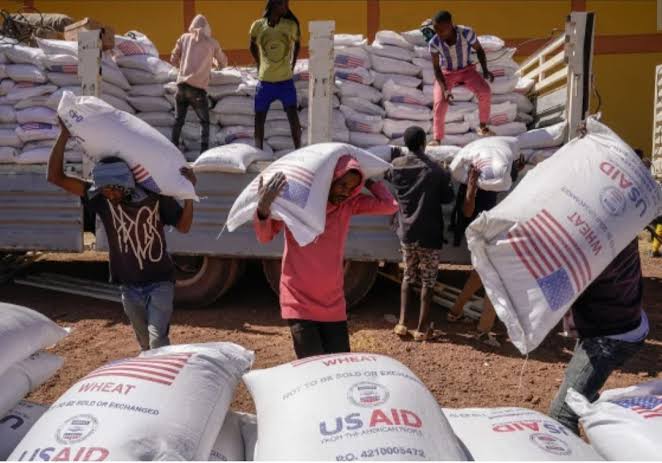
United States assistance to Nigeria, which was previously delivered mainly through USAID, alongside the U.S. State Department and Centers for Disease Control and Prevention (CDC), is structured across several primary sectors. These include healthcare, basic education, agriculture & food security, governance & economic development, humanitarian & security assistance, democracy and human rights,
At the onset of his administration, President Donald Trump ordered the suspension of foreign aid and disbanded USAID. However, it allowed limited funding to Nigeria, especially for counter-terrorism operations and support for victims of violence.
While the bill had initially restricted aid funding to 50 per cent, Mr Steube proposed 100 per cent (total) withholding of foreign assistance to Nigeria.
While the US has not officially withdrawn all aid to Nigeria, the potential financial implications are significant if the suspension becomes a permanent withdrawal.
Historical Funding Trends and Data
The data shows that US assistance to Nigeria followed a generally upward trend for most of the past decade.
Aid stood at $448.10 million in 2015 and increased steadily over the following years, reaching a record $1.03 billion in 2023.
However, the pace of funding slowed after that peak. Disbursements fell to $878.03 million in 2024 and declined further to $728.79 million in 2025, indicating that US assistance had already begun to decline before the latest aid freeze.
READ ALSO:
- Africa Must Boost Domestic Resources as Aid Falls — IMF
- Africa Must End Reliance on Foreign Investors – Dangote
- Foreign Investors’ Transactions Hit 6-Month High of N387.62bn in September
As of July 2026, Nigeria had received $187.50 million in US assistance for the year.
Historical trends show the scale of funding Nigeria stands to lose if all US assistance is withdrawn. Using data from 2015 through July 2026, the average annual disbursement amounts to about $741.57 million. Excluding the incomplete 2026 data, the average annual support between 2015 and 2025 rises to approximately $791.94 million.
This means a complete withdrawal of US aid would remove between three-quarters of a billion dollars and nearly $800 million in annual external funding from Nigeria, based on past disbursement patterns.
Long-Term Impact on Financing
The data also highlights how heavily Nigeria has relied on sustained US support over the past decade. The steady rise in annual disbursements until 2023 demonstrates that U.S. assistance became increasingly important before beginning to taper off in the last two years.
The historical figures show that the country would lose a sizeable and consistent source of external financing if the withdrawal becomes permanent.
With nearly $8.9 billion disbursed over almost 12 years, the potential end of US assistance would mark one of the most significant shifts in Nigeria’s external funding landscape in recent years.
The country’s challenge would not simply be replacing a one-off inflow but finding a sustainable alternative to an annual funding stream that has averaged between $740 million and $790 million over the past decade.
Human and Economic Consequences
Some analysts have expressed worry that the U.S. suspension of all aid to Nigeria would affect ordinary citizens more than the government. For instance, healthcare, which attracts a large chunk of the U.S. funding, usually focuses on programmes such as campaigns to mitigate HIV/AIDS, Malaria, Tuberculosis, maternal and child health and many more.
International analyst Adoyi Omole said the foreign aid to Nigeria is very critical in addressing a couple of challenges in various sectors of the economy.
The withdrawal, which could cost Nigeria almost a billion dollars, would have a significant impact on the economy.
“A lot is being done in various sectors of the economy and these aids provide a very important support to whatever the government is doing,” Omole stated when he appeared on Arise News.
He pointed out that even though the U.S. House of Representatives has passed the bill, there is still a window for the Nigerian government to douse tensions that led to the decision and lobby for a reversal.
While acknowledging that the move by the U.S. puts enormous pressure on Nigeria, he urged the government to step up efforts in tackling the challenges.
Call for Governance and Policy Reforms
On his part, a public affairs analyst, Dayo Shobowale, said the US is deploying that strategy to compel the Nigerian government to tackle insecurity in parts of the country and perceived persecution of religious minorities, especially Christians.
He regretted that if not for corruption and inefficiency in governance, Nigeria would not need any foreign aid given the abundant natural resources.
“Inefficiency and corruption, which have always been dogging our leadership right from independence to military and back to civilian rule, have almost become our own political culture,” Shobowale stated in an interview on Arise News.
He maintained that what the Americans are saying is “very logical and tenable” that a government should be able to protect its people.
He said it is in the interest of the government to step up efforts towards addressing the security challenges, corruption and inefficiency in leadership, warning that neighbouring countries under military rule today were because of insecurity and poor governance.
He insisted that the foreign aid cut will not strain the relationship between the U.S and Nigeria, citing ongoing military collaboration between the two countries to tackle banditry, insurgency and terrorism, especially in the northern part of Nigeria.
Should the U.S. finally cut off aid completely, Shobowale advised that the government should prudently manage resources and prioritise the needs of the citizenry.

Victor Ezeja is a Nigerian journalist skilled in producing insightful news analyses, feature stories, and interviews that simplify complex issues and drive informed public discourse. His work combines rigorous research, balanced reporting, and compelling storytelling to highlight developments shaping industries and society. Victor, who holds a Master's Degree in Mass Communication, specializes in energy, aviation, business, and economic reporting. He can be reached via @VICTOREZEJA on X

Alex is a business journalist cum data enthusiast with the Pinnacle Daily. He can be reached via ealex@thepinnacleng.com, @ehime_alex on X