

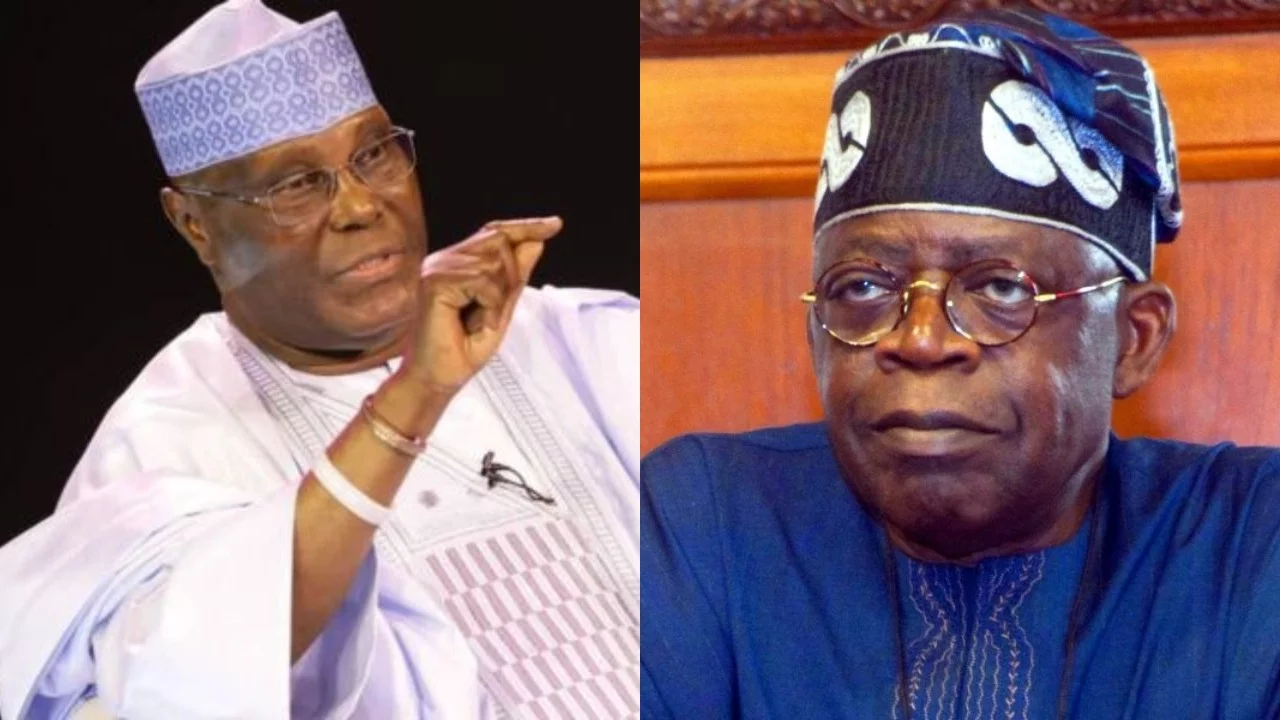
Former Vice President Atiku Abubakar has accused the Presidency of avoiding key questions surrounding President Bola Tinubu’s decades-old civil forfeiture case in the United States, saying the government has chosen insults instead of transparency.
In a statement issued on Thursday by his Senior Special Assistant on Public Communication, Phrank Shaibu, Atiku said the Presidency failed to address the issues he raised and resorted to personal attacks.
“When governments abandon facts for insults and substitute evidence with abuse, they unwittingly admit that they have run out of convincing answers,” the statement said.
“Nigerians expected clarification. What they received instead was a barrage of name-calling and political invective.”
‘Public Records Deserve Public Answers’
Atiku maintained that raising questions based on publicly available records should not be interpreted as an attack on Nigeria or its sovereignty.
“No one has reported Nigeria to anyone. Nigeria is not on trial. The issue concerns questions arising from publicly available records relating to the occupant of the nation’s highest office.
“Those records were not created by the opposition, the ADC, or any political actor. Attempting to silence legitimate public inquiry by wrapping oneself in the national flag does not answer the questions before the country,” he said
He also faulted the Presidency for revisiting past allegations against him instead of responding directly to the issues raised.
RELATED NEWS:
- Presidency Tackles Atiku on Moves to Lobby US Against Tinubu
- Fake Agency Scandal: Senate Rejects Fresh Call for Probe, as Atiku, Presidency Clash
- FG Hires US Lobbying Firm for $9M to Promote Christian Protection Efforts
“Nigerians can distinguish between political mudslinging and factual responses. Personal attacks do not erase public records, nor do they substitute for transparency,” Atiku stated.
“The Presidency should resist the temptation to personalise issues that require clear and factual explanations.”
‘Accountability is not Foreign Interference’
The former vice president described it as contradictory for the government to celebrate international recognition while rejecting scrutiny from abroad.
“You cannot celebrate international validation when it is convenient and condemn international scrutiny when it becomes uncomfortable. Accountability is not foreign interference; it is a democratic obligation,” he said.
According to Atiku, winning an election does not remove public officials’ obligation to account for their actions.
“Elections confer political authority, but they do not extinguish the public’s right to ask questions. A democratic mandate is not a substitute for transparency, nor does it exempt any public official from the obligation to account to the people.”
He urged the Presidency to respond with verifiable facts instead of engaging in political exchanges.
“If the government believes that the public record has been misunderstood or misrepresented, the appropriate response is to present the facts. Abuse cannot replace evidence, and propaganda cannot replace truth,” he said.
Atiku insisted that Nigerians deserve clear answers over the long-standing US civil forfeiture case involving President Tinubu.
“The Nigerian people deserve answers, not insults. They want to know if their President forfeited money to the Government of the United States of America on account of drug-related offences,” he said.
“They deserve transparency, not diversion. Until those questions are addressed with facts, no amount of outrage or personal attacks will silence legitimate public inquiry.”
Presidency Accused Atiku of Reviving Old Case
Atiku’s statement came hours after the Presidency accused him of attempting to reopen the 1993 US civil forfeiture case involving President Tinubu.
Pinnacle Daily reports that Presidential spokesman Bayo Onanuga alleged that Atiku engaged a Washington-based lobbying firm to circulate records from the United States Department of Justice relating to the case.
He described the move as “self-defeating” and accused the former vice president of taking Nigeria’s president before a foreign government.

Rafiyat Sadiq is a political, justice, and human rights reporter with Pinnacle Daily, known for fearless reporting and impactful storytelling. At Pinnacle Daily, she brings clarity and depth to issues shaping governance, democracy, and the protection of citizens’ rights.