

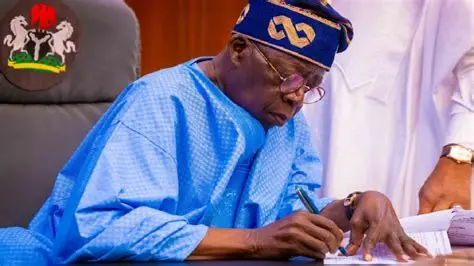
President Bola Tinubu has approved a ₦3.3 trillion payment plan to finally settle legacy debts in Nigeria’s power sector.
The payment plan approval was given under the Presidential Power Sector Financial Reforms Programme.
A statement signed by the presidential spokesperson, Bayo Onanuga, on Sunday, April 5, described the approval as a “full and final settlement” which aims to resolve financial liabilities accumulated over a decade in the power sector.
The presidency said the debt repayment plan followed the final review of the legacy debts that have beset the power sector for more than a decade. According to the statement, the sum of ₦3.3 trillion was agreed as a full and final settlement of the legacy debts after a comprehensive verification of claims.
It said the long-standing debts accumulated between February 2015 and March 2025.
“Following verification, ₦3.3 trillion has been agreed as a full and final settlement, ensuring a fair and transparent resolution,” part of the statement reads.
It stated that implementation of the payment has begun, with 15 power plants signing settlement agreements totalling ₦2.3 trillion. Out of this, the Federal Government has raised ₦501 billion through bonds to fund the payments. “Out of the amount, ₦223 billion has been disbursed, with further payments underway.”
Highlighting the implications of offsetting the legacy debts, the Presidency said it would inject liquidity into the power value chain and offer support to power plants, thereby boosting generation to provide a stable electricity supply.
“And as the sector stabilises, more investment, more jobs, and better service will follow,” the Presidency added.
Impact on Power Value Chain
The injection of liquidity is expected to stabilise the value chain, boosting gas supply, grid stability, and other broader reforms, such as improving metering of electricity consumers and tariff review to be more cost-reflective.
The move would ensure that gas suppliers are paid to prevent thermal plants from shutting down due to lack of fuel. Also, improving the reliability of electricity generation would help to reduce the frequency of national grid collapses.
READ ALSO:
- Higher Electricity Cost Looms as NMDPRA Raises Gas Price for GenCos
- GenCos Slam NLC Over ‘Political Settlement’ Claims, Defend ₦6trn Debt Recovery
- Paying for Darkness: Power Revenue Hits ₦2.3trn As Nigerians Grapple with Outages
- GenCos Debts: Geregu, Niger Delta Power, Others Reach Settlement Agreement as FG Issues ₦501bn Bond
- Oil Prices Surge Further as Middle East War Sustains Supply Disruption
Special Adviser on Energy to President Tinubu, Olu Arowolo-Verheijen, pointed out that the Presidential Power Sector Financial Reforms Programme goes beyond settling legacy debts.
According to her, the programme is also about “restoring confidence across the power sector — ensuring gas suppliers are paid, power plants can keep running, and the system begins to work more reliably.”
“It is part of a broader set of reforms already underway — including better metering and service-based tariffs that link what you pay to the quality of electricity you receive.
“The government is also prioritising power supply to businesses, industries, and small enterprises — because reliable electricity is critical to creating jobs, supporting livelihoods, and growing the economy.
“The goal is simple: more reliable power for homes, stronger support for businesses, and a system that works better for all Nigerians,” she added.
Meanwhile, President Tinubu has commended all stakeholders who supported efforts to resolve the legacy issues in the power sector.
The Nigerian leader has also confirmed that the next phase (Series II) will begin this quarter.

Victor Ezeja is a Nigerian journalist skilled in producing insightful news analyses, feature stories, and interviews that simplify complex issues and drive informed public discourse. His work combines rigorous research, balanced reporting, and compelling storytelling to highlight developments shaping industries and society. Victor, who holds a Master's Degree in Mass Communication, specializes in energy, aviation, business, and economic reporting. He can be reached via @VICTOREZEJA on X