


Despite a significant surge in revenue in Nigeria’s power sector over the past two years, millions of citizens continue to endure erratic electricity supply, raising fresh concerns about the effectiveness of ongoing reforms and investments in the sector.
Nigeria’s Minister of Power, Adebayo Adelabu, revealed that the sector’s revenue has more than doubled in the last two years.
Speaking during a press conference on Tuesday, March 24, Adelabu said revenue increased from ₦1 trillion in 2023 to ₦1.7 trillion in 2024 and to ₦2.3 trillion in 2025.
According to him, this was largely driven by the cost-reflective tariff introduced for Band A customers (about 15 per cent of total registered electricity customers) in 2024.
“In the sector, revenue, based on the introduction of cost-reflective tariffs for a portion of the consumers, about 15 per cent, grew from about ₦1 trillion that we met in 2023 to ₦1.7 trillion in 2024 and to ₦2.3 trillion in 2025. In two years, we more than doubled sector revenue,” the Minister stated.
He clarified that the total revenue as of 2023 when he assumed office as minister of power, was only able to cover about 9 per cent of energy invoices issued by power generation companies, but following the improvement in revenue generation, “today we are paying between 35 and 40 per cent of energy invoices from the generating companies, leaving only 60 per cent for the government to subsidise,” he added.
The tariff hike for Band A customers led to over a 300 per cent increase as they now pay from ₦225/kWh to as high as ₦271/kWh. Apart from tariff adjustments, the revenue boost is also attributed to improved billing systems, as indicated in recent quarterly reports by the Nigerian Electricity Regulatory Commission (NERC). According to the latest NERC Commercial Performance Factsheet, DisCos have achieved a collection efficiency of over 80 per cent. This is a significant leap from the cash-strapped years following the 2013 privatisation.
The increase was initially hailed by policymakers as a necessary step toward achieving a more sustainable and investor-friendly power market. However, the revenue increase has failed to translate into a stable grid. For many Nigerians, the financial gains have yet to translate into meaningful improvements in electricity supply. Analysts noted that despite the revenue increase, the physical infrastructure remains “on life support”.
Millions of Nigerians across the country report that even after being moved to expensive tariff bands, they receive as little as three to four hours of electricity daily. Since the start of 2026, the national grid has already collapsed three times, with total generation plunging to zero megawatts during those occurrences.
“I pay more now than I did two years ago, but the power situation is still the same, if not worse,” said a Lagos resident, Adebayo Ogunleye, who runs a small tailoring business, to Pinnacle Daily. “We still rely heavily on generators, and fuel costs keep rising,” he added.
Another Lagos resident, Mrs Patience Onoja, who runs a frozen food business, said her area is on Band A, making her spend more on electricity bills yet receive very low power supply on a daily basis.
“I am on Band A and spend almost ₦100,000 every month on my electricity bill, yet I still run my generator for about 10 hours a day just to keep my stock from spoiling,” Onoja stated. “We are paying for darkness at high costs,” she added.
On social media, many Nigerians across the country lament about persistent power failure, highlighting the impact on households and businesses.
The Minister of Power, who revealed the revenue increased in two years as part of achievements recorded in the power sector under his administration, acknowledged the recurring power outage, especially in recent times.

He apologised to Nigerians, acknowledging that the ongoing electricity disruptions have worsened hardship for households, businesses, and industries amid intense dry-season heat.
He said there has been a noticeable drop in electricity supply that has led to load shedding by power distribution companies across the country.
He said it is unlike 2024 and 2025 when there was an improvement in power supply compared to previous years.
“We want to apologise to the generality of Nigerians officially, now coming from me as the Minister of Power, for this temporary issue that is leading to hardship being experienced, especially during this dry season when there is so much heat everywhere,” Adelabu stated.
Gas Shortage Identified as Primary Cause
The minister attributed the crisis to factors “beyond the government’s control”. He said it is primarily caused by a shortage of gas supply to power-generating companies. The supply constraints have had a significant impact on thermal power plants, which, according to the minister, account for about 75 per cent of Nigeria’s electricity generation, while only 25 per cent uses water (hydro plants). “If there is no gas supply, there is nothing generation companies can do,” he stated.
Adelabu said the ongoing Middle East crisis has caused a global gas shortage, and there is a lot of pressure on gas exports from Nigerian producers now.
According to him, Nigeria mostly produces associated gas, and suppliers are currently under pressure to sell to international buyers at prices higher than what they sell to power plants in Nigeria. Adelabu said only two out of 32 power plants currently have firm gas supply contracts, while the remainder rely on irregular supplies.
In a public notice on Monday, March 23, Ikeja Electric confirmed that a nationwide drop in power generation caused by limited gas supply has significantly reduced the volume of power available on the national grid. The distribution company noted that the gas supply challenge has constrained generation capacity, affecting the overall energy available for distribution nationwide.
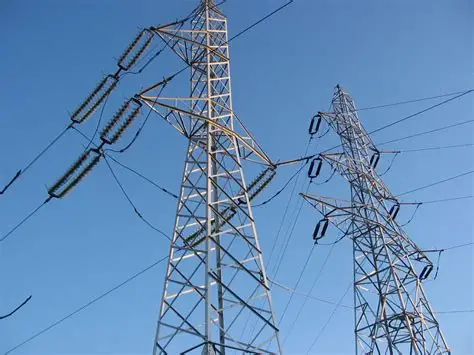
NERC data indicates that available generation capacity dropped to 4,384 megawatts in February 2026, far below the country’s installed capacity of about 13,000 megawatts. Reports also indicate a 43 per cent drop in gas supply, crippling thermal power plants.
Despite current challenges, Adelabu assured that there are ongoing efforts to reverse the situation and ensure adequate power supply. “I can tell you, with the committee that we have set up, and commitments from gas suppliers, and the timeline for repair of the gas pipelines, two weeks from now, we should start seeing improvements in supply,” he assured.
Sector Challenges and Investment Needs
Energy expert Dan Kunle traced the challenges of the power sector to what he described as improper execution of the privatisation programme. Kunle, who spoke in an interview on TVC on Tuesday, blamed the government of Muhammadu Buhari that came into power in 2015 for being against privatisation policy. According to him, the government failed to fully privatise the Nigeria Gas Company, making GenCos rely on the Company for gas supply, and today they are unable to get an adequate supply to work at full capacity.
Continuing, Kunle observed that even if the GenCos’ output reaches installed generation capacity, transmission infrastructure, still managed by the state-owned Transmission Company of Nigeria (TCN), is weak to evacuate the power generated to distribution companies across the country. TCN, according to him, has been in “limbo” since 2015. He mentioned that Manitoba, a Canadian power firm concessioned to manage the transmission infrastructure and upgrade it, was asked to go.
READ ALSO:
- Outrage as Abuja DisCo Records Multiple Power Outages in January and February 2026
- Nigeria’s Electricity Crisis: Recurring Grid Collapse Reignites Call for Nuclear Energy Adoption
- Why full Decentralisation Remains Antidote to Nigeria’s Electricity Crisis
Highlighting the way forward, Adelabu disclosed that Nigeria requires over $100 billion in combined government and private sector investments across the power sector value chain to achieve reliable electricity supply. This, according to the minister, includes approximately $30 billion to add 20,000 megawatts of generation capacity, $20 billion for transmission infrastructure, $25 billion for distribution, and $22 billion for gas pipeline investments.
Reacting to the minister’s assurance of fixing the power challenges, Kunle said “there is no magic he can do.”
While accusing the minister of not consulting widely to have a full grasp of the challenges and solutions, the energy expert stressed that the entire electricity sector needs a total overhaul to meet the current needs.
Public Frustration Mounts
Despite assurances, public frustration continues to mount.
Consumer advocacy groups argue that tariff increases without commensurate service improvements erode public trust and place additional strain on households already grappling with inflation and economic uncertainty.
Many Nigerians report receiving only three to five hours of electricity daily. Some residents of Enugu who spoke with Pinnacle Daily said the persistent power outage has forced them to rely on business centres for charging mobile phones. They lamented that the cost of charging a phone has now increased from ₦100 to about ₦500 due to rising fuel costs. “We have not had light since January, making us rely on charging our phones at business centres. They now charge us ₦300 per phone and ₦500 for a power bank,” said Fidelia Eya, a school teacher in Enugu.
In the midst of the power crisis, the Presidency has announced a ₦17 billion solar project to insulate the Presidential Villa from the failing national grid. Critics described the move as an “indictment of the status quo”. Meanwhile, the Rural Electrification Agency (REA) is racing to deploy 28 new mini-grids by the end of this quarter to bypass the national grid entirely.
As the country pushes forward with its power sector reforms, the gap between rising revenues and persistent outages underscores a critical challenge: translating financial performance into tangible, everyday benefits for citizens.

Victor Ezeja is a Nigerian journalist skilled in producing insightful news analyses, feature stories, and interviews that simplify complex issues and drive informed public discourse. His work combines rigorous research, balanced reporting, and compelling storytelling to highlight developments shaping industries and society. Victor, who holds a Master's Degree in Mass Communication, specializes in energy, aviation, business, and economic reporting. He can be reached via @VICTOREZEJA on X