Indigenous oil and gas company, Seplat Energy, has called on operators in Nigeria’s oil and gas industry to show a serious commitment to environmental sustainability through their activities. The company’s Chief Executive Officer, Mr. Roger Brown, who observed that oil and gas will continue to play a pivotal role in Nigeria’s energy mix, stressed that …
Indigenous oil and gas company, Seplat Energy, has called on operators in Nigeria’s oil and gas industry to show a serious commitment to environmental sustainability through their activities.
The company’s Chief Executive Officer, Mr. Roger Brown, who observed that oil and gas will continue to play a pivotal role in Nigeria’s energy mix, stressed that the challenge lies in operators being committed to responsible actions, especially as they affect the environment, society, and the economy.
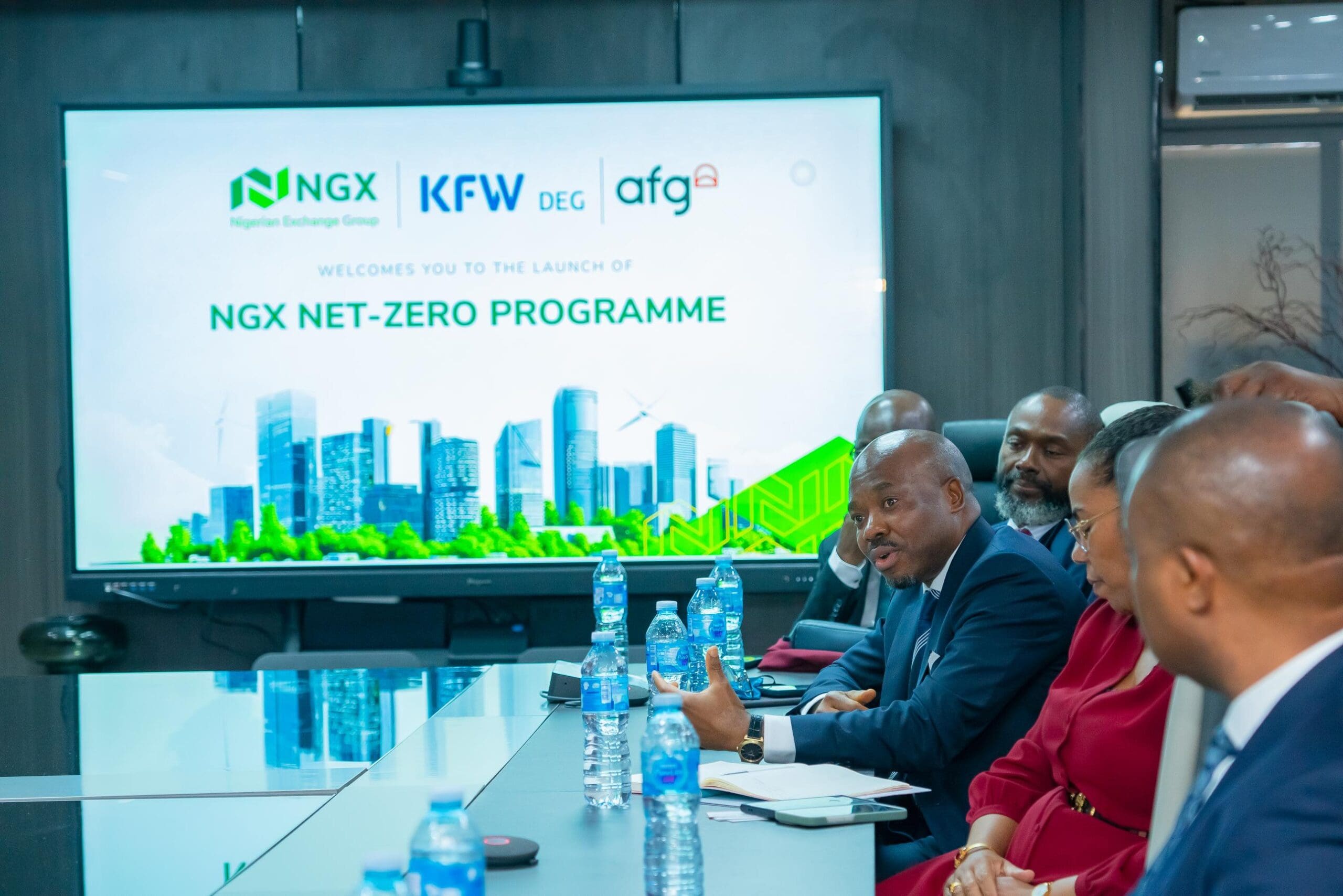
He spoke at a climate roundtable organised by the Nigerian Exchange Group (NGX Group) in partnership with DEG, Germany’s development finance institution, and Africa Foresight Group (AFG) in Lagos.
The event was the formal launch of the NGX Net-Zero Programme (N-Zero), an initiative intended to support listed companies in defining net-zero pathways, improving climate-related disclosures, and aligning with global investor expectations. The programme is reportedly expected to unlock between $2.5 billion and $3.1 billion in climate-linked capital for Nigerian companies.
Mr Brown, who was represented by Mr. Okechukwu Mba, Director, Gas & New Energy, Seplat Energy Plc, said: “Oil and gas will remain an important part of Nigeria’s energy mix for some time to come. The right conversation is not whether oil and gas should exist, but how operators conduct themselves responsibly.”
He stressed that responsible operations must be guided by specific actions such as increased efficiency, lower emissions, and credible offsetting strategies.
Mba said Seplat has embarked on a series of programmes to demonstrate its commitment to environmental sustainability.
Some of such projects, according to him, are aimed at ending gas flaring across all its onshore operations, adding that they were completed last year, and were currently at the commissioning stage.
He also highlighted Seplat Energy’s use of technology to improve operational efficiency, such as real-time monitoring of emissions across pipelines, valves, plants, and other critical infrastructure, which is supported by a robust asset integrity program designed to identify and eliminate emissions.
READ ALSO:
- Tinubu Celebrates ₦100trn NGX Milestone, Anticipates Bigger Gains in 2026
- NGX Smashes ₦100trn Mark in Strong Week Opening
- Tinubu Highlights What Developing Countries Need to Support Climate Sustainability Agenda
Mba also stated that the company is implementing natural methods to reduce emissions. Seplat Energy has initiated an afforestation campaign in one of its host communities in Edo State, committing to plant millions of trees over five years, with the first phase already completed.
He also cited the company’s investments in gas and LPG infrastructure as part of efforts to reduce emissions outside of its own operations. According to him, increasing access to LPG helps to minimize dependency on firewood, charcoal, and other biomass fuels, particularly in populations outside big cities.
Following Seplat Energy’s offshore acquisition, he stated that formerly exported LPG has been rerouted to the domestic market, considerably boosting availability, affordability, and market quality.
Mr. Mba also emphasised the critical need for financing to support Nigeria’s energy transition, particularly gas and gas-to-power projects, noting that while the national grid currently provides only about five gigawatts of electricity, a much larger share of power is generated by petrol and diesel generators, which emit significantly higher emissions.
“If we replace these inefficient power sources with gas-powered energy, we can achieve substantial decarbonisation. But without adequate financing, these projects cannot be implemented, and the benefits will not be realised,” he said.
Speaking at the event, Dr. Umaru Kwairanga, Group Chairman of NGX Group, stated that Africa’s capital markets must play a leading role in promoting climate action and sustainable growth, and that the NGX Net-Zero Programme would assist companies in moving from climate aspiration to measurable action.
Mr. Temi Popoola, Group Managing Director of NGX Group, also presented the investment case, noting that climate risk has become a critical factor in valuation and capital allocation globally, while Ms. Monika Beck, a member of DEG’s Management Board, stated that the partnership is consistent with DEG’s strategy of mobilising private capital to accelerate climate action while delivering measurable development impact.

Victor Ezeja is a Nigerian journalist skilled in producing insightful news analyses, feature stories, and interviews that simplify complex issues and drive informed public discourse. His work combines rigorous research, balanced reporting, and compelling storytelling to highlight developments shaping industries and society. Victor, who holds a Master's Degree in Mass Communication, specializes in energy, aviation, business, and economic reporting. He can be reached via @VICTOREZEJA on X