

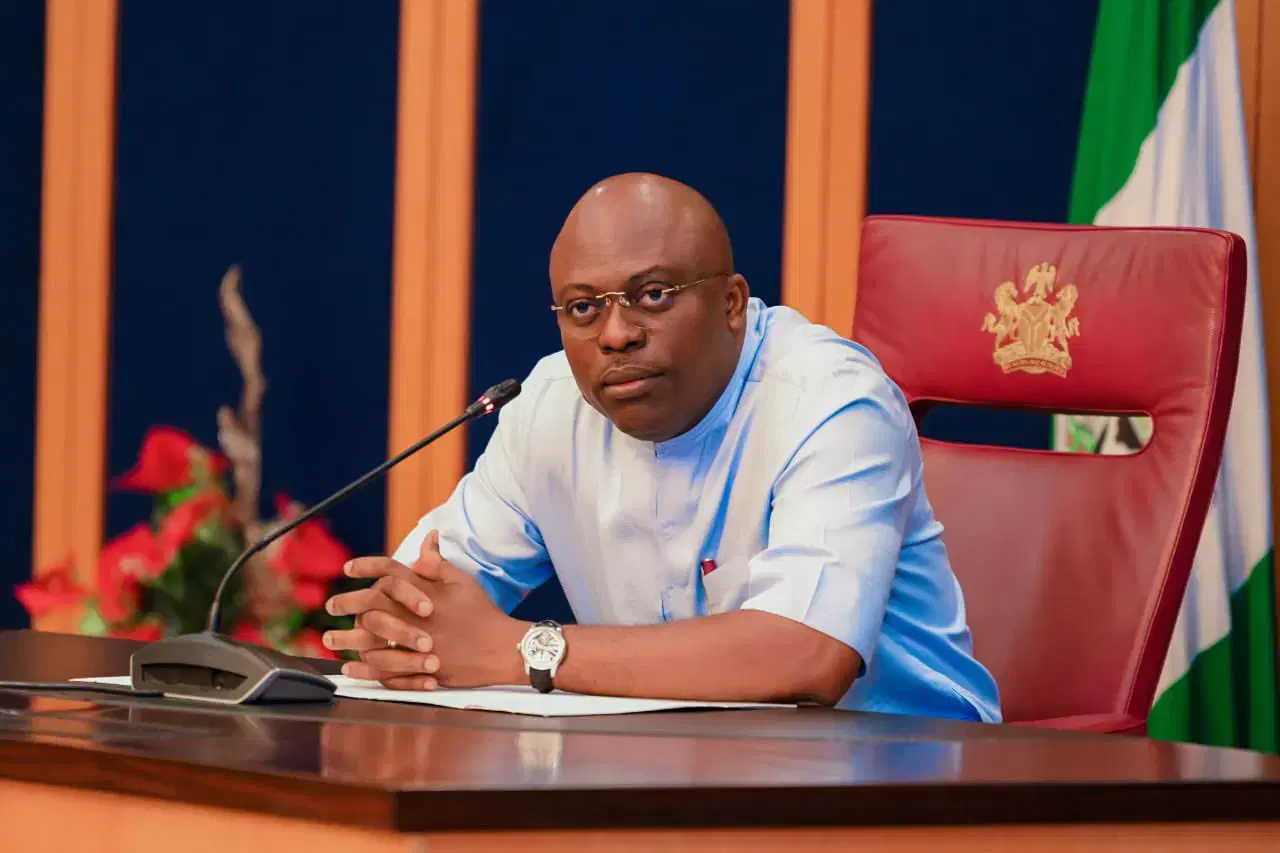
Political tensions deepened in Rivers State on Thursday as the 10th Rivers State House of Assembly resolved to prevent Governor Siminalayi Fubara from presenting the state’s Mid-Term Expenditure Framework (MTEF) and 2026 budget.
The decision follows the commencement of an impeachment probe against the governor and his deputy, Professor Ngozi Odu, over allegations of gross misconduct.
Assembly Launches Investigation
The resolution emerged during a plenary session in which lawmakers adopted a motion sponsored by Deputy Speaker Dumle Maol.
The motion mandates an investigation into the governor’s financial and administrative activities. Central to the allegations is Fubara’s alleged failure to submit the Mid-Term Expenditure Framework as required by law, alongside claims of spending public funds without legislative approval.
Lawmakers argued that these actions amounted to serious violations of constitutional provisions, undermining the authority of the legislature.
Alleged Defiance of Federal Intervention
During the deliberations, several members accused the governor of “recalcitrant disobedience” to President Bola Tinubu, claiming he ignored repeated federal efforts to mediate the state’s political crisis.
Legislators said Fubara failed to respect resolutions reached during peace interventions, worsening tensions between the executive and the legislature.
The Assembly formally barred the governor from presenting both the MTEF and the 2026 budget until the investigation concludes.
Speaker Emphasises Rule of Law
Addressing the chamber, Speaker Rt Hon. Martin Amaewhule emphasised that the Assembly would uphold its constitutional duties.
“We will follow due process to the letter. The law must take its full course,” Amaewhule said, noting that the impeachment proceedings would continue to their conclusion.
READ ALSO: Rivers Assembly Begins Impeachment Proceedings Against Fubara
He cited a Supreme Court judgement implicating the governor and deputy and insisted that the crisis should not be seen as a personal dispute between Fubara and the Minister of the Federal Capital Territory, Nyesom Wike.
“This is not about personalities. The governor is not fighting any individual; he is fighting against the Constitution,” the Speaker stated.
Public Reaction and Political Implications
Abdul-Aziz Abubakar Na’ibi, a prominent supporter of former Vice President Atiku Abubakar, has urged Governor Fubara to leverage the “immense resources and executive authority” of the state to counter impeachment threats and defend his administration.
Describing Rivers as “one of Nigeria’s wealthiest states”, Na’ibi advised the governor to mobilise grassroots support and instruct anti-corruption agencies to investigate alleged misconduct involving some state lawmakers and the Minister of the Federal Capital Territory (FCT), Nyesom Wike.
READ ALSO: Resign as Minister, Face Rivers Politics Obsession, APC Secretary Tells Wike
“If I were Gov. Sim Fubara, I would leverage the immense resources and executive authority of Rivers State to firmly counter any impeachment threats.
“This would include mobilising grassroots support to initiate constitutional recall processes against disloyal Assembly members aligned with Nyesom Wike, while directing anti-corruption agencies to thoroughly investigate and prosecute any credible allegations of misconduct against them and their leader, Wike,” Na’ibi wrote on his verified X account.
Legal Framework for Governor Impeachment in Nigeria
Under Section 188 of the Nigerian Constitution, impeachment proceedings can be initiated when at least one-third of the House members submit a written notice alleging gross misconduct. The allegation must be specific and leave no room for ambiguity.
The law requires that within seven days of receiving the notice, the Speaker must serve a copy on the governor.
Within 14 days, the House must decide whether to investigate the allegation, supported by a two-thirds majority.
A seven-person panel, excluding members of the legislature, public service, or political parties, is then appointed to conduct the investigation, with a report due within three months.
If the panel finds the allegation proven, the House may remove the governor with a two-thirds majority.

Rafiyat Sadiq is a political, justice, and human rights reporter with Pinnacle Daily, known for fearless reporting and impactful storytelling. At Pinnacle Daily, she brings clarity and depth to issues shaping governance, democracy, and the protection of citizens’ rights.