

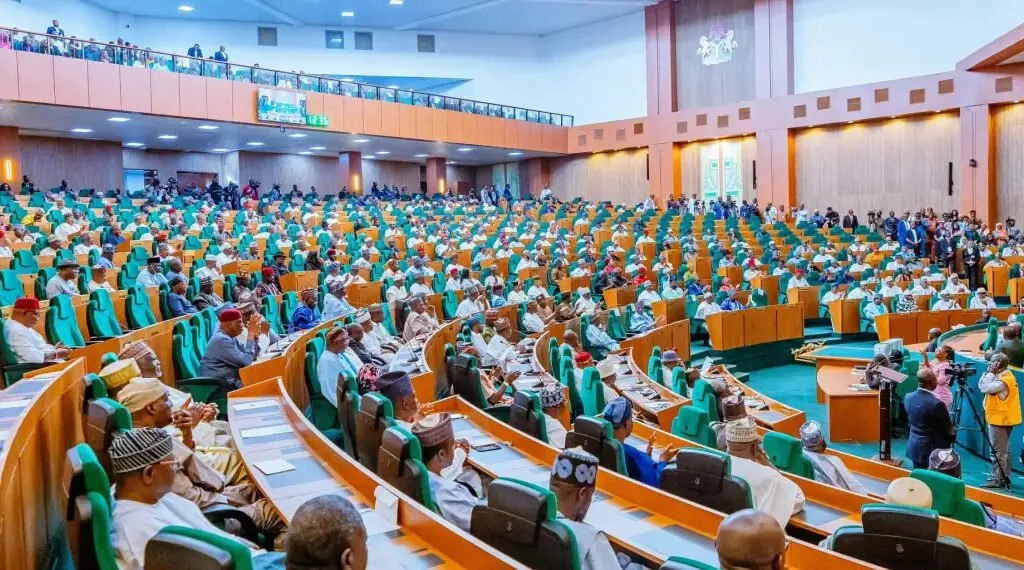
Proceedings in the House of Representatives became disorderly on Tuesday following disagreements over a motion to rescind the passage of the Electoral Act Amendment Bill.
The motion was moved during plenary by Francis Waive, chairman of the House Committee on Rules and Business, seeking a reversal of the bill passed on December 23, 2025.
When Speaker Tajudeen Abbas put the motion to a voice vote, lawmakers opposing it appeared louder than those in support. Despite this, Abbas ruled that the “ayes” had it, triggering protests across the chamber as members shouted objections.
The speaker then proposed an executive session, but this was also rejected by the lawmakers. Nonetheless, Abbas proceeded to move the House into an executive session.
Background
The House had, in December, passed the Electoral Act amendment with a provision mandating real-time electronic transmission of election results to the Independent National Electoral Commission (INEC) result viewing portal (IReV).
The clause provides that presiding officers shall electronically transmit results from each polling unit to the IReV portal in real time, after the prescribed Form EC8A has been duly signed, stamped and countersigned where applicable.
RELATED NEWS:
- Emergency Plenary: N’Assembly Moves to Shift Presidential Poll to Feb 13
- Protesters Demand Mandatory Real-Time Result Transmission at N’Assembly
- Protesters Demand EFCC Investigate El-Rufai Over Alleged N432bn Corruption
Earlier this month, the Senate passed its version of the amendment bill but rejected the provision on real-time electronic transmission, a decision that sparked protests and calls for a reversal.
On Tuesday, the Senate rescinded its earlier position and approved electronic transmission of results to IReV, while adding that manual collation should serve as a fallback in the event of technological failure.
Owing to differences between the versions passed by both chambers, a conference committee has been constituted to harmonise the bill.
Other areas of disagreement also exist between the Senate and the House. Civil society organisations have urged the National Assembly to adopt the House version on the transmission of election results.

Rafiyat Sadiq is a political, justice, and human rights reporter with Pinnacle Daily, known for fearless reporting and impactful storytelling. At Pinnacle Daily, she brings clarity and depth to issues shaping governance, democracy, and the protection of citizens’ rights.