

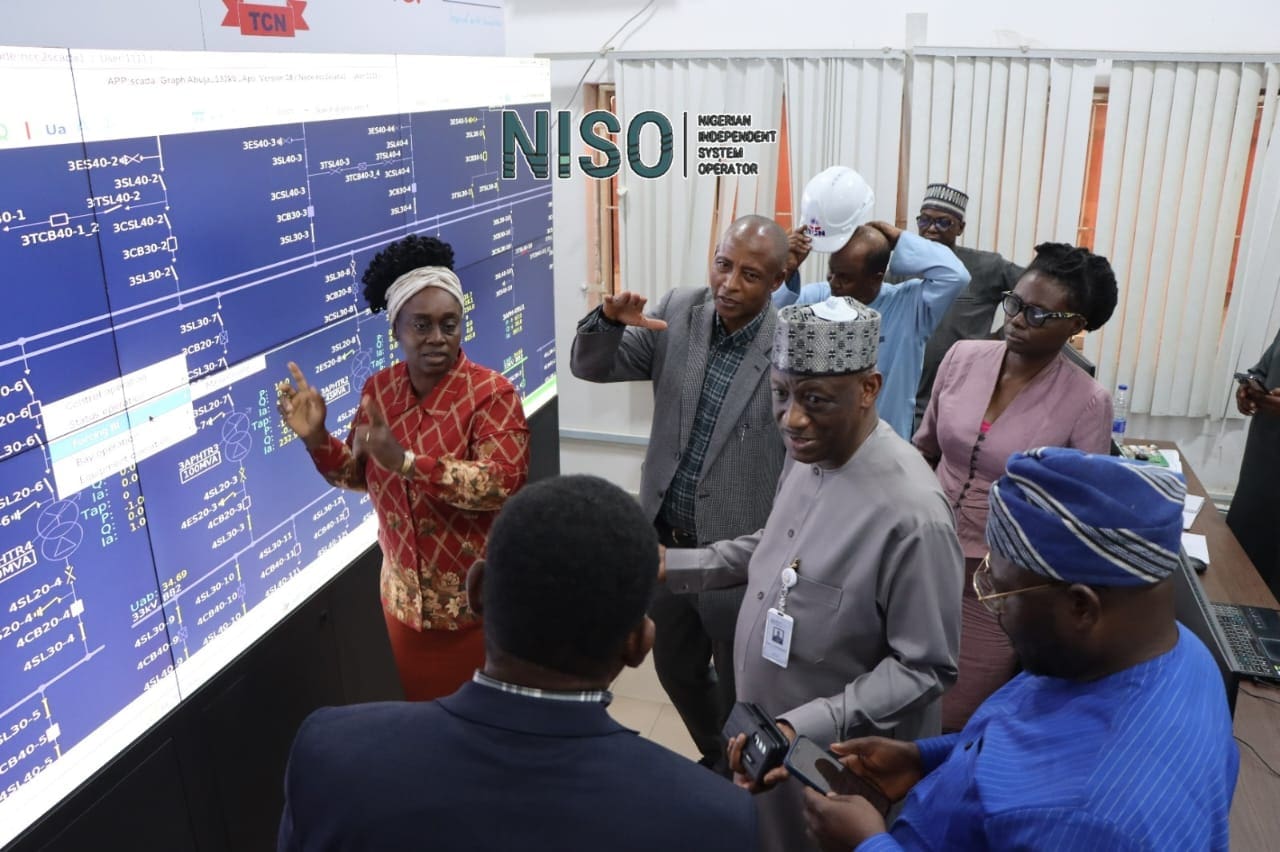
The Nigerian Independent System Operator (NISO) has commended the Nigerian National Petroleum Company (NNPC) Limited for its progress on the 350MW Abuja Independent Power Plant (IPP) and the accompanying SCADA (Supervisory Control and Data Acquisition) projects.
NISO said it is a vital step toward achieving the national target of 8,500MW grid generation capacity by the end of 2026.
Managing Director/Chief Executive Officer of NISO, Engr. Abdul Mohammed Bello made the commendation during an on-site assessment visit to the project location on Thursday.
The project is considered a critical milestone in the country’s push to stabilize its frequently collapsing national grid.
Located in Gwagwalada, the gas-fired 350MW plant is a flagship project under the NNPC’s “Gas-to-Power” initiative.
According to a statement by NISO, Bello, who led a high-level management delegation, assessed the current stage of construction and identified key areas for enhanced collaboration to accelerate project completion and timely commissioning.
The delegation also carried out an inspection visit to the Supervisory Control and Data Acquisition (SCADA) implementation site at the Gwagwalada transmission substation, which NISO said is 81 per cent completed.
READ ALSO:
- NISO Blames GenCo Tripping For Loss Of Power To National Grid
- GenCos Debts: Geregu, Niger Delta Power, Others Reach Settlement Agreement as FG Issues ₦501bn Bond
- Nigerians in Darkness again as National Grid Collapses Second Time in 2026
A SCADA system is a high-tech digital framework that allows grid operators to monitor and control the entire electricity value chain in real-time. Experts note that it enables real-time visibility and automated control (remote management of substations and power plants, allowing for precise load balancing).
For years, Nigeria’s power sector has struggled with “blind spots” where the System Operator couldn’t see what was happening at distant substations. This lack of data often led to slow responses during system disturbances.
The project, once completed, is believed to drastically improve power reliability for the Federal Capital Territory (FCT) and surrounding North-Central states, reducing the city’s dependence on power transmitted over long distances from the south.

Victor Ezeja is a Nigerian journalist skilled in producing insightful news analyses, feature stories, and interviews that simplify complex issues and drive informed public discourse. His work combines rigorous research, balanced reporting, and compelling storytelling to highlight developments shaping industries and society. Victor, who holds a Master's Degree in Mass Communication, specializes in energy, aviation, business, and economic reporting. He can be reached via @VICTOREZEJA on X