

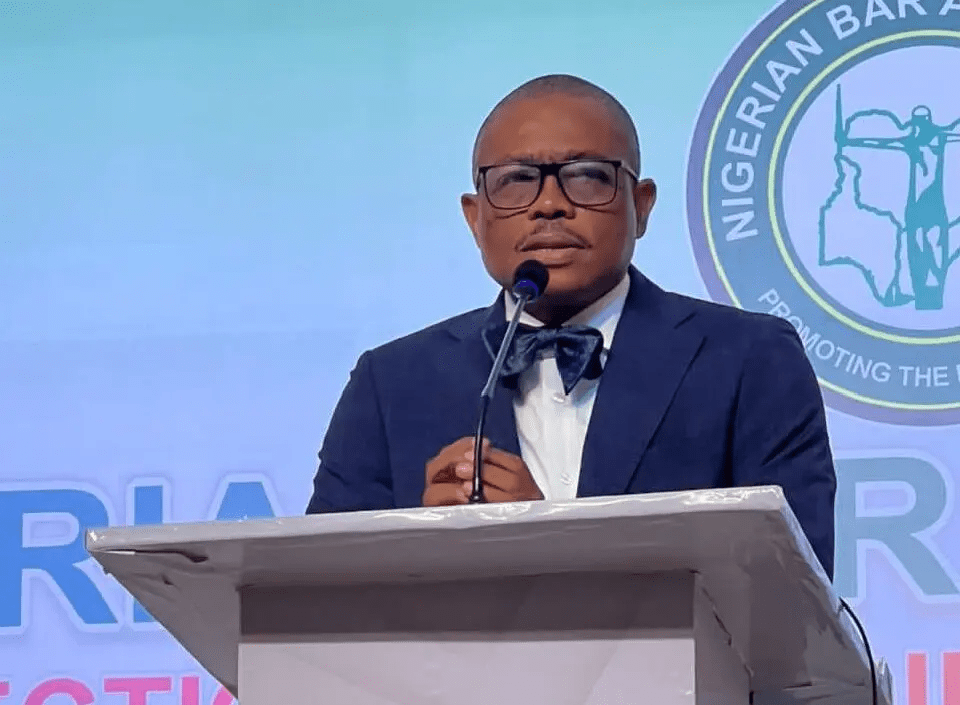
The President of the Nigerian Bar Association (NBA), Afam Osigwe, has called for deeper legal collaboration between Nigeria and Liberia, stressing the role of legal professionals in strengthening justice systems across West Africa.
In a statement shared on X on Wednesday, Osigwe delivered the message during the formal opening of the March 2026 Term of the Supreme Court of Liberia.
He conveyed what he described as “warm goodwill and solidarity from the Nigerian legal community to the Bench and Bar of Liberia.”
Osigwe described the opening of the court’s new term as an important institutional tradition that reflects the judiciary’s continued commitment to justice, the rule of law and democratic governance.
According to him, the event goes beyond ceremony and represents a renewed commitment by the legal profession to protect constitutional values, strengthen institutional integrity and ensure access to justice.
Commends Liberia’s judiciary
The NBA president also commended Liberia’s judiciary, saying the country’s Bench and Bar have continued to demonstrate resilience and dedication to strengthening constitutional democracy.
RELATED NEWS:
- ICPC Denies Arresting Justice Omotosho, Says It Lacks Mandate to Probe Serving Judges
- FG, NBA Partner to Offer Pro-Bono Service to Prison Inmates
- NBA Urges Tinubu to Intervene as Police Reactivate Tinted Glass Enforcement
He praised their commitment to upholding the rule of law and sustaining public confidence in the justice system.
Highlighting the historical relationship between the two countries, Osigwe said Nigeria and Liberia share deep ties and a common vision of building a just, stable and prosperous West Africa.
He noted that the legal communities of both nations have an important role in advancing that vision through collaboration, knowledge sharing and collective advocacy.
NBA proposes professional partnerships
Osigwe also stressed the need for legal institutions to respond to the rapidly changing global legal environment.
He reaffirmed the NBA’s commitment to strengthening professional cooperation with Liberia through expanded partnerships in continuing professional development and capacity building.
Such collaboration, he said, could include structured training programmes, joint conferences, exchange initiatives for young lawyers and virtual learning platforms.
According to him, these initiatives would help improve advocacy standards, strengthen compliance with professional ethics, deepen legal research culture and promote specialisation in emerging areas of legal practice linked to governance and economic development.
Regional cooperation, technology in justice delivery
On regional cooperation, Osigwe said harmonising legal frameworks and strengthening professional collaboration among legal practitioners would improve cross-border legal services.
He added that stronger arbitration, mediation and dispute resolution systems would also help attract investment and boost investor confidence across the region.
Osigwe further emphasised the growing role of technology in justice delivery, urging Bars and judiciaries across West Africa to work together on innovations such as electronic filing systems, virtual hearings, legal technology adoption and cybersecurity awareness.
He also stressed the need for responsible integration of artificial intelligence in legal practice while ensuring fairness, due process and judicial integrity.
Call for stronger regional legal community
Osigwe expressed hope that the March 2026 term of the Liberian Supreme Court would strengthen commitment to principled advocacy, stronger institutions and greater public trust in the justice system.
He also assured the Liberian Bench and Bar of the continued solidarity and partnership of the Nigerian Bar Association in promoting the rule of law and building a stronger regional legal community.

Rafiyat Sadiq is a political, justice, and human rights reporter with Pinnacle Daily, known for fearless reporting and impactful storytelling. At Pinnacle Daily, she brings clarity and depth to issues shaping governance, democracy, and the protection of citizens’ rights.