

United States immigration authorities have deported former Liberian rebel commander Mayama Sesay, widely known as “Black Diamond”, over her role in the country’s brutal civil wars.
Sesay, 43, who commanded an all-female fighters’ unit and was accused of recruiting and leading child soldiers, was returned to Liberia in September, according to a statement from US Immigration and Customs Enforcement (ICE).
ICE said Sesay entered the United States in 2014 on a visitor’s visa and later applied for permanent residency after marrying a US citizen. However, following years of litigation over her immigration status, she was arrested by ICE officers in Atlanta in April and placed in removal proceedings.
Allegations of War Crimes
The US agency described Sesay as a notorious figure during Liberia’s second civil war, noting that she recruited and trained child soldiers from the age of 22 to fight against forces loyal to former President Charles Taylor.
READ ALSO: Indian Court Jails Nigerian Man for 10 Years Over Drug Trafficking
“Sesay gained notoriety for her brutal tactics, including restraining and beating captured soldiers, and deploying mortar bombs to terrorize and kill both military personnel and civilians,” ICE said.
The statement added that an immigration judge had found Sesay’s testimony not credible and concluded that she had used and recruited child soldiers, leading to her designation as a war criminal.
Liberia’s Civil War Legacy
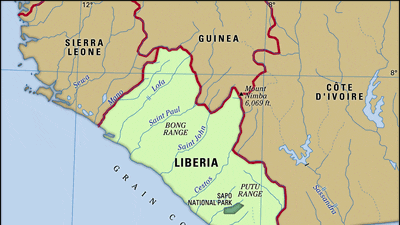
Liberia’s civil wars, which lasted from 1989 to 2003, killed an estimated 250,000 people. The conflicts were marked by widespread massacres, mutilation, sexual violence, and the conscription of children as fighters.
The small West African nation has since struggled to rebuild, particularly after the devastation of the 2014 Ebola epidemic, and continues to grapple with the legacy of its past violence records

Rafiyat Sadiq is a political, justice, and human rights reporter with Pinnacle Daily, known for fearless reporting and impactful storytelling. At Pinnacle Daily, she brings clarity and depth to issues shaping governance, democracy, and the protection of citizens’ rights.