

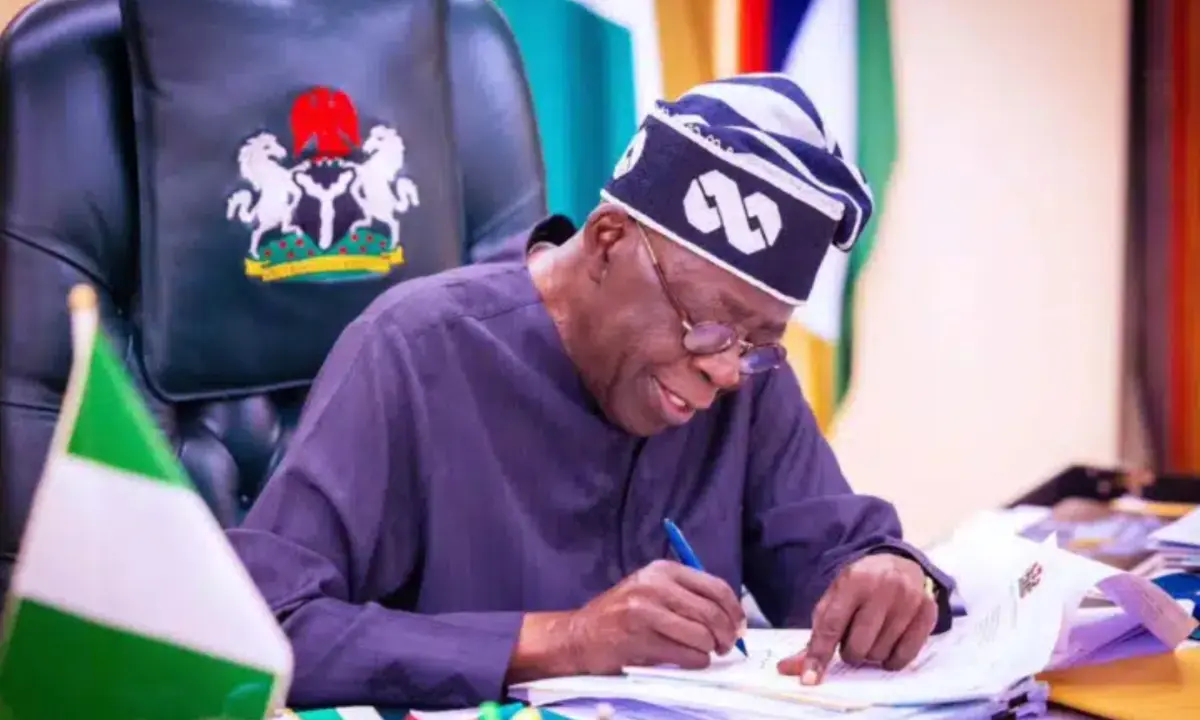
President Bola Tinubu has signed the Electoral Act 2026 (Amendment) into law, triggering widespread condemnation from opposition parties and civil society organisations, who warn that the changes could undermine Nigeria’s democratic process ahead of the 2027 general elections.
The President assented to the bill at about 5pm on Wednesday at the Presidential Villa, Abuja, less than 24 hours after its passage by both chambers of the National Assembly.
PDP, Opposition Cry Foul
The Peoples Democratic Party accused the ruling All Progressives Congress of fast-tracking the legislation out of fear of losing the 2027 elections.
In a statement by its National Publicity Secretary, Ini Ememobong, the PDP described the President’s assent as “a dark day for democracy”, alleging that the amendment was designed to weaken electoral safeguards.
RELATED NEWS:
- Senate Yet to Finalise Electoral Act Amendment after Prolonged Deliberations
- BREAKING: Senate Adopts Electronic, Manual Transmission of Election Results
- Opposition Lawmakers Protest as Reps Approve Senate Version on E-Transmission
“The hurried assent confirms that this was a well-orchestrated plot by the APC. The party’s fear of inevitable defeat in a free and fair election is palpable,” the statement read.
Contentious Provisions Raise Concern
The amended Act has generated intense debate, particularly over provisions allowing manual transmission of election results where electronic transmission fails.
Opposition parties and civil society organisations have consistently demanded mandatory real-time electronic transmission, especially following allegations of result manipulation during the 2023 general elections.
Concerns heightened after the Independent National Electoral Commission released the timetable for the 2027 general elections.
Civil Society Reacts
The Executive Director of YIAGA Africa, Samson Itodo, described the amendment as “a step backward”, saying it failed to address critical gaps in Nigeria’s electoral framework.
Similarly, the Country Director of Accountability Lab, Friday Odeh, warned that the law could legitimise election rigging and reverse gains made in previous reforms.
However, Executive Director of the Civil Society Legislative Advocacy Centre, Auwal Musa, said that while the law was flawed, Nigerians should continue to push for improvements rather than reject it outright.
Lawmakers Clash in House
The Labour Party caucus in the House of Representatives condemned what it described as the rushed assent to the bill.
Its leader, Afam Ogene, questioned whether the executive had adequate time to review the document before signing it into law, warning that Nigerians’ concerns about the integrity of future elections had been ignored.
Earlier, plenary sessions in the House turned rowdy as opposition lawmakers clashed with APC members over the removal of mandatory electronic transmission of results.
Protests Trail Amendment
Protests had earlier erupted at the National Assembly complex, with civil society organisations demanding that the law compel live electronic transmission of results from polling units to INEC’s central server.
Despite opposition lawmakers staging a walkout, APC legislators voted in the majority to pass the bill, retaining provisions for manual transmission where electronic systems fail.
CUPP Condemns Move
The Coalition of United Political Parties accused the President and the National Assembly of disregarding Nigerians’ will.
CUPP National Secretary Peter Ameh said the amendment was intended to protect the ruling party ahead of the 2027 elections, insisting that mandatory electronic transmission had earlier received broad public support.
Tinubu Raises Broadband Concerns
At the signing ceremony, President Tinubu defended the amendment, citing Nigeria’s broadband limitations and technical capacity to support real-time electronic transmission nationwide.
“No matter how good a system is, it is managed by human beings,” the President said, noting that voting and result collation remain largely manual at polling units.
Akpabio and Abbas Defend Law
Senate President Godswill Akpabio said the amended Act would enhance transparency and ensure that “every vote counts”, noting that it formally recognises electronic transmission of results for the first time since independence.
Speaker of the House of Representatives Abbas Tajudeen said the reduction of the election notice period from 360 to 300 days would help avoid voter apathy, especially during religious seasons.
Wike Commends Tinubu
Minister of the Federal Capital Territory Nyesom Wike praised the President for promptly signing the bill, describing it as a demonstration of commitment to strengthening Nigeria’s democratic process.
He said the swift assent had ended what he described as “unnecessary protests” by individuals preparing excuses for electoral defeat.
The 2027 general elections are scheduled to be held on February 20 for presidential and National Assembly elections and March 6 for governorship and state Houses of Assembly polls.

Rafiyat Sadiq is a political, justice, and human rights reporter with Pinnacle Daily, known for fearless reporting and impactful storytelling. At Pinnacle Daily, she brings clarity and depth to issues shaping governance, democracy, and the protection of citizens’ rights.