

For years, Nigeria’s oil sector has been at the centre of what analysts described as a fiscal paradox. The country depends heavily on petroleum revenues, yet billions of naira have been lost through deductions, weak remittances, accounting discrepancies and institutional overlaps.
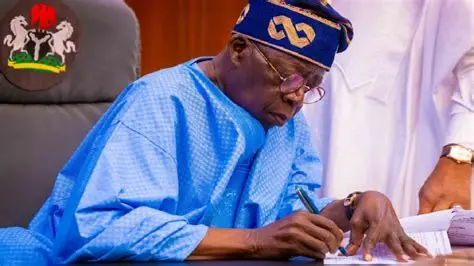
President Bola Tinubu’s latest Executive Order seeks to change that by stripping the Nigerian National Petroleum Company Limited (NNPC) of its power to retain portions of oil and gas revenues before remitting them to the Federation Account.
The move has been hailed by industry experts and financial analysts who said the order would help to strengthen revenue remittance compliance and enhance transparency.
They argued that the policy move could significantly curb revenue leakages and boost allocations to the Federation Account Allocation Committee (FAAC).
The Executive Order, according to the Presidency, mandates stricter reporting standards, real-time reconciliation of crude oil sales, and improved coordination between NNPC, the Ministry of Finance, and other revenue-generating agencies.
The presidential directive has stripped the NNPC of its 60 per cent cumulative retention power (30 per cent management fee and 30 per cent frontier fund), arguing that the national oil company’s existing 20 per cent profit retention for working capital is already sufficient.
These provisions, which were backed by the Petroleum Industry Act of 2021, now face legislative review.
Analysts say the policy is designed to ensure that earnings from crude oil and gas operations are promptly and fully remitted into the federation account.
Curbing Long-standing Leakages
For decades, concerns have trailed the remittance structure of Nigeria’s oil revenues, with audits and legislative probes highlighting discrepancies between production figures, sales proceeds, and remitted sums.
Experts argue that weak oversight, opaque accounting systems, and legacy subsidy arrangements contributed to shortfalls in what eventually accrues to the federation account.
CEO Financial Derivatives Company, Bismarck Rewane, said the executive order is a good one as it would, if effectively implemented, significantly reduce revenue leakages.
While making reference to past events, Rewane said the country cannot afford to continue having cases of unaccounted funds.
“The Executive Order is about making sure that monies go directly from NNPC to the Federation Account,” Rewane stated in an interview on Channels Television’s Business Morning on Thursday.
He expressed concern that unaccounted funds by the NNPC between 2017 and 2023 reportedly came up to the tune of N210 trillion, which is about 66 per cent of Nigeria’s GDP in real terms.
Commenting on the establishment of a committee of ministers to coordinate implementation of the executive order, Rewane said there is no need for that. According to him, all that is needed is for the order to be obeyed.
“Anytime there is a guidance or implementation committee, it creates bottlenecks and bottlenecks is the beginning of inappropriate behaviours,” he added.
Also commenting on the executive order, a Senior Advocate of Nigeria and an expert in energy and environmental law, Prof. Damilola Olawuyi, said it is an attempt to restore confidence and ensure transparency in the structure of NNPC, given what has happened in recent years, especially the reports of unaccounted funds to the tune of N210 trillion.
Olawuyi, who appeared on Channels Television’s Business Morning, said the move would enhance resource mobilization for investment in critical sectors like education, healthcare and infrastructure.
“The order will enhance resource mobilization. Nigeria needs a lot of money for education, health care, and infrastructure,” Olawuyi stated.
He said since the oil and gas sector remains Nigeria’s major source of revenue, the government must strive to block any leakage of funds.
Dragging NNPC out of its comfort zone
The legal expert observed that another positive impact of the executive order is making NNPC come out of what he called the “comfort Zone” to actually function as a commercial entity it is.
He said if NNPC is only receiving guaranteed incomes from oil and gas profits as provided in the PIA, then it is not a commercially viable national company.
“NNPCL has been restructured to be a commercial entity, and we expect it to be prosperous, to be viable and profitable. I think if it cannot achieve that, if it is receiving guaranteed income through some of the provisions of the Petroleum Industry Act, that sort of assures it of 30% payment here, 20% payment there. That is not how entrepreneurial national companies function.”
He gave examples of successful national companies like Saudi Aramco in Saudi Arabia, noting that it is one of the most profitable oil and gas companies in the world because it has been investing in different areas, including hydrogen, artificial intelligence and infrastructure.
“So, I would think that this announcement sort of takes the NNPCL out of its comfort zone, challenging it to bring money for the government, rather than the other way around. And I think it should be seen as a welcome challenge by the NNPCL itself,” he added.

Unlike Rewane, Prof. Olawuyi thinks that the establishment of the committee of ministers to coordinate the implementation of the directive is a positive step.
The President approved the establishment of an implementation committee to ensure the effective implementation of the executive order. Members of the committee include the Minister of Finance and Coordinating Minister of the Economy, the Attorney-General of the Federation and Minister of Justice, the Minister of Budget and National Planning and the Minister of State, Petroleum Resources (Oil).
Other members of the Committee are the Chairman, Nigeria Revenue Service; a Representative of the Ministry of Justice; the Special Adviser to the President on Energy; and the Director-General, Budget Office of the Federation.
READ ALSO:
- Tinubu Signs Executive Order Stripping NNPC Power to Retain Portions of Revenues
- NNPC Records ₦60.5trn Revenue, ₦5.7trn Profit in 2025
- Dangote, NNPC Sign Landmark Gas Agreements to Boost Industrial Expansion
- Competition Intensifies as Petrol Landing Costs Drop Below Dangote Prices
Olawuyi said implementing the order of direct remittance of oil and gas revenues into the federation account needs “appropriate oversight and guidance.” He maintained that having such a committee is “crucial.”
“I think having those experienced individuals leading the gradual implementation will be key.”
Impact on FAAC Disbursements
The Federation Account Allocation Committee distributes federally collected revenues monthly to the federal, state, and local governments. Any increase in remittances from oil proceeds could translate directly into higher FAAC allocations.
Olawuyi also agreed that implementing the directive will bring more funds into the federation account.
“By bringing more money into the Federation account, the federal government, states, and local government would have more money to be able to implement programmes. So, it will definitely be a boost in terms of the amount of money we have that FAAC would have to administer, and it will be a positive way to ensure that we can also have one sort of systemic and coordinated view of money coming in and how it is going out.”
Oil receipts account for a substantial share of Nigeria’s foreign exchange earnings and a significant portion of federally collected revenue. Industry observers note that plugging leakages could reduce reliance on borrowing and ease fiscal pressures across tiers of government.
Analysts estimate that the combined 30% management fee and 30% Frontier Exploration Fund alone accounted for approximately ₦1.42 trillion in the 2025 budget.
PIA Shortcomings
The senior advocate pointed out that one of the key problems with the implementation of the PIA is that it created “a web of regulatory entities with oversight over revenue collection and disbursement.”
According to him, the PIA created the Nigerian Upstream Petroleum Regulatory Commission (NUPRC), which collects some oil and gas taxes and levies, and the Nigerian Midstream and Downstream Petroleum Regulatory Authority (NMDPRA) also collects some money by virtue of some provisions of the PIA. “And so, what you then manage to create is a system whereby a number of regulatory entities are collecting money that should indeed go to the Federation account, which then makes it very difficult for us to really have a holistic overview of the amount of Nigeria’s worth. So, I think this is a welcome development, and would even boost the FAAC more,” Olawuyi stated.
Also reacting to the development, Agora Policy, a Nigerian think tank, hailed the executive order, saying it had, in a policy note in 2024, advocated amendment of the PIA increase the flow of oil and gas revenue to the Federation.
“We welcome President Tinubu’s bold measures, some of which we highlighted in our October 2024 Policy Note. The PIA is a great piece of legislation, but like all laws, it is not perfect. Its flaws are not flimsy: they disadvantage the Federation,” Agora Policy stated in a post on its X handle on Thursday.
In the policy note published in October 2024, Agora argued that the federation is getting less oil and gas revenue than it was getting before the PIA came into existence.
In his personal address to Nigerians, President Tinubu said the goal of the executive order is to promote transparency, accountability, constitutional compliance and ensure that oil and gas revenues must serve the Nigerian people first. “This reform is about fairness and fiscal responsibility,” Tinubu emphasized.
The president said his administration will undertake a comprehensive review of the Petroleum Industry Act to address structural and fiscal anomalies that weaken national revenue.
Transparency and Investor Confidence
Beyond immediate fiscal gains, analysts believe that the executive order could improve investor confidence in Nigeria’s oil and gas sector. Clearer financial reporting and compliance standards may reassure both domestic and foreign stakeholders about governance practices within the national oil company.
Chief Economist and partner at SPM Professionals, Dr. Paul Alaje, called for transparency in the disbursement of revenues generated by the government.
He said NNPC should operate squarely as a commercial entity that it has now become. “NNPC is a commercial entity and must operate as one,” Alaje stated.
Alaje cautioned that effective implementation will be critical and called on President Tinubu to ensure that the executive order is implemented.
“The executive order has been signed. What we want now is for the president to demonstrate the capacity to implement it. If he does not, it will just be media mention and nothing will really change,” he stated.
There are concerns that past reform efforts have sometimes faltered due to institutional resistance and capacity gaps. Experts recommend independent audits, digital tracking systems, and legislative oversight to sustain the gains envisioned by the directive.
As the reforms take shape, stakeholders across government and industry will be watching closely to see whether the executive order delivers on its promise: plugging revenue leakages, strengthening public finances, and boosting FAAC disbursements for the benefit of all tiers of government.

Victor Ezeja is a Nigerian journalist skilled in producing insightful news analyses, feature stories, and interviews that simplify complex issues and drive informed public discourse. His work combines rigorous research, balanced reporting, and compelling storytelling to highlight developments shaping industries and society. Victor, who holds a Master's Degree in Mass Communication, specializes in energy, aviation, business, and economic reporting. He can be reached via @VICTOREZEJA on X