

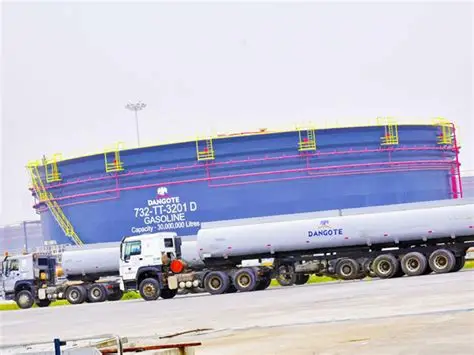
The Dangote Petroleum Refinery has again adjusted its ex-depot fuel prices, reflecting the intense volatility currently gripping the global energy market.
Effective immediately, the gantry price for Premium Motor Spirit (PMS), also known as petrol, has been raised to ₦1,275 per litre, while Automotive Gas Oil (AGO), commonly known as diesel, has jumped to ₦1,950 per litre.
The latest adjustment represents a ₦75 increase (5.02 per cent) for petrol and a ₦200 surge for diesel compared to the previous month’s rates. Prior to the latest price adjustment, petrol was sold at ₦1,200 per litre while diesel was ₦1,750 per litre.
Adjustment spurred by Global Oil Price Volatility
Analysts attribute the price hike to the escalating cost of crude oil on the international market. Global benchmarks, including Brent Crude, have seen a sharp rise in recent times, surging above $100 per barrel. This is fueled largely by geopolitical tensions in the Middle East involving the United States, Israel and Iran. The conflict has caused significant disruptions in the Strait of Hormuz, a global maritime route through which about 20 per cent of the world’s crude oil and gas passes.
Impact on the Domestic Economy
The price review is expected to further affect retail prices of petroleum products in the Nigerian downstream sector. Independent marketers have warned that the hike at the refinery level will inevitably lead to higher pump prices across retail outlets.
READ ALSO:
- Why FG Should Declare State of Emergency on Crude Oil Production – PETROAN
- Dangote Refinery Further Raises Petrol, Diesel Prices as Crude Rises above $110
- Oil Surges to $118 as Hormuz Tensions Deepen, Widening Brent–WTI Gap
- Middle East Tensions: Concerns as Fuel Prices Rise in Nigeria After Oil Price Surge
Industry analysts suggest that the retail price of petrol could soon reach as high as ₦1,500 per litre, while diesel is expected to cross the ₦2,000 mark at many filling stations.
Logistics & Inflation
With diesel being the primary fuel for heavy-duty trucks and industrial generators, economic experts express concerns of a further spike in the cost of transportation and food, further straining the disposable income of average Nigerians.
The Deregulation Reality
While the 650,000-barrels-per-day refinery was initially seen as a shield against global price shocks, experts note that under a deregulated regime, local prices remain tethered to international benchmarks.
Oil and gas experts have warned that as long as the refinery’s feedstock (crude oil) is priced in dollars and subject to global supply-demand dynamics, domestic consumers will continue to feel the heat of international conflicts. For now, Nigerians are bracing for a fresh wave of inflationary pressure as the new rates take hold across the country.
There are calls for the authorities to prioritise increasing crude oil production and adequate supply to domestic refineries to boost local refining as a way to cushion the effect of global oil price volatility.

Victor Ezeja is a Nigerian journalist skilled in producing insightful news analyses, feature stories, and interviews that simplify complex issues and drive informed public discourse. His work combines rigorous research, balanced reporting, and compelling storytelling to highlight developments shaping industries and society. Victor, who holds a Master's Degree in Mass Communication, specializes in energy, aviation, business, and economic reporting. He can be reached via @VICTOREZEJA on X