

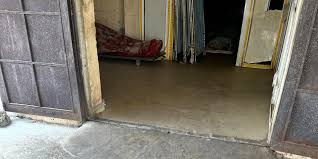
The stench hits you first, thick, foul, and unforgettable. Inside the University of Abuja Teaching Hospital mortuary, bodies lie uncovered on rusted stretchers, their forms swollen under the dim, flickering light.
A once sterile space now feels like a forgotten dungeon, where the dead wait not for burial, but for mercy. Power failures are frequent, cooling systems barely function, and attendants move helplessly between corpses.
For weeks, whispers of decay and neglect have haunted the hospital’s corridors. Families allege that officials demand “extra fees” to prioritise preservation, while staff blame government neglect and poor maintenance funding.
Inside the Mortuary: “We’re Losing the Dead Twice”
By mid-morning, the heat inside the University of Abuja Teaching Hospital mortuary becomes unbearable. A thick, damp air hangs over the tiled room as attendants fan themselves with old files.
Near the back, a grieving mother weeps silently beside a body already darkened by decomposition.
READ ALSO: Ampiclox as Contraceptive Threatens Fertility, Health System in Nigeria
“We’re losing the dead twice, first to death, and then to neglect,” says one attendant who pleads anonymity, his eyes darting toward the corridor. “The freezers break down for days. Sometimes, we pack ice blocks around the bodies just to delay the decay.”
The attendant says he has worked there for over seven years but has “never seen the place this bad.” He describes how bereaved families are forced to contribute money for diesel to power the mortuary’s failing generators. “If we don’t buy fuel, the corpses rot. It’s that simple.”
Hospital insiders blame years of neglect, underfunding, and bureaucratic delays. Documents obtained by Pinnacle Daily reveal that the mortuary’s refrigeration units have not been fully serviced for over two years due to “budgetary constraints”. Maintenance requests, several of which were filed between 2023 and 2024, remain pending.
“It’s not only unhygienic, it’s dangerous,” says a senior pathologist at the hospital. “Decomposing bodies release gases and fluids that can cause contamination. Staff are exposed daily with minimal protective gear.”
Environmental health officers warn that poorly maintained mortuaries can trigger outbreaks of infectious diseases such as cholera, meningitis, and Lassa fever, especially when located near water channels or residential areas.
From several metres away, the stench of decay hits with punishing force. It lingers in the air long before one reaches the mortuary gates of the University of Abuja Teaching Hospital (UATH) in Gwagwalada.
READ ALSO: Pregnancy at Any Cost: The Hidden Struggles of Nigerian Women
By the entrance, relatives cover their noses with scarves, tissues, or surgical masks.
Inside, attendants fan the air with cardboard, trying and failing to chase away the odour that hangs like a curse over the hall.
What lies within defies the meaning of a teaching hospital: bodies laid on mats and bare floors, flies hovering, and cooling units that no longer hum with life.
During multiple visits between November 6 and 8, reporters observed several corpses lying uncovered on the floor. Some bodies were swollen and discoloured; others were loosely wrapped in plastic sheets or mats.
The mortuary, built decades ago to serve as a regional referral centre, now operates without steady electricity or functioning refrigeration. Both cooling chambers and air conditioners were down during the visits.
A lone technician was seen dismantling a faulty unit, his tools soaked in water dripping from a leaking ceiling.
To improve airflow, windows and doors were flung open, allowing warm air and flies to circulate freely. The scene bore the marks of a system that has collapsed from within.
“We Are Overloaded Beyond Imagination”
In an interview, Dr Abdul Adelowo, Acting Head of the Pathology Department, admitted that the cooling system had broken down.
“Each chamber was built for 25 bodies, but the mortuary receives far more than that daily. Even when everything worked, capacity was already inadequate,” he said.
He explained that UATH serves not just Abuja but neighbouring states Kogi, Nasarawa, and Niger, and even parts of Kaduna and also receives accident victims from the busy Abuja–Lokoja highway.
“We can’t reject bodies,” Adelowo continued. “When other hospitals say their mortuaries are full, they send them here. Police and road safety bring in unknown victims almost every day.”
He revealed that even when the refrigerators were functional, their 50-body capacity was often stretched to accommodate over 200 corpses.
To cope, the hospital has resorted to chemical embalming, though many corpses are left unattended because they are unclaimed or abandoned.
“Recently, we disposed of about 70 unclaimed bodies after police approval,” he disclosed.
Voices from the Grieving
Outside the mortuary, grief collides with frustration.
A middle-aged man waiting under a mango tree told Pinnacle Daily that he had come to claim his cousin’s body.
“They said visitors are not allowed inside, but one worker told me my brother is lying on the floor because the refrigerators have spoilt,” he said, shaking his head.
Another visitor, clutching a burial cloth, said the staff asked him to “buy diesel if he wanted the corpse preserved until morning.”
“How can a government hospital be asking families to fuel generators?” he asked bitterly. “Even the dead are not safe in this country.”
Experts warn that what is happening at UATH is not just a local problem; it’s a public health time bomb.
According to Nigeria’s Health Facility Monitoring and Accreditation Agency (HEFAMAA) standards, any licensed mortuary must have:
- Functional cold chambers
- Clean, well-ventilated rooms
- Drainage and disinfection units
- Continuous power supply
- Trained technicians in protective gear
Yet, the mortuary at UATH meets none of these standards.
The World Health Organisation (WHO) insists that mortuaries must uphold the “dignity of the dead and the safety of the living.” But here, dignity is the first casualty.
“Decomposing remains release biohazardous gases and fluids that can infect handlers and contaminate the air,” explained Dr Chukwuemeka Ibekwe, a public health consultant in Abuja. “Without proper ventilation and disinfection, diseases can spread even beyond the facility.”
Nigeria has over 450 registered mortuaries, yet only a fraction meet international preservation standards.
Most public hospitals depend on erratic power supplies and outdated cooling systems. The lack of oversight has left the mortuary sector largely unregulated — and the dead forgotten.
A 2023 Federal Ministry of Health audit showed that over 60% of government-owned mortuaries operate with expired or malfunctioning refrigeration units.
“We cannot continue to ignore the infrastructure of death,” said a Lagos-based forensic pathologist, “because how a society treats its dead says everything about how it values life.”
When contacted, the hospital’s Public Relations Officer confirmed that the facility was aware of the public complaints and that management had “commenced steps to restore the refrigeration system.”
“We are engaging contractors and expect the units to be fixed soon. It’s a technical problem aggravated by an unstable power supply,” he said.
He added that plans were underway to expand the mortuary capacity to accommodate the hospital’s growing service area.
But for now, the air around the mortuary still reeks of neglect. “Dignity should not end at death, but in this mortuary, it already has.”
READ ALSO: Nigeria @ 65: Health Sector in Intensive Care — Experts
In the quiet of the mortuary yard, a worker lights incense to drown the odour. A truck rumbles in another delivery of the dead. The cycle continues.
The University of Abuja Teaching Hospital mortuary is not just a failing facility; it is a mirror of a country that has lost its sense of reverence for human life and death.
Analysts are unanimous in their submissions that, until the cold rooms work again, until families stop paying for diesel to keep their loved ones from rotting, until dignity returns to the dead, the stench will remain, not just in the air, but in the conscience of a nation.

Esther Ososanya is an investigative journalist with Pinnacle Daily, reporting across health, business, environment, metro, Fct and crime. Known for her bold, empathetic storytelling, she uncovers hidden truths, challenges broken systems, and gives voice to overlooked Nigerians. Her work drives national conversations and demands accountability one powerful story at a time.