

Rising global crude oil prices triggered by the escalating U.S.–Iran war are putting renewed pressure on domestic fuel prices in Nigeria, raising concerns about inflation and the cost of living across the country.
Global oil benchmark has surged past the $100 per barrel mark for the first time in years as conflict in the Middle East disrupted supply routes and production in the region. According to a Reuters report, Brent crude briefly climbed as high as $119 per barrel before settling around $105 on Monday, March 9, amid fears that the conflict could further destabilize global energy markets.
The spike has already begun to reverberate across Nigeria’s downstream petroleum market. Dangote Petroleum Refinery raised its ex-depot price twice last week to about ₦995 per litre from ₦874, prompting depot owners and filling stations to adjust retail prices upward.
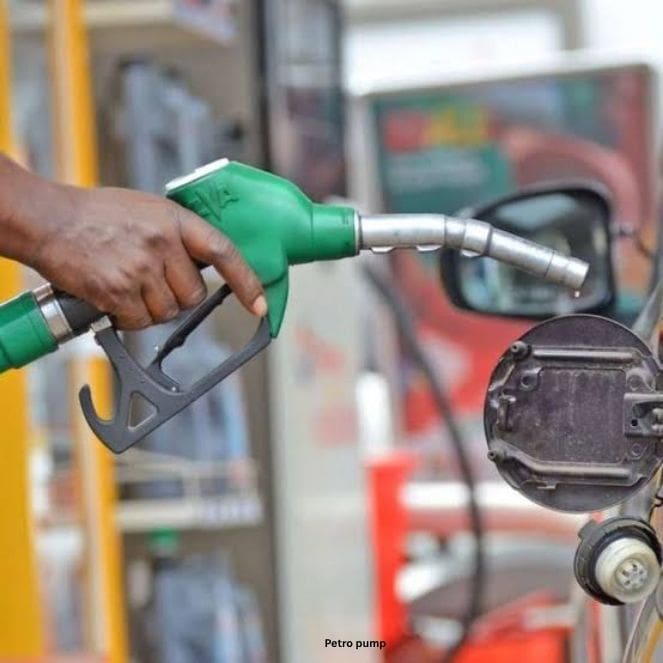
Oil marketers have raised the pump price of Premium Motor Spirit (PMS), popularly known as petrol, to around ₦1,200 per litre, up from about ₦930 per litre in several locations across the country.
Pinnacle Daily correspondent observed on Monday morning that some filling stations in different parts of Lagos have adjusted their pump prices to reflect the new market trend. The NNPC retail outlet along Oshodi-Apapa Expressway fixed its pump price at ₦1,040 per litre, AP along Oba Akran Avenue, Ikeja is selling at ₦1,089, Mobil filling station on the same axis is selling at ₦1,064 per litre, while MRS is selling at ₦1,060.
Industry operators say the increase reflects rising crude costs and higher replacement prices for refined products.
Energy analysts warn that the situation could worsen if hostilities in the Middle East persist.
“The Middle East conflict has impacted the domestic market, causing uncertainty and frequent price adjustments,” said petroleum analyst Olajide Jeremiah. “More increases are possible if crude prices continue to climb,” he added.
The war has heightened fears over disruptions to the Strait of Hormuz, a strategic waterway through which roughly one-fifth of the world’s oil supply passes. Shipping disruptions and production cuts in several Gulf countries have fueled the rapid rise in crude prices and shaken global markets.
Analysts project that the war, which started on February 28, could make fuel prices remain high for weeks and months even if it ends immediately.
Some oil-rich Gulf countries have announced measures aimed at cutting output as storage drops. Kuwait, through its national oil company, Kuwait Petroleum Corporation, has declared a force majeure on shipments in a bid to ensure adequate domestic supply.
Bahrain’s BAPCO also announced a force majeure following a recent attack on its refinery complex.
Similarly, Qatar Energy also declared Force Majeure to its affected buyers. In a post on X, the company announced earlier last week its decision to stop production of liquefied natural gas (LNG) and associated products, following attacks on its facilities by airstrikes from Iran in the Ras Laffan Industrial City and Mesaieed Industrial City.
Impact on Nigeria
For Nigeria, Africa’s largest oil producer, the surge in oil prices presents a mixed economic picture. While higher crude prices could boost government revenues, economists say the country’s reliance on imported refined products means consumers still face rising pump prices.
READ ALSO:
- Middle East Tensions: Concerns as Fuel Prices Rise in Nigeria After Oil Price Surge
- U.S./Israel-Iran War: Oil Prices Could Hit $150/barrel, Qatari Energy Minister Warns
- Risks, Opportunities US-Iran War Poses for Nigeria
- Thousands of Flights Remain Cancelled, Billions of Dollars Lost as U.S.-Israel War Against Iran Continues
Across several cities, motorists have reported queues at filling stations and sporadic supply disruptions as marketers adjust to the volatile market conditions.
Economists also warn that sustained high oil prices could trigger broader inflation across transportation, food, and energy costs, putting additional strain on households already grappling with economic reforms and currency volatility.
“If crude prices remain above $100 per barrel for an extended period, the impact on petrol, diesel, and aviation fuel will be significant,” Dr Ebikabowei Aduku, an economist and lecturer in the Department of Economics at the University of Africa Toru-Orua (UAT) in Bayelsa State, noted in a chat with Pinnacle Daily.
Aduku expressed concerns that this may lead to a hike in transport fares and food prices, which are, according to him, the primary drivers of inflation in the country.
With the conflict showing no immediate signs of easing, industry stakeholders say Nigerians may have to brace for further price adjustments in the weeks ahead.

Victor Ezeja is a Nigerian journalist skilled in producing insightful news analyses, feature stories, and interviews that simplify complex issues and drive informed public discourse. His work combines rigorous research, balanced reporting, and compelling storytelling to highlight developments shaping industries and society. Victor, who holds a Master's Degree in Mass Communication, specializes in energy, aviation, business, and economic reporting. He can be reached via @VICTOREZEJA on X