

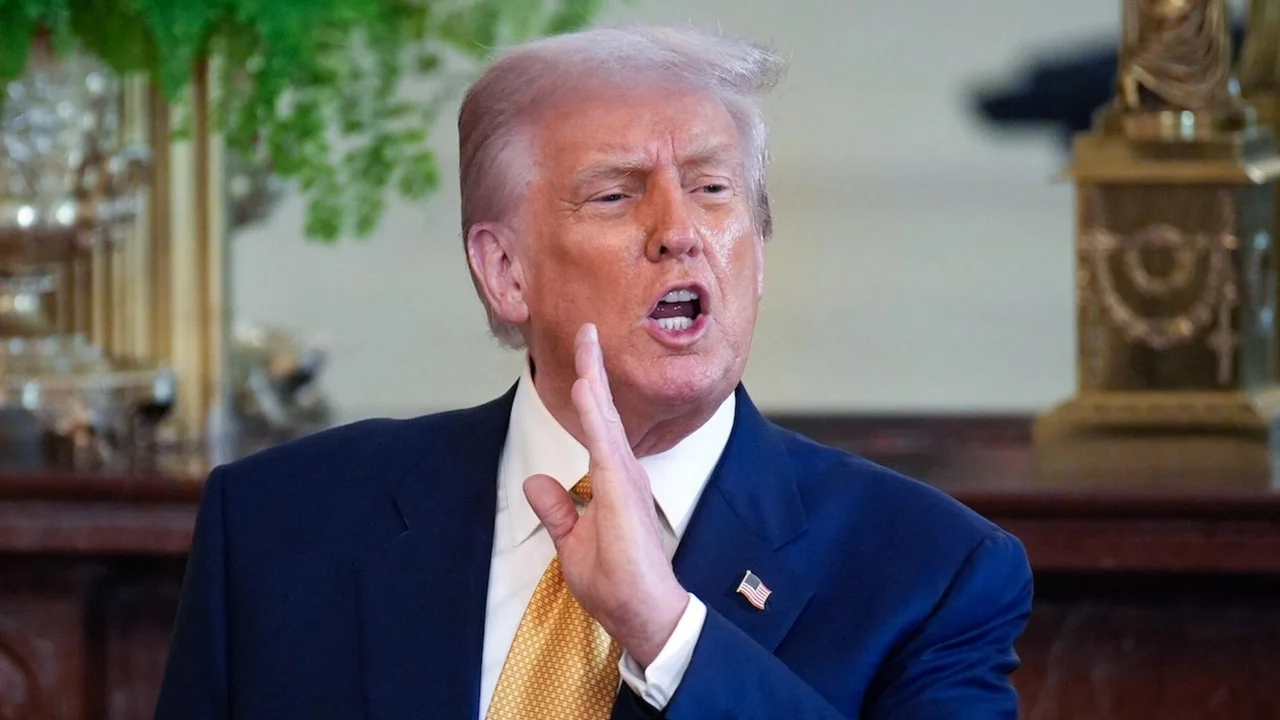
U.S. President Donald Trump says birthright citizenship was originally designed to protect the children of enslaved people, insisting it was never intended for “wealthy foreigners” travelling to the United States to give birth.
In an interview with Politico, Trump defended the executive order he signed on his first day back in office in January 2025, which sought to end automatic citizenship for children born on US soil.
He warned that a Supreme Court ruling against his administration would be “devastating”.
Trump’s Executive Order Faces Legal Pushback
The president argued that the legal foundation of birthright citizenship dates back to the Civil War era and “had everything to do with the babies of slaves”.
“That case was not meant for some rich person coming from another country … and all of a sudden their whole family becomes United States citizens,” he said, adding that he believed judges “understand it, too”.
The 14th Amendment, adopted in 1868, affirms that “all persons born or naturalised in the United States, and subject to the jurisdiction thereof, are citizens of the United States,” he said.
READ ALSO: Trump Signs Bill Ending Longest U.S. Govt Shutdown Amid Political Fallout
Trump’s policy declared that babies born in the US more than 30 days after his inauguration would no longer automatically qualify for citizenship, prompting multiple legal challenges.
Several federal courts initially blocked the order.
Supreme Court to Decide Constitutional Question
In June, the Supreme Court ruled that lower courts lacked the authority to issue broad nationwide injunctions against an executive order, allowing the justices to take up the constitutional issue directly.
Trump has maintained that ending birthright citizenship is necessary on economic grounds, arguing the US “cannot afford to house tens of millions of people”.
The Supreme Court is expected to hear arguments in the coming months, with a decision that could reshape immigration policy and redefine the scope of the 14th Amendment.

Rafiyat Sadiq is a political, justice, and human rights reporter with Pinnacle Daily, known for fearless reporting and impactful storytelling. At Pinnacle Daily, she brings clarity and depth to issues shaping governance, democracy, and the protection of citizens’ rights.