

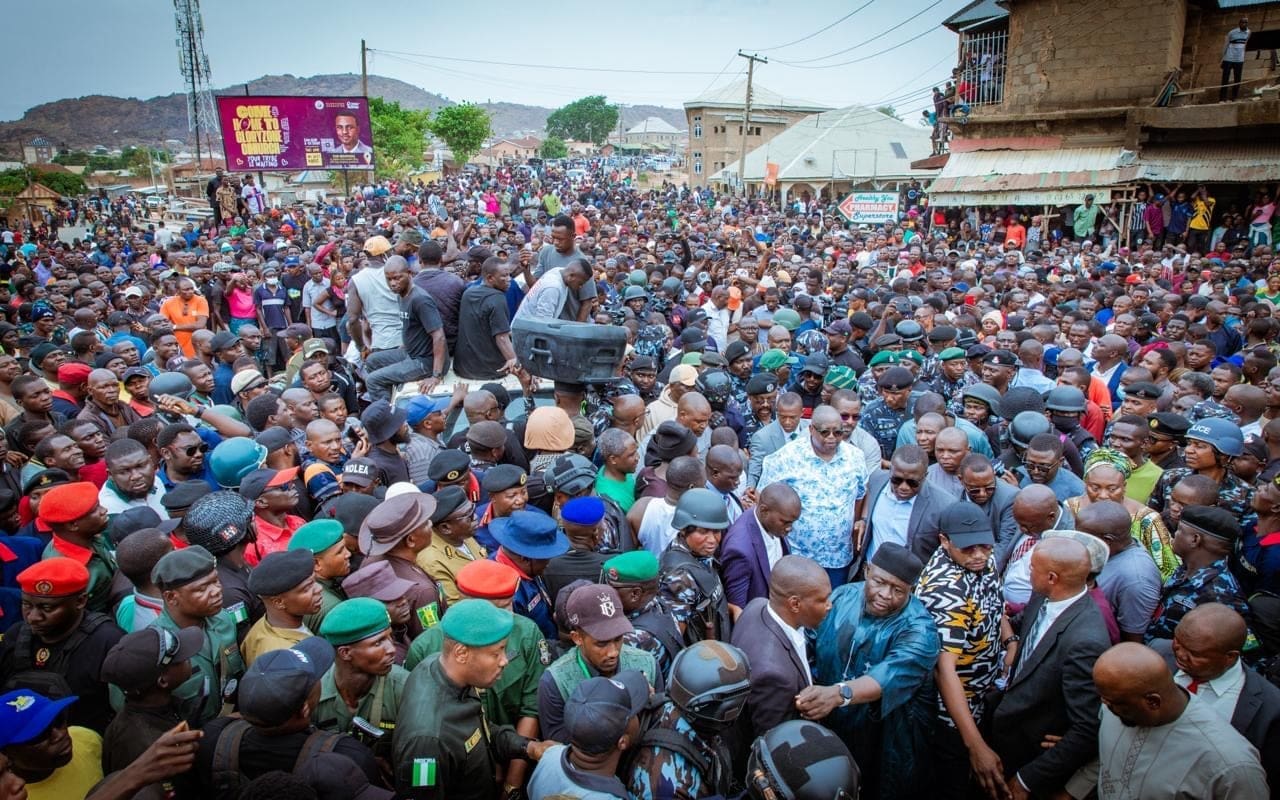
Nigeria is once again in the grip of grief and fear as fresh attacks in 2026 have left communities shattered and families buried in mourning, with no clear end in sight.
The deadly Palm Sunday attack in Agwan Rukuba community in the Jos North Local Government Area of Plateau State has become the latest symbol of a worsening crisis. Worshippers who gathered for prayer were struck in a moment meant for peace. The assault left deaths, injuries, and renewed trauma across Plateau State.
Security expert Steven Okwori says the country is now facing a dangerous pattern of killings without justice, repeated attacks without consequences, and rising fear without protection.
A Peaceful Weekend Turns Deadly
In the quiet villages across Plateau and Kaduna States, the weekend began like any other, soft light stretched over farmlands, and smoke curled gently from cooking fires. Farmers prepared to head out, while markets readied for the hum of trade.
In Kaduna State, residents had gathered in Kahir village, Kagarko LGA, Kaduna State, for a bachelor’s eve celebration when suspected bandits attacked.
Thirteen people were killed, several others were injured, and at least 28 were abducted.
By the following day, instead of celebrating Palm Sunday together, a middle-aged woman in Jos found herself clutching the lifeless body of her teenage son, Promise, urging him to breathe, to wake up. The video of that emotional moment went viral on social media on Monday.
Promise was among the 27 residents killed on Sunday when gunmen invaded the Angwan Rukuba area of Jos North, Plateau State, and opened fire on residents. Many more were injured. By dawn, the full weight of the night’s horror began to settle.
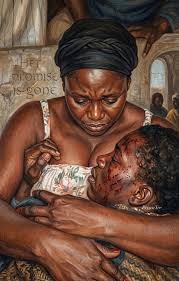
“Promise is the only male child that I have. But I give God the glory. He is the one who gave me, and He is the one who took him back,” his mother said a day after his death.
“I strongly believe that the blood of Promise and the innocent people that they killed will never go in vain. Even by mistake, if I’m quarrelling with him, he would say, ‘Mummy, I don’t want to see your tears.’ I know that Promise will fight this battle for me, because he would not allow me to shed tears like this.”
A curfew has been declared in the Plateau State capital. But it cannot halt the quiet procession of coffins, nor still the tears of a grief-stricken mother clutching her son’s lifeless body to her chest, her world collapsing in her arms.
Angwan Rukuba is in mourning. The soil, rich and waiting for the rains, is now soaked with the blood of its children, husbands, sons, and wives.
Emmanuel Daniel, a youth leader in the Angwan Rukuba community, said the attackers moved from house to house, forcing doors open and shooting indiscriminately.
According to eyewitnesses, some victims who fled to a nearby pharmacy for treatment were pursued and shot. By morning, the front of the building was stained with blood, its doors riddled with bullets.
Solomon Mwantiri, national president of the Berom Youth Moulders Association, said the attack reflected intelligence gathered weeks earlier, indicating that armed groups had moved into Plateau and other parts of the Middle Belt.
He alleged that the groups had established camps in preparation for attacks and that fighters linked to Bello Turji, a notorious bandit leader in the North-West, as well as others from Nasarawa and Southern Kaduna, had entered the state.
He said communities expected security agencies to act on such intelligence and prevent the attack.
Twenty-seven dead in Plateau and 13 in Kaduna. Forty lives gone.
At first glance, they are just numbers. But behind each figure is a face, a family, a life abruptly cut short. Together, they form a grim tally in Nigeria’s deepening insecurity crisis.
Nigeria’s Rising Toll of Killings and Kidnappings
Nigeria’s deepening insecurity is a grim backdrop to the latest attacks. All six regions of the country are plagued by distinct and, in some cases, similar security challenges, with active military operations ongoing in five of the six zones.
According to the National Human Rights Commission, at least 3,584 killings and 3,012 kidnappings were recorded across the country between January 2024 and April 2025. Kaduna, Benue, Katsina, and Plateau remain among the most affected states.

In Plateau State, research by Amnesty International documented hundreds of attacks on rural communities in recent years, contributing to the displacement of tens of thousands of residents.
A report also indicated that 10,217 people were killed in the first two years since President Bola Ahmed Tinubu assumed office. Benue recorded the highest toll, followed by Plateau.
In November 2025, President Bola Ahmed Tinubu declared a national security emergency following a wave of attacks in Kebbi, Niger, and Kwara states that left more than 350 people abducted within days.
Yet, the violence has persisted. A February report by Pinnacle Daily documented over 300 civilian deaths across the states in just seven weeks of 2026.
In the days that follow such attacks, statements are issued, condemnations are made, and promises of investigations and justice echo across official channels.
But for those who live this reality, the aftermath is immediate and personal. A young boy in Kaduna now faces a future without his father. Promise’s mother must rebuild a home where her son exists only in memory.
For now, there are bodies to bury, often hurriedly, sometimes in mass graves.
As the sun sets on another weekend, communities in Plateau and Kaduna are left to pick up the pieces, and the country is once again confronted with the unanswered question of how to stop the next weekend from becoming another chapter in this decade-long tragedy.
READ ALSO:
- Plateau Attack: Police, Community Clash Over Death Toll
- 2026 Death Map: How Terror Violence Has Killed Over 300 Nigerians in 7 Weeks
- How Money Laundering Empires Feed Violence in Nigeria
- Night of Terror in Jos As Gunmen Attack Plateau Community, Casualties Feared
While official nationwide figures are not yet consolidated, reports indicate that hundreds of Nigerians have been killed in violent attacks across multiple states since January 2026.
Independent estimates suggest that in just 41 days earlier in the year, violence, including terror attacks, communal clashes, and armed robbery, claimed more than 1,250 lives across the country.
Experts warn that the true toll may be higher, as many rural attacks go unreported and some bodies are still being recovered in hard-to-reach areas.
What This Means for Nigeria
The spread of violence from the North-East to central and North-West regions and the targeting of both civilians and security forces underscores a deepening crisis that threatens national stability and public confidence.
With attacks continuing into April and no clear strategy yet emerging to curb the violence, many Nigerians now live in fear of where the next strike might occur.
A Cycle of Death and Empty Promises
Okwori delivered a blunt assessment of Nigeria’s security response.
He said the system is trapped in a cycle of attacks happening, lives being lost, and officials responding with statements, condolences, and promises that rarely translate into action.
“Every time Nigerians are killed, we hear the same messages,” he said. “But the killings continue.”
He questioned whether security agencies are overwhelmed, under-equipped, or failing to act decisively. He also raised concerns about intelligence failures and poor coordination.
“These are critical questions the government must answer,” he added.

Easter Approaches, Fear Intensifies
With Easter approaching, fear is spreading across Christian communities. Okwori warned that the recent Palm Sunday killings have heightened anxiety about attending church services.
Many worshippers are now asking: Is it safe to gather and pray?
Okwori questioned whether security forces are properly equipped and supported to confront the scale of violence.
He also raised concerns about political will.
“Is it that they do not know what to do, or that they are not being given what they need?” he asked.
He stressed that Nigeria’s Constitution places the protection of lives at the core of government responsibility.
“In this case, that responsibility is not being fulfilled,” he said.
A Growing Crisis of Trust
Beyond the violence, Okwori warned of a deeper crisis: the erosion of public trust. Communities no longer feel protected. Families no longer feel safe. He said this breakdown weakens cooperation between citizens and security agencies.

“When people stop trusting the system, security becomes harder to achieve,” he warned.
Okwori urged the government to act decisively. He called for stronger intelligence gathering, better deployment of security forces, and accountability for attackers.
Most importantly, he stressed the need for justice. “Without justice, there can be no peace,” he said.
He warned that continued inaction will only embolden attackers and deepen Nigeria’s security crisis.
A Nation Waiting for Protection
Nigeria stands at a critical point as Easter approaches, and security expert Okwori has issued a stark warning: the time for words is over.
From Jos to rural communities across the country, fear has taken hold. Many Nigerians now live in uncertainty, unsure of the next attack or the next victim. As the Easter period draws closer, that anxiety has only deepened, especially in communities where gatherings are expected.
Okwori stressed that insecurity is no longer an abstract concern but a daily reality. He noted that Nigerians now live in constant fear due to unpredictable attacks spreading across different parts of the country.
He warned that without urgent and concrete action, the situation will continue to worsen. According to him, citizens remain vulnerable at home, in public spaces, and even during religious gatherings.
Okwori called for immediate and sustained measures to restore public confidence and ensure the protection of all Nigerians, regardless of religion or location.
With attacks persisting into April and no clear, effective strategy yet in place to curb the violence, many Nigerians are left asking a painful question, where will the next strike happen?

Esther Ososanya is an investigative journalist with Pinnacle Daily, reporting across health, business, environment, metro, Fct and crime. Known for her bold, empathetic storytelling, she uncovers hidden truths, challenges broken systems, and gives voice to overlooked Nigerians. Her work drives national conversations and demands accountability one powerful story at a time.