

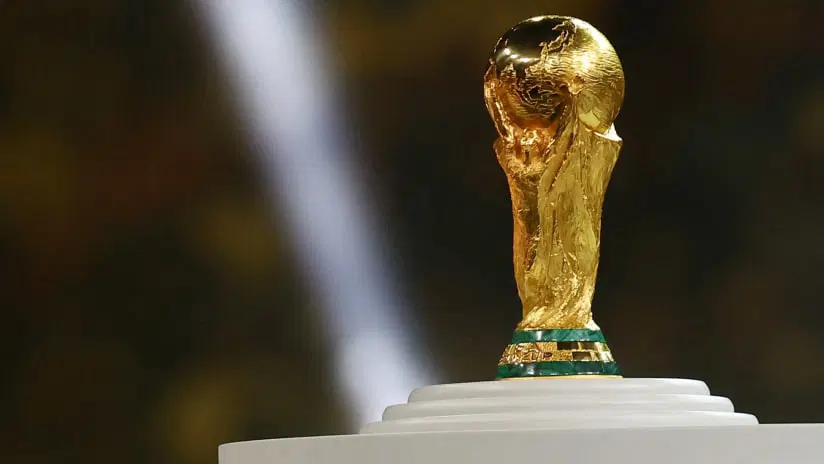
The FIFA World Cup 2026 is set to go beyond sporting excellence, becoming a global stage where football’s most valuable assets both in skill and earnings collide.
The tournament will feature players whose combined annual income crosses the $900 million mark, underscoring how football has evolved into one of the world’s most powerful entertainment industries driven by salaries, endorsements, and global branding.
From Saudi Arabia’s financial surge to Europe’s elite clubs and Major League Soccer’s commercial expansion, the 2026 World Cup will showcase not just talent, but the economic hierarchy shaping modern football.
Cristiano Ronaldo: The Undisputed Financial Benchmark
Cristiano Ronaldo leads the list with an estimated $216 million annual income at Al Nassr. The Portuguese icon remains football’s highest-paid player, a status reinforced by his Saudi Pro League contract and massive global endorsement portfolio.
Even in the later stages of his career, Ronaldo continues to dominate both sporting influence and commercial value, setting a financial benchmark few athletes in any sport have matched.
Saudi Arabia’s aggressive investment in football is clearly reflected in this elite earnings list.
Karim Benzema earns about $112 million at Al Ittihad, maintaining his elite status even after leaving Europe. Sadio Mané follows with roughly $46 million at Al Nassr, where he now shares a league with Ronaldo.
Riyad Mahrez, at Al Ahli, commands approximately $60 million annually, highlighting how former Premier League stars have become central figures in the Saudi football project. Collectively, their earnings reflect a strategic shift that has repositioned the Saudi Pro League as a global financial powerhouse in football.
Lionel Messi and MLS: Turning Stardom into Global Commerce
Lionel Messi earns an estimated $80 million at Inter Miami, a figure that reflects more than just salary—it captures the commercial explosion his presence has triggered in Major League Soccer.
Since his arrival, MLS has recorded unprecedented growth in global viewership, ticket demand, and brand partnerships. Messi’s influence has transformed Inter Miami into one of the most commercially visible clubs in world football, reinforcing his status as a global sports icon whose value extends beyond the pitch.
Mbappé, Haaland and the New Financial Order of European Football
The next generation of football superstars is rapidly closing the gap in earnings, reshaping the sport’s financial future.
Kylian Mbappé earns around $37 million at Real Madrid, combining elite performance with massive global marketability. Erling Haaland follows closely with about $36 million at Manchester City, driven by his extraordinary goal-scoring consistency in the Premier League and UEFA Champions League.
These two represent the new commercial backbone of European football, where youth, performance, and branding converge into multimillion-dollar valuations.
Real Madrid’s Young Core and the Rise of Football’s Next Billion-Dollar Icons
Real Madrid continues to dominate football’s emerging financial ecosystem.
Jude Bellingham, at just 22, earns approximately $24 million annually, reflecting his rapid rise into global stardom after a breakout season in Spain. Vinícius Jr. earns around $23 million, powered by his pace, creativity, and growing influence as one of Brazil’s key attacking figures.
Together with Mbappé and Bellingham, they represent a generational shift where elite clubs are investing heavily in young talent that combines sporting dominance with global commercial appeal.
African Stars Maintain Strong Global Economic Footprint
African footballers remain strongly represented among the world’s highest earners.
Mohamed Salah earns about $25 million at Liverpool, continuing to serve as one of the Premier League’s most consistent performers and a global ambassador for African football. Sadio Mané and Riyad Mahrez further strengthen Africa’s presence in the top financial bracket, proving the continent’s continued influence on the global game.
READ ALSO:
- FIFA Rejects Iran’s Request to Move World Cup Matches from U.S. Despite Security Concerns
- FIFA World Cup: Things to Know about the Trophy
- How Trump’s Visa Freeze May Jeopardise Economy, World Cup
- Morocco Clinches Arab Cup After Thrilling 3–2 Win Over Jordan
When combined, these ten players generate more than $900 million annually, reflecting football’s transformation into a high-stakes global industry where talent, branding, and market forces are deeply interconnected.
As the 2026 World Cup approaches, the focus will extend beyond goals and trophies. It will also be a display of how elite players shape global entertainment economics, influence international fan culture, and define the commercial future of football at its highest level.

Esther Ososanya is an investigative journalist with Pinnacle Daily, reporting across health, business, environment, metro, Fct and crime. Known for her bold, empathetic storytelling, she uncovers hidden truths, challenges broken systems, and gives voice to overlooked Nigerians. Her work drives national conversations and demands accountability one powerful story at a time.