

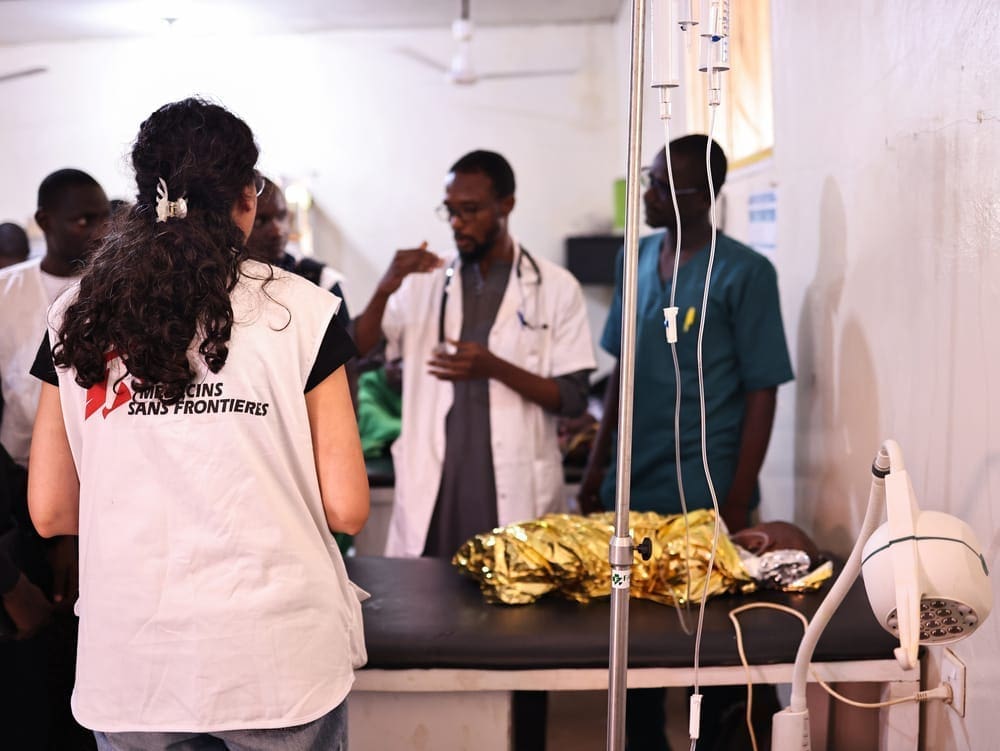
Nigeria recorded the highest level of malnutrition in 2025 among 77 countries where Médecins Sans Frontières (MSF) operates, the organisation’s Country Representative for Nigeria, Dr. Ahmed Aldikhari, has revealed.
Aldikhari disclosed this in Abuja during the launch of MSF’s 2025 Country Activity Report for Nigeria, which highlighted worsening malnutrition, repeated disease outbreaks and persistent maternal healthcare challenges across the country.
According to the report, malnutrition and recurring disease outbreaks reached alarming levels amid major gaps in healthcare access and funding.
Speaking at the event, Aldikhari described the situation as deeply troubling, noting that Nigeria recorded the highest number of malnutrition cases among all countries where MSF operates.
“Malnutrition was one of the biggest highlights that we witnessed in Nigeria. The malnutrition cases we had in Nigeria was the biggest in the world and we are operating in 77 countries in the world,” he said.
He explained that MSF is currently working with the Nigerian government and relevant non-governmental organisations to tackle the growing crisis.
Aldikhari identified climate change, insecurity in northern states regarded as Nigeria’s food basket, poor infrastructure, inadequate health facilities, shortage of medical personnel, poor remuneration for health workers and funding gaps as major drivers of malnutrition in the country.
Over 440,000 Children Treated for Malnutrition
The report showed that MSF teams have witnessed a steady rise in malnutrition cases across northern Nigeria since 2022, with 2025 recording the highest admissions so far.
In 2025 alone, MSF treated 353,989 children suffering from severe acute malnutrition through outpatient programmes, while 90,723 children with severe complications were admitted into inpatient stabilisation centres in MSF-supported facilities.
Overall, more than 440,000 children received treatment for malnutrition across Nigeria during the year.
“The 2025 data tells a harrowing story: with over 440,000 children put on treatment, it is the year with highest admissions for malnutrition we’ve had in Nigeria in recent years,” Aldikhari said.
He warned that malnutrition and infectious diseases are now feeding into each other, worsening the vulnerability of children in affected communities.
“We are seeing a vicious cycle where malnutrition is both a cause and a consequence of diseases such as measles, malaria and diphtheria among others,” he added.
Disease Outbreaks Overwhelm Health Facilities
The report also noted that Nigeria continues to battle repeated outbreaks of infectious diseases including cholera, Lassa fever, measles, meningitis, diphtheria and typhoid fever, especially during the rainy season.
According to MSF, its teams treated 341,239 malaria patients, 38,753 children for measles, 6,123 patients for diphtheria and 985 meningitis cases in 2025.
The organisation stressed that disease outbreaks and malnutrition are closely linked, as repeated illnesses further weaken already malnourished children.
To contain seasonal outbreaks, MSF said it has continued to collaborate with federal and state health authorities to support vaccination campaigns, strengthen emergency interventions, distribute mosquito nets and reinforce medical supplies and personnel.
Aldikhari stressed that many of the diseases remain preventable through stronger vaccination coverage, improved sanitation, disease surveillance and timely healthcare access.
READ ALSO:
- Nigeria’s Oil Production Rebounds but still Misses OPEC Quota
- World Food Day: Experts Raise the Alarm over Persisting Food Crisis in Nigeria
- Nigeria’s Strategy to Fight Malnutrition Could Fuel Hypertension Crisis – Experts
- Life Expectancy: Nigeria Stuck at Bottom Globally Despite Decade of Gains
The report further highlighted Nigeria’s worsening maternal healthcare crisis, noting that the country still records some of the highest maternal and newborn mortality rates globally.
According to MSF, women in rural and conflict-affected communities continue to face major barriers to accessing healthcare due to insecurity, transportation challenges, overstretched hospitals, poor referral systems and the high cost of treatment.
In 2025, MSF assisted 33,590 deliveries, conducted 119,469 antenatal consultations and carried out 224 fistula surgeries across its supported facilities nationwide.
The organisation said many women continue to arrive at hospitals with severe complications linked to delayed access to care, including obstructed labour, excessive bleeding, infections and eclampsia.
MSF has operated in Nigeria since 1996, responding to disease outbreaks, malnutrition, maternal health emergencies, natural disasters and conflict-related crises.
In 2025, the organisation ran regular medical projects in Bauchi, Borno, Cross River, Ebonyi, Jigawa, Kano, Katsina, Kebbi, Sokoto and Zamfara states, while also establishing a new presence in Kaduna State.
Emergency interventions were also carried out in states including Niger and Adamawa.
Aldikhari called for urgent investment in primary healthcare, staffing, referral systems, equipment and emergency maternal services, particularly in underserved communities across the country.

Esther Ososanya is an investigative journalist with Pinnacle Daily, reporting across health, business, environment, metro, Fct and crime. Known for her bold, empathetic storytelling, she uncovers hidden truths, challenges broken systems, and gives voice to overlooked Nigerians. Her work drives national conversations and demands accountability one powerful story at a time.