

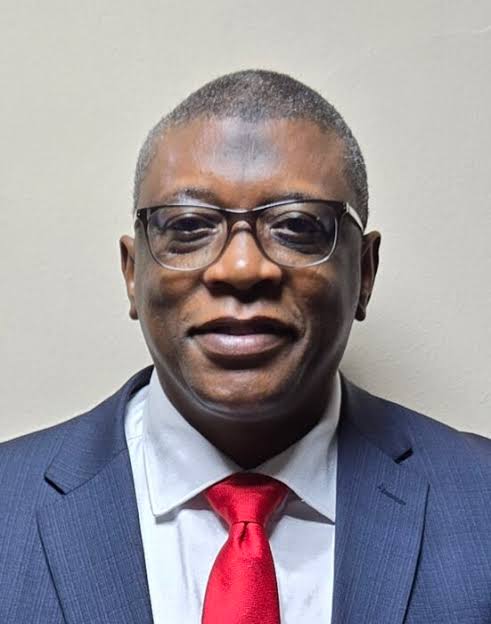
African countries pay more to borrow than comparable economies in other regions, and the way their risks are assessed is a major reason, the Director-General of the West African Institute for Financial and Economic Management (WAIFEM), Baba Musa, has said.
Speaking at a panel on the Debt Sustainability Framework, credit ratings and Africa’s risk premium, held on the sidelines of the IMF/World Bank Annual Meetings, Musa argued that outside perceptions and interpretations of African economies often put the continent at a disadvantage.
The United Nations Economic Commission for Africa (ECA) estimates the cost of this risk premium at about $75 billion a year in excess of interest payments, according to Hanan Morsy, its Deputy Executive Secretary and Chief Economist, who spoke on the same panel.
‘Assessed accurately, evaluate fairly’
Musa said African countries have spent about two decades asking for the same thing. “For a rating agency, the methodology should be comparable with international standards. However, what African countries have been asking for over the past 20 years is that they should be assessed accurately, their risks communicated proportionately, and their economies evaluated fairly,” he said.
READ ALSO:
- FG Faults: World Bank’s 124% Debt Interest Figure
- Global Debt Could Hit 100% of GDP by 2030 – IMF
- IMF Warns Energy Shock, AI Boom, and Record Debt Threaten Growth
- Deutsche Bank Sees More Naira Gains, Flags Borrowing Risk
- He stressed that this was not a request for preferential treatment or lower standards. He said the aim was methodologies that reflect the diversity, resources and economic circumstances of African countries. “Africa’s voice should be heard, and the continent should be assessed fairly, just like any other region,” he said.
AfCRA: test is transparency
The remarks come weeks after the launch of the Africa Credit Rating Agency (AfCRA) in Mauritius. It is meant to complement existing international agencies by bringing more African data, expertise and perspectives into assessments.
Musa said AfCRA’s success will depend on transparency, credible methodologies and its ability to capture the actual realities of African economies. Other panellists agreed. They also cautioned that the agency’s creation alone will not lower borrowing costs without stronger economic fundamentals and institutional credibility.
The debt framework needs joint ownership
Musa welcomed aspects of the revised Debt Sustainability Framework (DSF). He said it was progress that the framework now distinguishes between external debt distress, overall public debt distress and actual debt unsustainability.
He said countries facing liquidity pressure should not be assessed like those with solvency problems. Gross financing needs measured against gross domestic product and government revenue could give a more nuanced picture, he said.
He also said African governments should have a bigger role. In his view, countries should jointly determine the assumptions and projections used to judge their debt positions. He warned against cases where the IMF and World Bank rely on their own projections while governments hold different estimates of their outlooks.
Panellists back evidence, data and capacity
Morsy said African countries must make their own case with evidence, not words alone. “If you do not advocate for yourself, no one will,” she said. She said reliable data limits the room for discretion in credit assessments, and countries must be ready to supply evidence to support their outlooks.
Niger’s former Finance Minister Ahmat Jidoud said the DSF revision should not end efforts to improve debt assessment. He urged the IMF and World Bank to explain the models and assumptions behind the framework and to train finance ministry officials. He also raised concerns about how the revised framework treats domestic debt, particularly for the West African Economic and Monetary Union and the Central African Economic and Monetary Community.
Olivier Pognon, Chief Executive Officer of the African Legal Support Facility (ALSF), said stronger coordination and knowledge-sharing among African institutions are essential. The ALSF is developing a capacity-building platform for debt management offices and officials who negotiate public borrowing and major projects. It is due to launch in Abidjan at the end of November.
Wider pressure
Also at the Annual Meetings, IMF Managing Director Kristalina Georgieva said high and rising interest burdens, especially in low-income countries, were crowding out development spending. “Too many countries carry too much debt,” she said.
What it means
For African governments: Musa’s argument puts the onus on finance ministries as much as on the rating agencies. If countries want a say in the assumptions behind debt assessments, they need credible, timely data and the technical capacity to defend their projections. Morsy and Jidoud made the same point from different angles.
For Nigeria and West Africa: WAIFEM trains central bank and finance ministry officials across the region, so the capacity push has direct relevance for debt offices in Anglophone West Africa. Any gap between a government’s own forecasts and those of the IMF and World Bank carries a cost, because those assessments shape how investors price risk.
For investors: AfCRA adds a new source of analysis, but it will be judged on independence and methodology, not its origin. Panellists said acceptance by investors will determine whether it has any effect on borrowing costs.

Sunday Michael Ogwu is a Nigerian journalist and editor of Pinnacle Daily. He is known for his work in business and economic reporting. He has held editorial roles in prominent Nigerian media outlets, where he has focused on economic policy, financial markets, and developmental issues affecting Nigeria and Africa more broadly.