

Deobanks could mark the next stage of financial innovation by changing the underlying infrastructure that moves money and digital value, rather than simply offering another financial application.
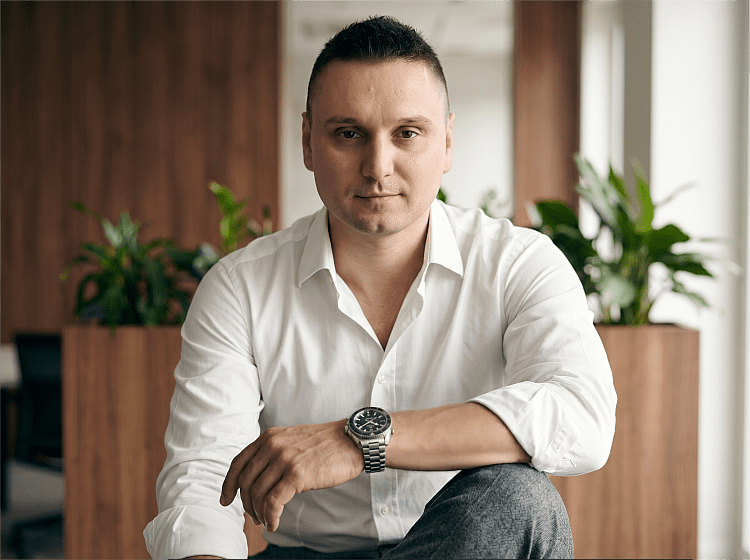
This is the view of Maksym Sakharov, chief executive officer (CEO) and Co-Founder at WeFi.co.
Sakharov made the argument in an op-ed shared with Pinnacle Daily recently, saying financial innovation has become too closely associated with what customers see on their screens, even though applications are often only the final layer of bigger changes in financial infrastructure.
He said neobanks have helped raise expectations around accessibility and user experience by demonstrating that financial services could be designed around customers rather than the operational limitations of traditional financial institutions.
However, Sakharov argued that the next major opportunity lies beneath the interface.
“Applications are often the final expression of much deeper changes taking place across financial infrastructure,” he said, adding that the industry’s opportunity is increasingly about improving how financial systems coordinate the movement of value.
Moving Beyond the Financial App
According to Sakharov, financial activity has become more complex even as digital products have made transactions appear simpler.
A business receiving a payment, for instance, may simultaneously have to deal with liquidity management, reconciliation, treasury operations, compliance checks, accounting and settlement across multiple institutions and jurisdictions.
READ ALSO:
- SEC Launches Fintech Clinic to Tighten Oversight, Protect Investors
- Stablecoins Thrive Where Traditional Finance Falls Short – WeFi CEO
- How Nigerian Banks Bet Big on Non-Banking Businesses
- ‘We Hope to List Fertiliser Company’ — Dangote
Consumers are also increasingly moving between payment methods, digital assets, financial platforms and international transactions.
While digital interfaces can make these activities appear seamless, Sakharov said the underlying systems remain fragmented.
“Businesses rarely experience finance as individual products. They experience it as one continuous commercial workflow where every additional handoff between systems introduces complexity, reconciliation, and operational overhead,” he said.
He argued that further improvements to customer interfaces could have diminishing commercial benefits if the infrastructure supporting them remains based on systems developed for an earlier financial environment.
Deobanks and the Infrastructure Layer
Sakharov said deobanks should therefore be viewed differently from other digital financial products.
A deobank, he explained, is a financial platform built on the Deobanking Model, which is designed for an increasingly onchain financial system.
Rather than adding another application layer to existing financial rails, the model is designed around an environment where settlement, digital value, onchain accounting, distributed custody and financial services can operate more directly together.
“The objective is not to make financial services feel different. It is to make the underlying infrastructure better suited to the way value increasingly moves across today’s economy,” Sakharov said.
He contrasted the approach with the role of neobanks, saying, “Neobanks largely transformed how people access financial services. Deobanks seek to modernise how those services operate.”
According to him, customers should still be able to pay, receive, transfer, hold, convert money and access credit through familiar and intuitive experiences. The difference would lie in the infrastructure supporting those services.
Technology Convergence Opens New Model
Sakharov said the Deobanking Model has become possible because several developments have matured together rather than because of a single technological breakthrough.
These include stablecoins, which have demonstrated new approaches to digital settlement; onchain finance, which has introduced programmable financial operations and shared accounting environments; and advances in distributed custody and multi-party computation, which have created new approaches to securing and managing digital assets.
He added that compliance-aware infrastructure is also helping connect these technologies to the requirements of regulated financial activity.
“Individually, each of these developments addresses a specific operational challenge. Together, they make a different financial operating model commercially viable,” he said.
Sakharov said the success of this infrastructure would ultimately depend less on whether customers recognise the technology behind it and more on whether it reduces operational complexity and enables financial activity to function more efficiently.
He said infrastructure becomes valuable when it is reliable enough to operate in the background without demanding users’ attention.
“The long-term success of deobanks will not be determined by whether users recognise the technologies supporting them,” Sakharov said.
Instead, he argued that businesses should be able to coordinate financial activity with less complexity while consumers continue to receive familiar financial services with greater capabilities.
Ultimately, Sakharov said deobanks represent an evolution in the operating architecture of financial services as value increasingly moves through a digital and interconnected economy.

Alex is a business journalist cum data enthusiast with the Pinnacle Daily. He can be reached via ealex@thepinnacleng.com, @ehime_alex on X