

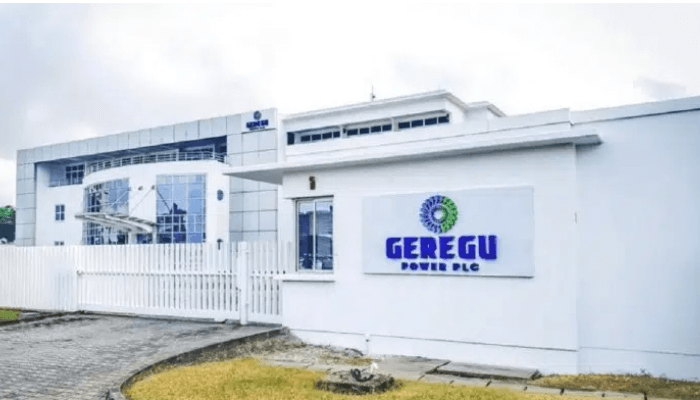
Geregu Power Plc has appointed Engr Mohammed Sani Jaoji as its acting Chief Executive Officer, effective Monday, August 17, 2026.
The appointment comes amid growing concerns over the company’s debt obligations and recent default on its bond repayment.
The company announced the appointment in a statement to the Nigerian Exchange Limited (NGX) and the investing public on Monday, saying it was subject to the approval of the Nigerian Electricity Regulatory Commission.
The appointment follows the expiration of the term of the company’s Interim Chief Executive Officer, Sean Manley, on August 14, 2026.
“The Board is confident that the appointment will strengthen the governance structure and strategic direction of the company pending the appointment of a substantive Chief Executive Officer,” Geregu said.
Jaoji brings more than three decades of experience in the power sector, including technical and leadership roles at the former National Electric Power Authority and Geregu Power.
He served as Head, Maintenance Planning and Performance at Geregu between 2007 and 2019 and was later a technical assistant to the Minister of Power from 2019 to 2023 before returning to the company.
The leadership change comes as Geregu faces questions over its ability to manage a growing concentration of debt obligations after defaulting on the eighth coupon payment and fourth principal repayment of its ₦40.09 billion Series 1 senior unsecured bond.
Geregu had earlier this year appointed Mr Sean Manley as its Interim CEO, effective February 2, 2026, stating that Manley would bring his over three-decade professional experience in the power sector to add value to the company, Pinnacle Daily reported.
Debt obligations put pressure on cash flow.
Pinnacle Daily analysis of Geregu’s unaudited financial statements for the six months ended June 30, 2026, shows that the company generated ₦85.58 billion in net cash from operating activities during the period.
READ ALSO:
- Geregu Power Engages Stakeholders Over ₦40.09bn Bond Default
- Geregu Power Appoints Siemens’ Sean Manley as Interim CEO
- Iran–US–Israel War: CPPE Flags Inflation Threat to Nigeria
- Trillions Budgets, Millions in Darkness: Why Nigeria’s Power Interventions are Failing to End Blackout
This was more than eight times the ₦10.37 billion used for interest and principal repayments.
The strong operating cash flow, however, does not eliminate concerns about the company’s liquidity.
The report shows that Geregu had ₦48.67 billion in borrowings, bonds and other obligations due within one year, while contractual cash flows of ₦38.04 billion were due within six months or less.
The company had ₦65.59 billion in cash and cash equivalents at the end of June against current liabilities of ₦179.82 billion.
Trade and other payables accounted for ₦96.40 billion, including ₦80.31 billion owed for gas.
Geregu’s operating cash flow was also supported substantially by a ₦135.34 billion reduction in trade and other receivables, while profit after tax stood at only ₦2.50 billion.
This makes the company’s ability to continue converting receivables into cash critical to its capacity to meet upcoming obligations.
Its total borrowings increased from ₦33.94 billion at the end of 2025 to ₦36.24 billion by June 2026, despite repayments during the period.
The bond payable declined from ₦34.15 billion to ₦29.86 billion, but ₦10.99 billion was classified as a current liability.
Rating withdrawal adds pressure.
The debt default has also affected investor confidence, with Agusto & Co. withdrawing Geregu’s ‘A’ rating after the company said previously issued financial statements were undergoing independent verification.
The rating agency said it no longer had “sufficient reliable information” to maintain its credit opinion.
“Pending completion of this review, Agusto & Co is unable to rely on the current audited financial statements and, therefore, cannot provide an opinion regarding the company’s creditworthiness,” the agency stated.
Geregu said in its August 12 statement that its board and management had undertaken a comprehensive review of its transactions, liabilities, operational commitments, financing arrangements and financial obligations.
“Discussions and engagements are ongoing, and the company will continue to act in good faith in fulfilling its responsibilities,” Geregu said.
The company’s finance costs also rose to ₦7.41 billion in the first half of 2026 from ₦6.81 billion a year earlier, against an operating profit of ₦8.48 billion.
With substantial obligations falling due and a significant portion of its cash generation dependent on receivables collection, Geregu’s immediate challenge is increasingly centred on managing the timing of cash inflows against its debt obligations.
The appointment of Jaoji therefore comes at a critical point for the power producer as it works to address its financial obligations and restore confidence among investors and other stakeholders.

Alex is a business journalist cum data enthusiast with the Pinnacle Daily. He can be reached via ealex@thepinnacleng.com, @ehime_alex on X