

By Esther Ososanya
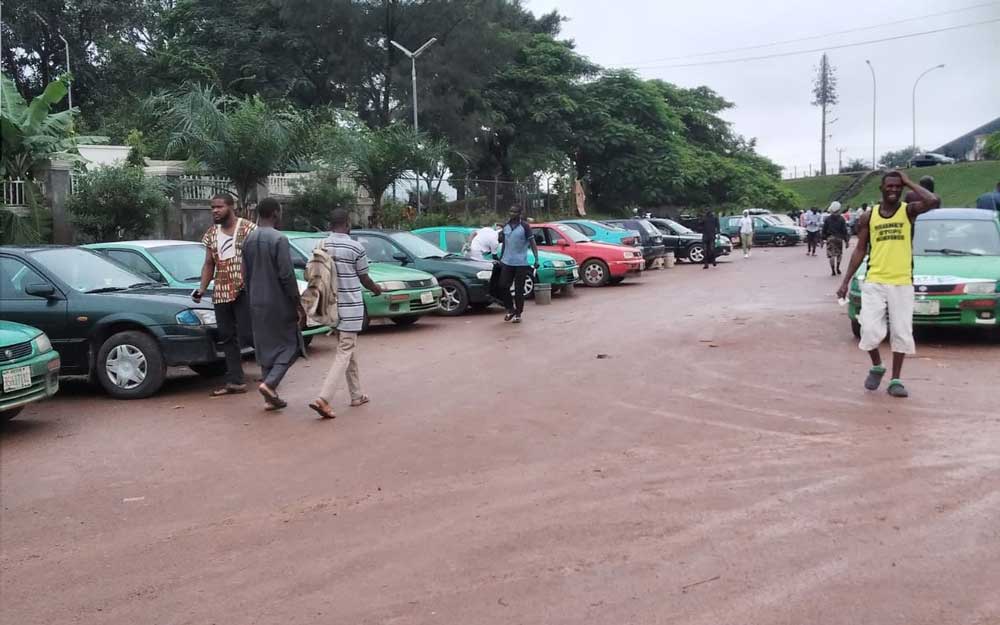
Commercial drivers in the Federal Capital Territory are raising the alarm over worsening inconsistencies in fuel prices across filling stations, warning that the rising costs paired with passenger resistance to fare hikes are crippling their daily income and pushing many closer to financial collapse.
For the past five days, the capital city has seen petrol prices swing wildly from one station to another, with no clear regulation or pricing ceiling.
Interviews conducted by Pinnacle Daily with Abuja-based transporters paint a picture of confusion, frustration, and a system spiralling into chaos.
“Fuel is killing our hustle,” said Mr Isaac Alake, a commercial driver operating the Lugbe–Airport route.
He said, “This morning, I bought fuel for ₦945 at the Shema filling station. But Mega Station is selling at ₦900, AP is at ₦955, and Corn Oil is doing ₦960. Even NNPC is selling at ₦900. There’s no uniform price anywhere.”
A City of Uneven Pumps—and Unreliable Litres
Across Abuja, petrol prices now vary by as much as ₦70 to ₦95 per litre, ranging from ₦900 to nearly ₦1,000 depending on the station.
Drivers say they are left at the mercy of whichever station is nearby or has fuel in stock, often with no guarantee of getting a fair price—or a full tank.
Beyond inconsistent pricing, some transporters have raised concerns about under-dispensing at some fuel stations.
“You’ll buy fuel and see ₦10,000 on the pump, but your gauge barely moves,” said Abdulsalam Suleiman, who operates along the AYA–Mararaba axis.
“We suspect some stations are cheating us by selling incomplete litres. It’s bad enough that the price is high; now we don’t even trust the measurement,” he added.
This combination of inflated prices and suspected manipulation has left many drivers doubly shortchanged, paying more for what may be less.
With daily fuel costs now averaging between ₦18,000 and ₦25,000 depending on routes, many drivers say they are operating at a loss and struggling to stay afloat.
Passengers Say ‘No’ to Fare Increases
Despite rising operating costs, attempts to adjust transport fares are often met with backlash from commuters.
“I told one passenger I needed to raise the fare to ₦23,000 for the airport trip,” Mr Isaac said. “She told me she only budgeted ₦20,000 and couldn’t pay more. How do we survive like this?”
For many Abuja commuters, inflation has already stretched their budgets thin. Transportation costs are typically pre-planned, leaving little room for spontaneous fare hikes even when drivers explain the fuel situation.
“We try to explain, but people either argue or get down from the car,” Suleiman added. “Everyone is struggling, but we’re the ones spending the most just to keep the car moving.”
The Deregulation Dilemma
Since the federal government fully deregulated the downstream oil sector, petrol prices have become market-driven, leading to wide variations based on location, supplier, and logistics.
But in the absence of a pricing benchmark or strict enforcement, many drivers believe fuel marketers are taking advantage of the situation.
“There’s no PRP—Petroleum Retail Price—anymore,” said Mr Sunday Obi, a transporter who plies the Berger–Kubwa route. “Everyone just sells at their own price. It feels like there’s no oversight.”
READ ALSO: 5% Fuel Tax Could Derail Economy, ActionAid Warns
With schools resuming in less than a month and holidaymakers returning to the city, transporters fear the situation could worsen if petrol prices continue to rise or remain unstable.
For now, many drivers say they make daily decisions based on fuel availability and commuter tolerance but warn that if conditions don’t improve soon, more transporters may be forced out of business.
“We’re not asking for much,” said Mr Sunday. “Just a stable system. A pump price we can plan around. Something to show passengers when we need to adjust fares. Right now, we’re all just guessing.”
Reacting to the development, the Independent Petroleum Marketers Association of Nigeria (IPMAN) has attributed recent fuel price increases to market deregulation and fluctuating international crude oil prices, rather than opposing price reductions.
IPMAN emphasised that prices are determined by market forces, including crude oil prices, exchange rates, and individual marketers’ supply costs.
They clarify that while some marketers may have opposed price reductions in the past, this was not the official position of IPMAN.
Also, the Nigerian Midstream and Downstream Petroleum Regulatory Authority (NMDPRA) has repeatedly claimed that while it monitors pump prices in real-time, the era of setting uniform prices is over because the market is fully deregulated.

Esther Ososanya is an investigative journalist with Pinnacle Daily, reporting across health, business, environment, metro, Fct and crime. Known for her bold, empathetic storytelling, she uncovers hidden truths, challenges broken systems, and gives voice to overlooked Nigerians. Her work drives national conversations and demands accountability one powerful story at a time.