Director-General of the Securities and Exchange Commission (SEC), Emomotimi Agama, has said that Nigeria’s non-interest capital market valuation of over ₦1.6 trillion is clear evidence of an enabling regulatory environment. Agama said this at the 7th African International Conference on Islamic Finance (AICIF) 2025 in Lagos, which was held on November 4 and 5. He …
Director-General of the Securities and Exchange Commission (SEC), Emomotimi Agama, has said that Nigeria’s non-interest capital market valuation of over ₦1.6 trillion is clear evidence of an enabling regulatory environment.
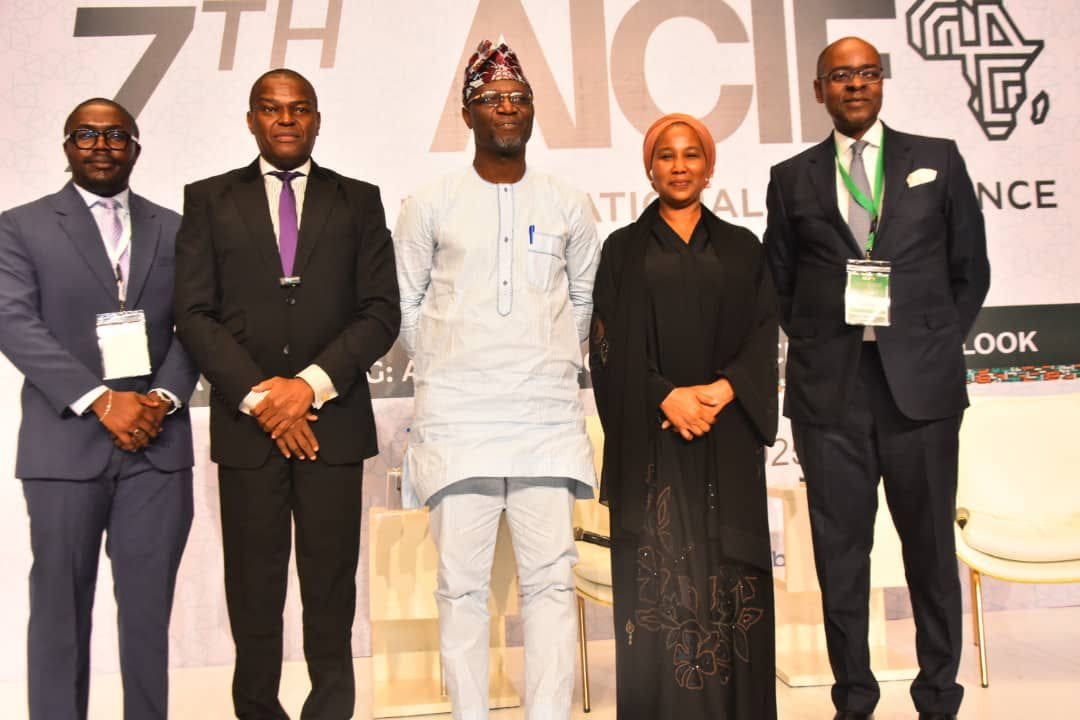
Agama said this at the 7th African International Conference on Islamic Finance (AICIF) 2025 in Lagos, which was held on November 4 and 5.
He stressed that the rise underscores the SEC’s expanding role in deepening financial inclusion and supporting infrastructure development.
According to him, the growth reflects investors’ confidence and the success of the Commission’s regulatory reforms under the Investments and Securities Act (ISA) 2025.
“The remarkable growth of the non-interest segment in Nigeria—a market now valued at over ₦1.6 trillion—is clear evidence that when there is an enabling regulatory environment, the market responds with vigour,” the SEC boss said.
He noted that the Nigerian sovereign Sukuk programme has raised over ₦1.4 trillion through seven issuances since 2017, financing the construction and rehabilitation of 124 critical roads covering more than 5,820 kilometres across the country.
READ ALSO: How 10 Most Capitalised Stocks Control over 60% of NGX Market Cap
He believes that the recent approval of a $500 million international Sukuk would mark the next phase of Nigeria’s effort to attract ethical financing for infrastructure and economic growth.
According to Agama, the rapid growth of Islamic finance across the continent shows Africa’s readiness to embrace non-interest instruments as a mainstream funding source.
He noted that Egypt, Kenya, Tanzania, Senegal, and Ghana are strengthening legal and policy frameworks to attract Shariah-compliant investments.
Commending the Metropolitan Skills for its role in advancing Islamic finance, Agama said resolutions from the conference would feed into the Second Nigerian Capital Market Masterplan (2026–2035), as the first plan concludes this year.
READ ALSO: FG Introduces Digital Tracking System for Varsity Funds, Performances
Pinnacle Daily reported that the first plan, which was a 10-year vision, failed to achieve half of its objectives.
Continuing, Agama urged stakeholders to continue using Islamic finance as a tool for ethical investment, financial inclusion, and infrastructure renewal, stressing that “prosperity without inclusion is not sustainable.”
Pinnacle Daily has earlier reported that Nigeria’s non-interest capital market valuation has grown to over ₦1.6 trillion.
In her address, the Conference Chairperson, Ummahani Ahmad Amin, said Islamic finance has made remarkable progress in Nigeria and across Africa.
READ ALSO: Nigeria’s Non-Interest Capital Market Valuation Hits ₦1.6trn – SEC
She, however, raised worries that the continent has yet to fully harness its potential as a reliable source of catalytic capital to bridge its annual infrastructure financing gap estimated at $130 billion to $170 billion.
She cited that although global Islamic financial assets grew by 14.9 per cent year-on-year to $3.88 trillion in 2024, Africa’s share remains marginal due to barriers such as underdeveloped market infrastructure, limited liquidity, and low investor education.
“To enable Sukuk and other Islamic financial instruments to serve as effective drivers of financial intermediation and macro-financial stability, we must first address the barriers that continue to constrain their growth,” Amin added.

Alex is a business journalist cum data enthusiast with the Pinnacle Daily. He can be reached via ealex@thepinnacleng.com, @ehime_alex on X