

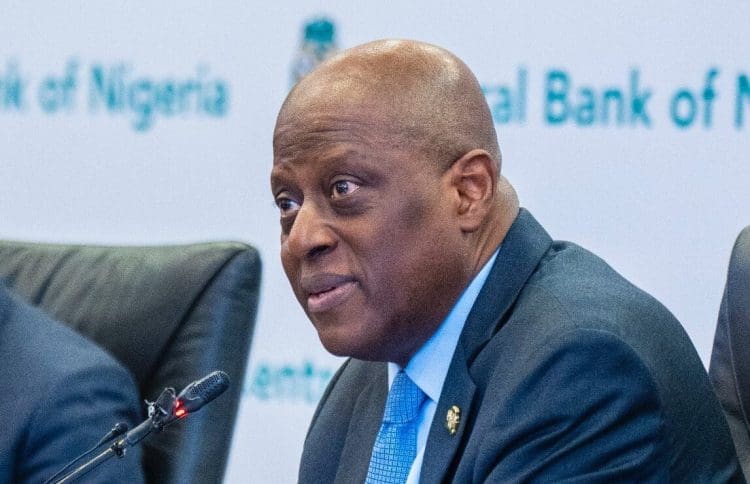
The Central Bank of Nigeria (CBN) has introduced a new banking policy framework that raises the cost of ATM card issuance while cutting a wide range of other charges, in a move aimed at making financial services cheaper, clearer, and more accessible.
It made this known in a circular signed by the Director of Financial Policy and Regulation Department, Rita Sike, noting that the new Guide to Charges by Banks and Other Financial Institutions in Nigeria (2026) will take effect from May 1, 2026.
The guidelines form part of a broader review of the 2020 rules, showing that while some fees, such as ATM card issuance, are now capped at higher levels, the regulator has significantly reduced or removed several everyday banking charges.
“This reviewed Guide provides for an increased range of financial services, encourages development of innovative products, strengthens responsibility for oversight and accountability and promotes financial inclusion through lower tariffs for micropayments/transactions,” it stated.
Under the new rules, the cost of issuing or replacing a debit or credit card is capped at ₦1,500, marking a notable adjustment in card-related fees.
However, the increase comes alongside broader cost reductions across the banking system.
CBN stated that transfers below ₦5,000 will attract no charges, while fees on larger transactions are capped at lower levels. ATM withdrawals from a customer’s own bank will remain free, and charges on other machines are limited.
In addition, customers will no longer pay for services such as account closure, reactivation, or receiving monthly statements, reducing the cost of maintaining a bank account.
Account Maintenance Fee to End
One of the most significant changes is the phase-out of current account maintenance fees. The charge will be reduced in 2026 and eliminated by 2027, easing a long-standing burden on bank customers.
READ ALSO:
- Explainer: 17 New CBN Banking Rules Every Customer Should Know
- Tinubu’s UK Visit Yields $1.5bn Deals but Falls Short for Nigerian Businesses
- BudgIT Flags Vague Projects, N8.67trn Opaque Votes in Nigeria’s 2026 Budget
- NGX Moves to Shake Up Free Float Rules to Attract Investors
- CBN’s New NOFR: What it Means for Interest Rates and Markets
These measures are designed to lower the cost of everyday banking, particularly for small transactions, while encouraging more Nigerians to adopt digital payment channels.
New Transparency Rules for Loans
The guide also introduces stricter rules on how banks present loan costs. All lending must now be quoted using the Annual Percentage Rate (APR), which combines interest and fees into a single, clear figure.
Banks are required to inform customers that loan terms are negotiable, give advance notice before changing interest rates, and allow a grace period before applying penalties for missed payments.
This is expected to improve transparency and help borrowers better understand the full cost of credit.
Stronger Protection for Customers
Customers are also protected from hidden or unfair charges under the new framework. Card payments at shops and online platforms will not attract fees for users, as merchants will now bear those costs within a capped limit.
Banks are further barred from deducting charges from accounts without sufficient funds. Any such charges must be deferred until the account is funded, preventing unauthorised overdrafts.
Broader Coverage, Tighter Oversight
The revised guide expands its coverage beyond traditional banks to include microfinance banks, mobile money operators, mortgage banks, and finance companies, reflecting the growing role of digital and non-bank financial institutions.
To ensure compliance, the CBN has introduced stricter oversight measures. Banks must configure their systems to allow only approved charges, while compliance officers are required to submit monthly reports on failed transactions.
“This reviewed Guide… strengthens responsibility for oversight and accountability,” the apex bank said, adding that the framework is also meant to “encourage increased adoption of electronic channels and accommodate new industry participants.”
The draft has been released for public comments, with stakeholders invited to submit feedback before the final version is issued.

Alex is a business journalist cum data enthusiast with the Pinnacle Daily. He can be reached via ealex@thepinnacleng.com, @ehime_alex on X