

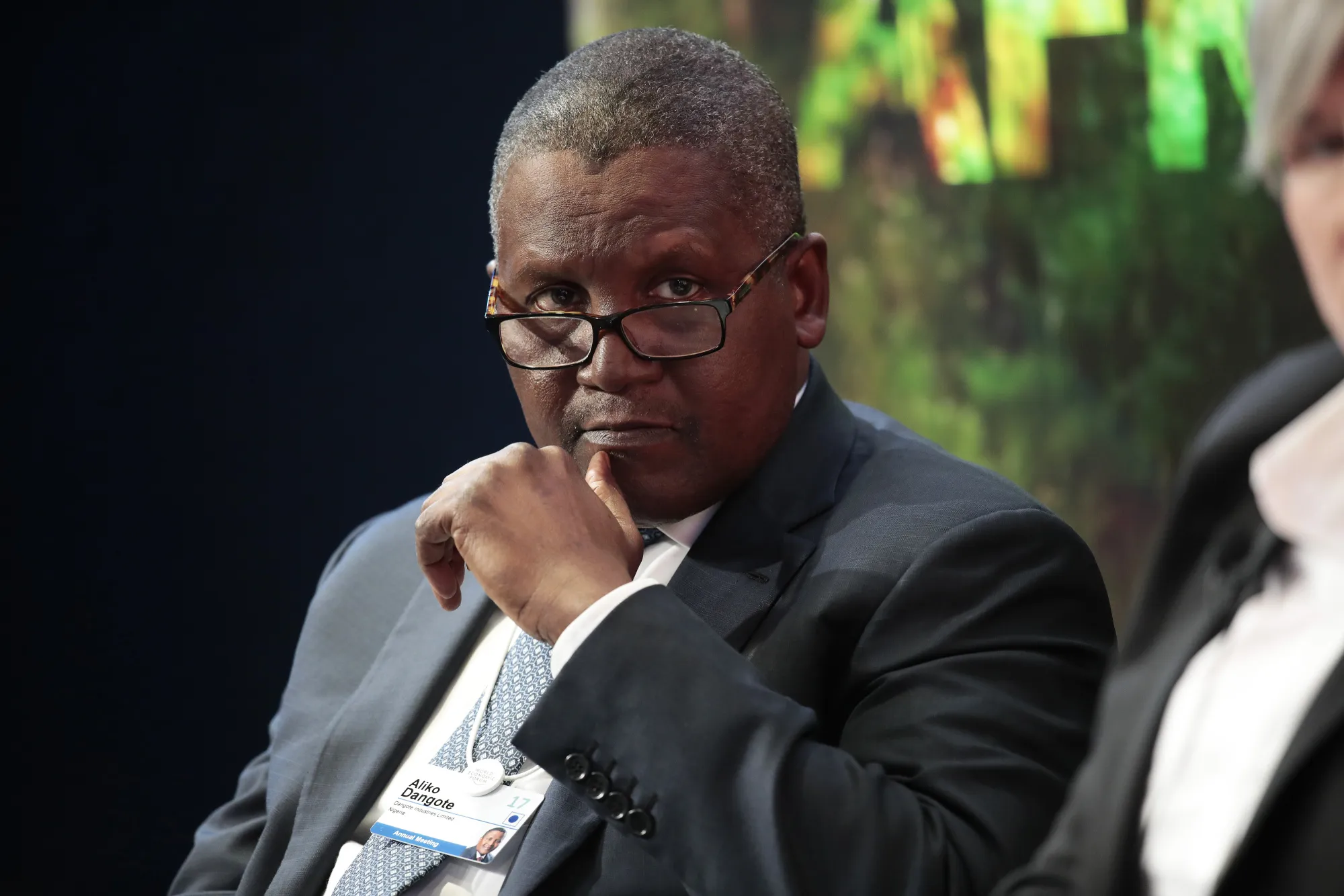
Africa’s leading industrialist, Aliko Dangote, has reiterated his position that true industrialisation of the continent can only be achieved by African investors leading the charge, not foreigners.
Dangote argued that the continent must reduce its dependence on foreign investors to achieve sustainable economic growth.
Speaking during a presidential panel session at an infrastructure summit in Nairobi, tagged “Africa We Build,” Dangote stated that for decades, Africa’s growth has been hindered by an over-dependence on foreign investors, many of whom, according to him, had little genuine interest in building sustainable local economies.
“We have made serious mistakes by relying too heavily on foreign investors. No investor will come without local leadership and domestic commitment. We must take the risk ourselves and build our own continent rather than wait for outsiders,” he stated.
He emphasised that Africa has the resources, talent, and market size to develop its own industries. He maintained that by prioritising local manufacturing, processing, and value addition (e.g., refining crude oil within Africa rather than exporting raw materials), African nations can retain wealth and create jobs.
Speaking on financing landscape, Dangote noted a shift. According to him, “In the past, many international financial institutions were not focused on developing Africa; their priority was their own interests. Today, however, we have institutions that are willing to listen to African entrepreneurs.”
The business magnate reiterated that no meaningful investment will materialize without strong domestic leadership and a firm commitment from within Africa itself.
His emphasis is on building local capacity, reducing Africa’s vulnerability to external shocks, as evidenced by the ongoing Middle East tension and the Russia-Ukraine war since 2022, among others, which have caused supply chain disruptions.
READ ALSO:
- Dangote Seeks to Build 650,000bpd Refinery in East Africa in Major Oil Sector Expansion
- Dangote Targets 15,000 bpd as Upstream Oil Assets Begin Crude Production
- Nigeria’s Footprint in U.S. Energy Market Shrinks as Crude Export Plunges 47%
- Nigeria’s Trade Surplus Rises to ₦1.71trn in Q4
Economic experts have pointed out that over-reliance on foreign capital makes African economies susceptible to global market fluctuations, currency volatility, and sudden capital outflows.
Dangote advocated domestic savings, regional investment, and stronger local financial systems to cushion against these risks.
He points to his own investments—such as the oil refinery in Nigeria, cement production across the continent, and fertilizer plants—as models of homegrown industrial development.
Previously, he had argued that strategic sectors like energy, infrastructure, and agriculture should be led by African entrepreneurs and governments.
Still on financing, Dangote noted that foreign loans and aid often come with conditions that undermine local industries. He therefore called for more self-reliant financing mechanisms, including diaspora bonds, pan-African development funds, and reinvestment of local profits.
Regional Integration
Dangote reiterated his support for policies like the African Continental Free Trade Area (AfCFTA), which encourages intra-African trade and reduces reliance on external markets.
He called on African leaders to support free movement across the continent by accelerating the adoption of visa-free policy, stressing that the current systems create significant barrier to trade.
He pointed out that currently, it is easier to move around the continent with foreign passports than African passport, which should stop.
“Why can’t we allow visa-free for all Africans? Please, we need to do that, because if we don’t really do that, it will be difficult to trade with somebody that you cannot get in and out easily,” he stated.

Victor Ezeja is a Nigerian journalist skilled in producing insightful news analyses, feature stories, and interviews that simplify complex issues and drive informed public discourse. His work combines rigorous research, balanced reporting, and compelling storytelling to highlight developments shaping industries and society. Victor, who holds a Master's Degree in Mass Communication, specializes in energy, aviation, business, and economic reporting. He can be reached via @VICTOREZEJA on X