

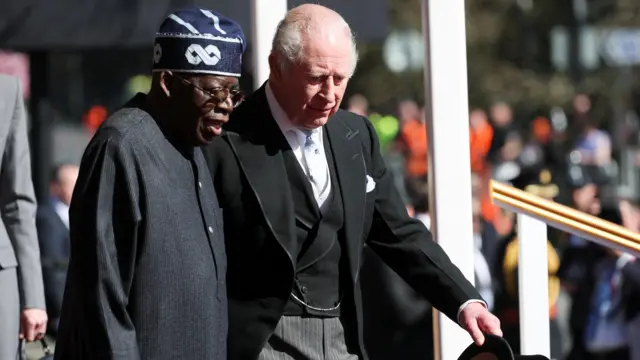
President Bola Tinubu’s recent state visit to the United Kingdom delivered about $1.5 billion in deals and strengthened diplomatic ties, but fell short of translating into clear benefits for Nigerian businesses, according to the Alliance for Economic Research and Ethics LTDGTE.
In a statement on Friday, 20 March, by its Chairman, Dele Oye, the organisation remarked that the visit was “a masterclass in diplomatic pageantry,” noting that the reception by King Charles III and the historic nature of the trip underscored its significance.
“On paper, the numbers are equally impressive,” the non-profit policy research organisation dedicated to evidence-based economic governance in Nigeria and Africa stated, citing agreements valued at about $1.5 billion and annual Nigeria-UK trade of £8.1 billion.
It noted that key outcomes included a £746 million UK Export Finance-backed port upgrade and a $496 million dairy investment, alongside expansions by Nigerian firms such as Zenith Bank, LemFi, Moniepoint and Kuda in the UK market.
It, however, questioned the real impact of the visit on Nigerian businesses.
READ ALSO:
- Nigeria’s Oil Revenue Falls 24.7% Short of Target in 2024
- Why Nigeria may not Benefit from Oil Price Surge
- 2026 Budget: Tinubu, Shettima to Spend ₦8.74bn on Travels
- Nigeria, UK Sign £746m Deal for Apapa, Tincan Ports Upgrade
- CSOs Oppose Lagos CP Promotion, Seek Probe Over Soweto
- How Strong Naira Lifts Imports, Pressures Exports, State Revenues
It asked, “Was this a triumph of government economic diplomacy, or a missed opportunity masked by private sector resilience?”
The organisation argued that while the visit delivered strong optics, it lacked a clear commercial strategy.
“What was conspicuously absent… was a concrete, forward-looking roadmap for transforming this ‘special relationship’ into measurable economic outcomes for Nigerian businesses,” it said.
The group also pointed to weak government participation at key business events, stating that the Nigeria-UK Business Forum was “notably under-attended by senior federal government officials,” adding that this “signals a severe lack of coordination and a failure to prioritise trade diplomacy.”
On the major port financing deal, the organisation said the benefits may be skewed.
“We must call it what it is: infrastructure financing that primarily benefits UK contractors,” it said, noting that it improves import logistics but does little to support Nigerian exports.
“It reinforces Nigeria’s role as a market for British goods rather than positioning us as an export powerhouse,” it added.
The organisation further noted that the success of Nigerian banks and fintechs in the UK was not driven by the visit.
“These are the fruits of organic private sector dynamism… not the direct result of presidential diplomacy,” it said.
It also criticised the lack of focus on Nigeria’s diaspora, despite its economic importance.
“The diaspora was celebrated for its cultural impact but ignored as an economic engine,” the organisation said, noting the absence of policies such as diaspora bonds or targeted investment channels.
According to the organisation, Nigeria needs to shift from symbolic diplomacy to results-driven engagement.
“The government excels at diplomatic symbolism, but it still struggles to effectively facilitate business,” it maintained.
It stressed that the real impact of the visit will depend on outcomes in the coming months.
“The true test… will not be measured in loans signed… but in what happens over the next six months,” he said.
“If Nigerian SMEs do not secure new UK market access… then this historic trip will have been little more than an expensive, beautifully orchestrated photo opportunity,” it said.
Urging that future engagements must prioritise local businesses, it added, “Nigeria is undeniably open for business, but it is time our diplomatic engagements put Nigerian businesses… at the absolute centre of the stage.”

Alex is a business journalist cum data enthusiast with the Pinnacle Daily. He can be reached via ealex@thepinnacleng.com, @ehime_alex on X