
As global oil prices remain volatile and Nigerian commuters grapple with soaring petrol costs, the Federal Government’s push for Compressed Natural Gas (CNG) has emerged as a compelling alternative.
President Bola Tinubu’s recent order for the immediate deployment of 100,000 CNG conversion kits further highlights the urgency to wean the country off expensive imported fuel. But despite these efforts, adoption remains sluggish, infrastructure is inadequate, and public scepticism persists.
Industry experts have argued that while the foundation has been laid, coordinated action across multiple fronts is needed to truly make CNG the game-changer it promises to be for transportation costs.
Current state of CNG
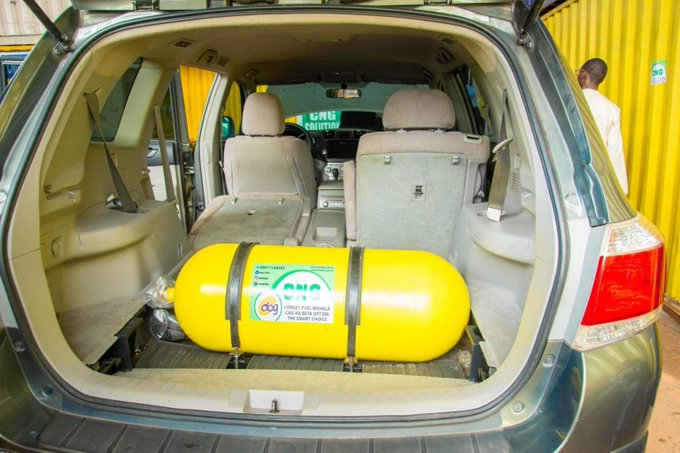
Since the launch of the Presidential Compressed Natural Gas Initiative (Pi-CNG) in 2023, following the removal of fuel subsidy, the country has continued to make efforts toward increasing CNG adoption. Over 100,000 vehicles have been reportedly converted from petrol to CNG, with the number of certified conversion centres increased to over 300 from seven in 2023 and more than 68 licensed refuelling stations and about 150 under construction.
The initiative has also attracted significant private capital. Pi-CNG Executive Chairman Ismaeel Ahmed recently disclosed that the sector has drawn over $2 billion in private investment, creating approximately 80,000 direct jobs. The government is targeting $5 billion in investment and 300,000 direct jobs by 2027.
However, these figures tell only part of the story. Nigeria missed its 2025 targets for conversion centres and refuelling stations, achieving about 300 centres against a goal of 500, and just over 40 stations against a target of 150. More concerning, the 100,000 converted vehicles represent less than one per cent of Nigeria’s 12 million registered vehicles. States and government agencies continue to procure petrol-powered vehicles, raising fundamental questions about policy coherence and institutional commitment.
Affordable Financing to Boost CNG Adoption
Financial expert, Kalu Aja, has highlighted measures the Federal Government can take to deepen the adoption of CNG across the country.
Aja, who noted that CNG has high setup costs, said it is cheaper in terms of running it recurrently after installation, calling on the authorities to take the right steps towards making CNG the future dominant fuel for transport.
In a post via his X handle, Aja said the best way to increase access to CNG kits is for the government to create a 4-year loan scheme with a zero-interest rate to be repaid annually by vehicle owners.
He stated that this strategy would encourage many vehicle owners who can’t afford the high upfront cost of installing or getting CNG vehicles.
“Long term, CNG should be the future for Nigeria. CNG is cheaper in terms of running costs but has high setup costs,” Aja stated.
“A simple way to fund this is to offer the kit under a 4-year zero-interest loan, paid annually when the car owner renews their car insurance.”
He further stressed that the adoption of CNG by commercial bus operators would significantly drive down the cost of transportation, currently rising because of the high cost of petrol and diesel. According to him, the increased use of CNG would help to make more petrol available for export and also reduce gas flaring.
“If commercial buses adopt CNG, you could potentially arrest rising transportation costs. This frees up more PMS for export and reduces gas flaring,” he added.
READ ALSO:
- Tinubu Orders Rollout Of 100,000 CNG Kits Nationwide amid High Fuel Prices
- How Conversion Cost, Scarcity Hinder CNG Adoption in Nigeria
- Energy Sufficiency: Can Solar Solve Nigeria’s Decades-long Power Crisis?
- Calls for Decentralised Power System Intensify as Grid Failure Persists
Reacting to Aja’s comment, an X user, Kayode Abraham, said investigations have revealed that there is a shortage of qualified technicians handling the retrofitting of vehicles with CNG kits, leading to poor outcomes. Abraham also cited the shortage of CNG-filling stations across the country.
Another user, Tayo Adepetu, said when the CNG initiative was launched in 2023, there was a programme unveiled by the Federal Government that allowed people to install CNG kits on their vehicles on credit. He queried what happened to the implementation of the initiative across the states, stressing that it could go a long way in increasing CNG adoption by motorists in the country.
The Infrastructure Imperative
Industry experts have stressed the need for accelerating infrastructure deployment to boost CNG adoption. They estimate that Nigeria needs hundreds of CNG stations to support a meaningful shift to gas-powered public transport.
The Midstream and Downstream Gas Infrastructure Fund (MDGIF) recently concluded discussions with Chinese manufacturer, Endurance Group, to build 500 CNG refuelling stations across Nigeria over the next three years. The collaboration will establish the CNG Auto Mobility Infrastructure Company (CAM InfraCo) as a government-backed Special Purpose Vehicle, involving the Bank of Industry and Séquor Investment Partners.
The project aims to deploy integrated refuelling stations, develop liquefied CNG gas supply infrastructure, and provide transportation trucks to form a “virtual pipeline” across all states. According to MDGIF Executive Director Oluwole Adama, this will help ease long queues at existing stations by expanding access and ensuring consistent supply through improved logistics.
Making Conversion Affordable
Since the CNG rollout, cost has remained a formidable barrier. Despite government subsidies, conversion fees range between N900,000 and N1.6 million per vehicle. For commercial transport operators and low-income vehicle owners, this upfront cost is prohibitive.
Apart from the zero-interest loan scheme recommended by Aja, Dr Kazeem Abubakar, an engineer and Assistant Director of Research at the National Centre for Technology Management (NACETEM), has advocated scaling up conversion incentives, particularly for those who need them most. This, according to him, is in the form of subsidies or support for the procurement of conversion kits for low-income vehicle owners and commercial operators.
Dealing with Safety concerns
While the government is rolling out policies to drive CNG adoption, analysts have noted that public scepticism about CNG safety and performance remains a significant challenge.
Dr Abubakar emphasised the importance of awareness and safety campaigns to clear doubts and rebuild trust.
He also stressed the need for policy consistency, noting that investors need predictability.
Gas analyst, Kayode Oke, echoed the need for the government to conduct enlightenment programmes to address safety concerns people have about using CNG.
In a chat with Pinnacle Daily, Oke stated that apart from saving cost in the long run, the use of CNG helps in reducing global emissions, contributing to deepening the clean energy agenda.
Speaking on CNG and safety, he said Nigerians should go for good-quality kits when doing vehicle conversion.

Victor Ezeja is a passionate journalist, scholar and analyst of socioeconomic issues in Nigeria and Africa. He is skilled in energy reporting, business and economy, and holds a master's degree in mass communication.