The push for a decentralized power system in Nigeria has intensified in recent times as the collapse of the national grid persists, becoming a major crisis for the country’s electricity sector. Multiple collapses in recent times have plunged different parts of the country into prolonged outages, disrupting homes, businesses, hospitals, and industries, with the attendant …
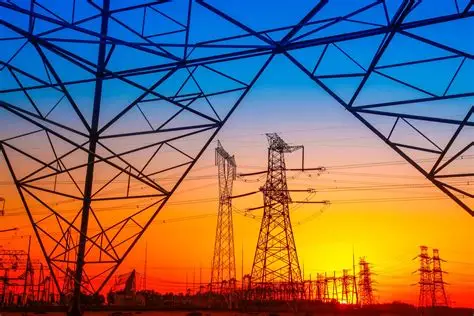
The push for a decentralized power system in Nigeria has intensified in recent times as the collapse of the national grid persists, becoming a major crisis for the country’s electricity sector.
Multiple collapses in recent times have plunged different parts of the country into prolonged outages, disrupting homes, businesses, hospitals, and industries, with the attendant social and economic implications.
The national grid has collapsed three times in less than a month (specifically on January 23 and 27, following a late December 2025 failure), plunging millions into darkness and reigniting debates over the country’s centralized energy system.
Recurring Grid Collapses
On Friday, January 23, 2026, Nigeria’s national electricity grid collapsed, causing a nationwide blackout. From over 4,500 megawatts (MW), it plunged to just about 24MW on Friday afternoon as all grid-connected power plants went off, recording zero on the Nigerian Independent System Operator (NISO), Grid Performance Dashboard. It reoccurred on January 27, when power generation plunged, with the 11 electricity distribution companies recording zero allocation from the grid.
NISO and distribution companies have confirmed system disturbances and collapses. NISO reported that the collapse was due to the simultaneous tripping of multiple high-voltage transmission lines and the disconnection of several power generation units from the grid.
This incident is part of a lingering pattern of instability in the power sector. Despite billions of naira investment in the power sector, the national grid collapsed about 105 times in 10 years (between 2014 and 2024). In 2024 alone, Nigeria recorded 12 cases of grid collapse and about five major incidents in 2025. This latest failure underscores persistent challenges of ageing infrastructure and inadequate maintenance identified as systemic weaknesses.
Energy experts and stakeholders have argued that the current system is no longer sustainable.
Decentralised Power System
In response to the persistent crashes of the national grid, experts and industry groups are increasingly advocating decentralised energy solutions to improve reliability by limiting nationwide outages when one part fails.
Advocates for a decentralisd system, often called Distributed Energy Resources (DERs), suggest shifting toward a model where power is generated and consumed locally.
They note that under the centralized system, there is high vulnerability as a minor fault at a single substation can trigger a “cascading failure”, causing all connected power plants to trip and dropping national generation to 0MW. NISO confirmed that the grid collapse that occurred on Tuesday, January 27, was caused by a voltage disturbance at the Gombe transmission substation, and quickly spread across the transmission network, affecting multiple substations.
Currently, Nigeria’s centralised grid system relies mainly on gas and hydro-powered plants for meeting national electricity needs. According to the Nigerian Electricity Regulatory Commission (NERC), there were 28 power plants connected to the national grid as of the third quarter of 2025. This, according to NERC, consists of five hydro plants, two steam plants, 19 Open Cycle Gas Turbine (OCGT), and two Combined Cycle Gas Turbine (CCGT) plants.
READ ALSO:
- Nigeria Records First National Grid Collapse in 2026
- Nigerians in Darkness again as National Grid Collapses Second Time in 2026
- GenCos Lose ₦987.92bn in Five Years Over Power Grid Failure
While Nigeria’s installed electricity generation capacity is 13,000MW, what is generated and wheeled to the national grid hovers between 4,000MW and 5,000MW. This, according to energy analysts, is a fraction of the amount of electricity needed to power the Nigerian economy and its population of over 200 million.
There are concerns that much of the grid’s transmission equipment is decades old and cannot handle the 13,000MW of installed capacity. The grid often buckles if generation exceeds just 5,000MW.
In a chat with Pinnacle Daily, an engineer with one of the DisCos, who pleaded anonymity, said Nigeria’s power problem is not really about generation alone. According to him, many DisCos are unable to take load when available power rises above 5,000MW because of old lines, overloaded transformers, and weak 33kV/11kV networks, which limit what they can safely offtake and distribute.
“When the load offered is more than the DisCos can handle, they reject it to prevent local breakdowns. That rejection creates imbalances on the grid and could trigger instability,” he stated.
Energy analyst, Nick Agule, said the grid collapse is traceable to decades of weak institutional reform in the power sector. He faulted the privatization process that left transmission in the hands of the government, insisting that it has remained a bottleneck to delivering efficient power supply across the country.
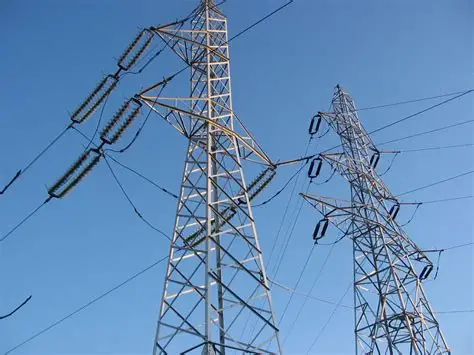
Agule said there has been no significant investment to strengthen the transmission capacity, making it impossible to wheel all that has been generated to the electricity market.
He said instead of focusing on tariffs and categorization of electricity customers into bands, the Minister of Power, Adebayo Adelabu, should have advised President Tinubu on the need to bring in private-sector investors into the Transmission Company of Nigeria to inject funds needed to upgrade the infrastructure.
“By today, the private sector would have sunk in the billions of dollars that are needed and we would be on our way to expanding the transmission capacity to pave way for the generation companies to put more power into the transmission, because some of the grid collapses, we see is generation trying to push a bit more power into transmission and transmission is so weak and it collapses,” Agule stated when he appeared on Arise News.
He said people (especially those in Band A) are paying more for power, but because of weak infrastructure, they are not getting the value.
He dismissed claims that transmission is such a high-security asset that should not be left in the hands of private sector players, arguing that the telecom sector today, dominated by private sector operators, is providing efficient telecom services.
Reacting to the recent grid collapse, economic expert and public affairs commentator, Dr Paul Alaje, highlighted the problems of the power sector in the country, which include ageing transmission infrastructure, weak grid management, lack of real-time control systems, gas supply disruptions, load rejection by DisCos, vandalism, and poor coordination across the value chain.
Alaje noted that the core issue is a lack of investment in critical subsectors and what he described as “weak institutional accountability.”
He highlighted the implications for businesses, healthcare, education and public services across the country.
“A dysfunctional power system directly constrains growth, jobs, and productivity,” Alaje stated.
He stressed that other countries, both in Africa and other parts of the world, faced similar challenges, but fixed them, and wondered why Nigeria’s own always ends with mere rhetoric.
According to him, what Nigeria needs is significant investment in modern infrastructure across generation, transmission and distribution segments, a decentralized power system, strong regulatory enforcement and serious private-sector participation.
“Nigeria’s solution is not rhetoric. It is modern infrastructure, full deployment of SCADA and digital controls, decentralised and state-level power generation, secure gas supply, strict regulatory enforcement, protection of critical assets, and serious private-sector participation,” Alaje stated.
“Power is not just electricity. It is productivity, industrialisation, and development. Until we fix the grid, we will keep debating symptoms instead of building functional systems that actually work,” he added.
Also commenting on the power sector challenges, a former Director-General of the Bureau of Public Service Reforms (BPSR), Dr Joe Abah, said over-centralisation has remained the major factor in Nigeria’s power problems.
He called for the creation of smaller power grids that cover different regions or areas to curb nationwide power outage that occurs when the national grid collapses.
“Why don’t we have several grids that cover smaller regional areas? Why should the whole country be in darkness at the same time?” Abah asked in a post on his X handle.
Also speaking on the incessant grid collapse, a Professor of Energy and Electricity Law at the University of Lagos, Yemi Oke SAN, also echoed that Nigeria’s power sector urgently needs decentralised, off-grid solutions.
Oke said the challenges in Nigeria’s power sector are human-induced. According to him, the law is there, but needs to be enforced appropriately, to get better results in the power sector. While giving an example of the Aba Independent Power Project (IPP) run by Geometric Power affiliated to former Minister of Power, Prof. Bart Nnaji, Oke said Nigeria needs to shift from operating a centralised electric power structure.

“We advocated a decentralized grid structure. At some point, it may be regionalized. We have advocated extensive off-grid solutions -mini-grid, mobile grid- that will free up the dilapidated grid that we have,” Oke stated.
He affirmed that apart from vandalism of power infrastructure in some parts of Nigeria, the country’s power grid system is old and likened it to the national pipeline system that encounters problem any time any weak part ruptures under pressure. He noted that modern reality is that the world is now going off-grid.
Electricity Act 2023 and Decentralised Power System
The Electricity Act of 2023 supports a decentralized power system model by empowering state governments to regulate their own electricity markets. By this, states can now establish their own electricity regulatory commissions to take over oversight from the federal NERC for intra-state operations; issue licences for the generation, transmission, and distribution of electricity within their borders, and also set up state-owned utilities to manage local grids, reducing the total dependence on the fragile national grid.
Currently, a couple of states have established their own State Electricity Regulatory Commissions (SERCs), including Lagos, Ondo, Enugu, Ekiti, Abia, Anambra, Bayelsa, and Gombe.
Prof. Yemi Oke questioned the viability of states that have created independent electricity regulatory markets in terms of having sustainable power structures to reduce tension on the national grid.
READ ALSO:
- Metering, Billing Trouble Nigerians as DisCo Complaints Drop 22%
- Eko DisCo Creates Subsidiary, Excel, to Take over Lagos Operations
- Dangote, NNPC Sign Landmark Gas Agreements to Boost Industrial Expansion
In an interview with Channels Television on Saturday, Oke said the states are yet to live up to their expectations two years after the Electricity Act came into effect. He mentioned that communities are still buying transformers, while individual customers are still paying for meters.
He called on states to attract foreign investors to invest in developing electricity infrastructure in their areas and move away from the national grid to accelerate development by powering households and businesses.
He also observed that technology has not been sufficiently deployed for the purpose of grid management. According to him, countries now use drones powered by artificial intelligence to monitor their transmission infrastructure and detect issues and quickly resolve them before they escalate.

Victor Ezeja is a Nigerian journalist skilled in producing insightful news analyses, feature stories, and interviews that simplify complex issues and drive informed public discourse. His work combines rigorous research, balanced reporting, and compelling storytelling to highlight developments shaping industries and society. Victor, who holds a Master's Degree in Mass Communication, specializes in energy, aviation, business, and economic reporting. He can be reached via @VICTOREZEJA on X