


The use of Compressed Natural Gas (CNG) as an alternative fuel is believed to be cost-effective and aligns with the global transition to clean energy agenda, but issues around conversion cost and availability of CNG have hindered the adoption in Nigeria.
Nigeria holds the largest natural gas reserves in Africa and ninth in the world, with approximately 206.53 trillion cubic feet. However, energy consumption has historically been dominated by petrol and diesel.
As a form of policy intervention after removing fuel subsidy scheme in 2023, President Bola Tinubu’s administration came up with an initiative to deploy CNG as an alternative fuel to ease the impact on Nigerians. This led to the launch of the Presidential Compressed Natural Gas Initiative (PCNGi) in 2023 to drive the agenda.
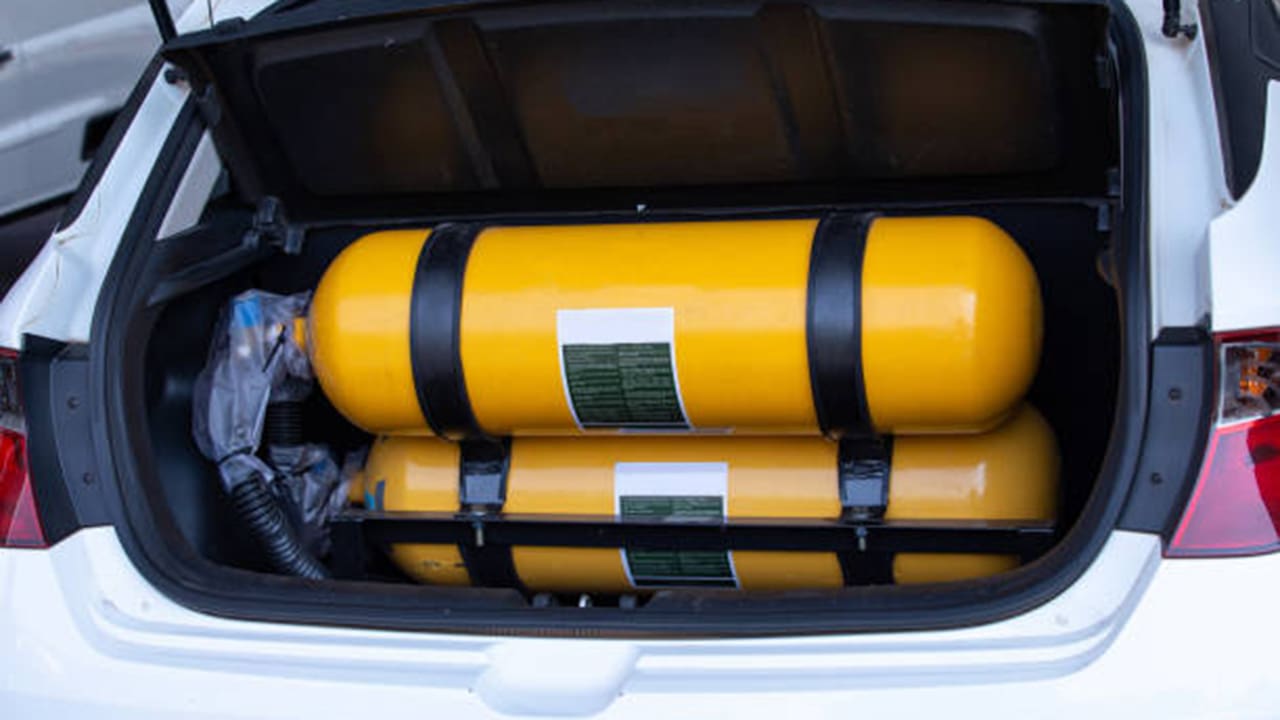
Part of the move is to accelerate the conversion of petrol and diesel-powered vehicles to use CNG, while the government also encourages the deployment of fully kitted CNG vehicles across the country.
On efforts towards CNG infrastructure expansion, the Federal Government says it has attracted more than $2 billion in private sector investments into Nigeria’s CNG industry and is aiming to increase the figure to $5 billion by 2027.
Executive Chairman and CEO of the Presidential Initiative on Compressed Natural Gas and Electric Vehicles, Ismaeel Ahmed, who made this known in Abuja on Friday, December 5, 2025, claimed that the CNG sector has witnessed a significant transformation since 2023 when the programme was launched. He expressed confidence that the $5 billion target will be realistic, adding that there is rising investor interest, which could push total investments into “double-digit billions” before 2027.
READ ALSO: Dangote Refinery to Slash Fuel Prices as CNG Truck Rollout Begins Soon
On job creation, Ahmed said the initiative has created more than 80,000 direct jobs, with projections to reach 300,000 by 2027.
He further stated that vehicle conversion centres have increased from seven in 2023, when the programme was launched, to 369 in 2025, with plans to reach 3,000 centres nationwide by 2027. He also said that licensed refueling stations have increased from 20 in 2023 to over 68 in 2025, with over 150 additional outlets currently under construction. He added that the target is to establish between 2,000 and 2,500 retail stations across the country by 2027.
CNG is said to offer motorists up to 90 per cent savings on fuel costs. However, its adoption has been hindered by both the scarcity of infrastructure and rising costs.
Limited Infrastructure and Supply
While some users have highlighted the benefits of using CNG-powered vehicles, such as reduced fueling cost and zero carbon emission, experts have observed that the most critical barrier is the underdeveloped distribution and refuelling infrastructure, which leads to actual and perceived scarcity for motorists.
READ ALSO: FG Denies CNG Price Hike, Blames Private Operators
The number of operational CNG refueling stations across the country is highly inadequate for the large population amid high dependency on road transport, and they are concentrated in a few urban centers (like Lagos, Benin, and Abuja). This creates anxiety among most vehicle owners, as they grapple with the fear of not finding a refueling station after a journey.
Chidinma Obi, CEO of Dindu Energy Services and Resources Limited, while noting that various policies and programmes on gas expansion and utilization are yielding benefits, however, stated that concerns about the cost of transition pose a threat to the adoption of CNG by Nigerians and businesses.
Scarcity here isn’t about the raw gas, but about the entire ecosystem needed to make CNG accessible to the end-user.
DG National Automotive Development and Design Council (NADDC), Joseph Osanipin, said in a televised interview that about 100,000 vehicles have been converted within one year across the country. This is still a far cry when compared to over 200 million people in the country. Even among those who have gotten their vehicles converted to use CNG, there are concerns about the scarcity of the product at refueling stations.
Pinnacle Daily’s check on the Presidential CNG Initiative website shows that over 5,000 technicians have been trained, while the PCNGi’s target is to have about one million private and commercial vehicles converted by 2027 through the CNG Conversion Incentives Programme.
So far, only a handful of states currently have functional CNG filling stations.
Osanipin said having conversion and refuelling centres requires significant investments. While mentioning that the target is to have about one million vehicles converted by 2027, the NADDC DG said it would be achieved once there are more investments in the infrastructure, emphasising the need for more private sector participation.
High Conversion Costs
While CNG offers long-term savings, the upfront cost of converting petrol engines is substantial and not easily affordable for the average Nigerian.
Pinnacle Daily gathered that a complete CNG retrofit for vehicles ranges from ₦1.3 million to ₦1.6 million, depending on vehicle size and the number of cylinders required.
This high upfront cost is a major disincentive, especially for low-income individuals and small commercial transport operators who may not have access to financing, despite the long-term fuel savings offered by CNG. This financial burden is significantly compounded by the absence of government-backed financing options or subsidies to ease the initial cost.
A commercial bus driver in Lagos, Benedict Edeh, lamented the cost of converting vehicles to run on CNG, saying it discourages many motorists from doing so. “We have heard that converting our vehicles to use CNG is good, but the cost is very high,” Edeh, who drives an eight-seater mini-bus, stated in a chat with Pinnacle Daily correspondent.
He added that the harsh economic reality in the country makes it difficult for both private and commercial motorists to raise over one million for vehicle conversion to run on CNG, even when they have to deal with other challenges, such as vehicle repair.
Rising and Volatile CNG Price
Although CNG is promoted as a cheaper alternative, its price has recently risen significantly due to factors like tariff adjustments linked to reduced government subsidies, rising input costs, foreign exchange pressures, and infrastructure bottlenecks.
The retail price of filling CNG in Nigeria generally ranges from ₦380 to ₦450 per standard cubic meter (SCM), with prices varying by vehicle type (such as passenger vehicles and commercial trucks) and location.
This pricing reflects a significant increase from the previous price of ₦230/SCM. While still cheaper than petrol (currently between ₦890 and ₦950 per liter) and diesel (above ₦1,000 per liter), observers believe this sudden price jump and volatility reduce the promised cost-savings, raising concerns among consumers about the long-term affordability and stability of CNG pricing.
In an interview with Pinnacle Daily, Kayode, a gas analyst who works with Ibile Oil and Gas Company (IOGC) in Lagos, highlighted the benefits of using CNG on vehicles, adding that the initiative would curb the practices of gas flaring, as more natural gas would now be captured and processed for use as CNG. He said many companies have invested in setting up CNG refueling stations to ensure there are enough stations across the country. He said IOGC will launch four stations before the end of this year and an additional 13 by mid next year in Lagos.
While admitting that the conversion cost is still not affordable to many vehicle users, Kayode called on the federal government to introduce more incentives in the form of a subsidy to mitigate the cost.
“I think the government needs to do something, maybe a subsidy, as a form of incentive that would encourage people to pay for the switch from using petrol or diesel to CNG,” Kayode stated.
The analyst also urged the government to create enlightenment programmes to address safety concerns that people have about using CNG in their vehicles.
Already, the government has put some measures in place to accelerate the adoption. Apart from the Presidential CNG Initiative, the federal government also launched the Nigeria Gas Expansion Programme (NGEP). However, there is still low adoption as the scarcity of the enabling infrastructure and market ecosystem, coupled with prohibitively high initial costs, persists.
CNG price hike sparks reactions.
The recent spike in the price of CNG has raised reactions from the public.
Economic expert Professor Imonokha Enakhena said the CNG price hike has made many Nigerians who have converted their vehicles to run on CNG regret their decision after incurring financial burden to do it.
“Many people, including commercial drivers, took on significant financial burdens (up to N1.5 million or more) to convert their vehicles based on this promise. The sudden price hike feels like the govt is moving the goalposts after ordinary folks have already invested heavily in it,“ Enakhena stated via X.
He argued that the new price of CNG, though still cheaper than petrol, significantly erodes the savings the people were enjoying.
While noting the impact of the price hike on cost of living, the economic expert expressed concern that it could force the people to revert to petrol, “negating the entire purpose of the CNG initiative and its promised benefits.”
According to him, instead of rolling out subsidies that would benefit the wealthy more than the poor, a more effective strategy would have been to introduce a scheme aimed at supporting low-income households and commercial transporters.
Beyond CNG, he emphasised the need for investment in a variety of alternative transport solutions, including electric vehicles and an efficient public transit system, “to provide a more resilient and affordable transport network for all Nigerians.”
Some X users complained about travelling long distance to refill. “I converted our Sienna, which we used as a school bus, to CNG. However, I had to stop using it because it became more expensive for us than using PMS, especially since the nearest refueling station was about 100 km away round trip. With recent price hikes, the situation has only gotten worse,” an X user stated.

Victor Ezeja is a Nigerian journalist skilled in producing insightful news analyses, feature stories, and interviews that simplify complex issues and drive informed public discourse. His work combines rigorous research, balanced reporting, and compelling storytelling to highlight developments shaping industries and society. Victor, who holds a Master's Degree in Mass Communication, specializes in energy, aviation, business, and economic reporting. He can be reached via @VICTOREZEJA on X