
Chairman, Presidential Committee on Fiscal Policy and Tax Reforms, Prof. Taiwo Oyedele has said Nigeria’s tax reforms aim to strengthen the capital market while promoting inclusive economic growth.
Prof. Oyedele stated this while highlighting the benefits of the benefits of the ongoing tax reforms in Nigeria.
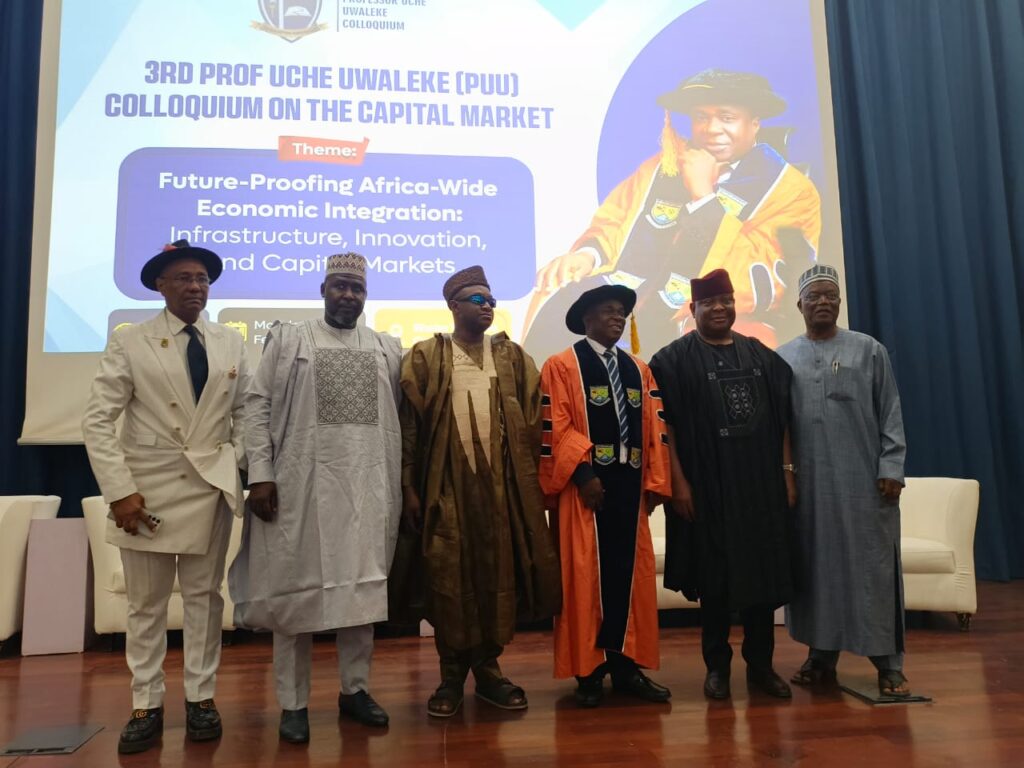
He spoke at the 3rd Professor Uche Uwaleke Biennial Colloquium on the Capital Market in Abuja on Monday, February 23, 2026.
He outlined measures in the new tax laws that support capital market operations such as capital gains tax exemptions for reinvested proceeds, higher tax-exempt thresholds for retail investors, corporate tax reduction from 30% to 25%, and removal of stamp duties on share transfers.
“These reforms encourage long-term participation, increase market liquidity, and strengthen the link between savings and productive investment,” Oyedele stated.
Experts highlighted positive results in Nigeria’s capital market, noting that it kicked off 2026 with record gains, showing growing investor confidence and the impact of fiscal reforms. By mid-February, the Nigerian Stock Exchange (NGX) All-Share Index had risen by 25.3% in just seven weeks.
Market capitalisation topped ₦125 trillion, supported by reforms, monetary policy adjustments, and strong performances in the energy, industrial, and financial sectors.
Capital Markets as Africa’s Economic “Bloodstream”
Uche Uwaleke, Professor of Capital Market at Nasarawa State University, described capital market as the “bloodstream” of Africa’s economic integration under the African Continental Free Trade Area (AfCFTA).
He urged domestic savings, pension funds, insurance assets, and sovereign wealth funds to flow into productive investments.
“For Africa-wide integration to succeed, our capital markets must deepen, broaden, and connect. Cross-border listings must be strengthened, regulatory cooperation enhanced, and investor protection made non-negotiable,” Uwaleke said.
Prof. Uwaleke stressed that integration requires more than finance.
“No economy integrates on paper alone. Roads, railways, ports, energy systems, broadband networks, and data centres must operate efficiently to support trade, industrialisation, and regional value chains,” he said.
He also highlighted innovation and digital skills for Africa’s youth. Sustainable finance, such as green bonds and climate-conscious investments, is crucial to ensure integration does not harm the environment.
Lawmakers Commit to Strong Governance
Senator Osita Izunaso, Chairman of the Senate Committee on Capital Market & Institutions, described the colloquium as a platform where policymakers, academics, and industry leaders meet. He commended Prof. Uwaleke for sustaining the biennial forum and said strong legislation, effective oversight, and credible regulation are vital for investor confidence.
“This forum provides the opportunity to turn ideas into actionable reforms that enhance efficiency, transparency, resilience, and innovation within our capital markets,” Izunaso said.
Academic Leadership in Capital Market Studies
Prof. Sa’adatu Liman, Vice Chancellor of Nasarawa State University Keffi, represented by Deputy Vice Chancellor Research and Innovations Dr. K’tso Ngharbu, welcomed participants and highlighted the university’s pioneering role through its Institute of Capital Market Studies.
“This colloquium bridges theory and practice, ensuring that academic insights inform policy and contribute meaningfully to national and continental economic progress,” Liman said.
Discussions focused on infrastructure, innovation, and capital markets. Speakers stressed the need for interoperable systems, harmonised standards, and coordinated investments to prevent fragmentation. Innovation, both technological and policy-driven, was highlighted as critical for competitiveness, supporting startups, research, and youth-led enterprises.
READ ALSO:
- SEC Capital Hike Triggers Survival Test for Nigeria’s Market Operators
- ₦2.9trn Raw Materials Export Surge Exposes Gaps in Value-Addition Drive
- Nigeria’s Exports to Africa Rise 14% to N4.82trn in H1 2025
- U.S. Proposes Critical Minerals Trade Bloc to Counter China’s Influence
Oyedele explained that fiscal and tax reforms support this vision. Reinvestment incentives, retail investor protections, lower corporate taxes, and elimination of transaction costs aim to attract patient capital, improve market liquidity, and strengthen the link between savings and investment.
Participants agreed that capital markets, infrastructure, and innovation must work together to ensure sustainable economic integration. They called for consistent policies, investment in digital and physical infrastructure, and stronger regulatory frameworks.
The colloquium concluded with a renewed commitment from academia, government, regulators, and industry stakeholders to leverage Nigeria’s capital market as a strategic engine for industrialisation, job creation, and Africa-wide economic integration.

Esther Ososanya is an investigative journalist with Pinnacle Daily, reporting across health, business, environment, metro, Fct and crime. Known for her bold, empathetic storytelling, she uncovers hidden truths, challenges broken systems, and gives voice to overlooked Nigerians. Her work drives national conversations and demands accountability one powerful story at a time.