
Lawmakers May Delay January 2026 Rollout Amid Alleged Alterations — Oyedele

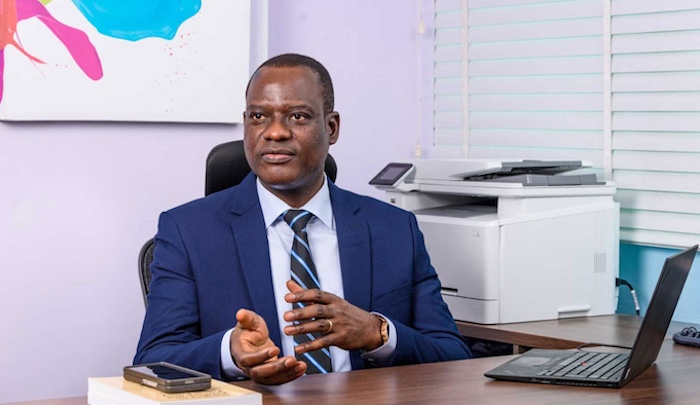
Chairman of the Presidential Fiscal Policy and Tax Reforms Committee, Taiwo Oyedele, has stated that the National Assembly has the constitutional authority to suspend the planned implementation of Nigeria’s tax reform laws set for January 2026.

In an interview on Channels Television on Monday, Oyedele responded to allegations that parts of the tax laws passed by the National Assembly were altered in the gazetted copies.

He clarified that while the accusation of alteration had emerged recently, there had already been mounting calls for the suspension of the reforms from certain quarters.

According to Oyedele, the opposition to the tax reforms stems largely from misinformation and fear rather than from the substance of the laws themselves.

Oyedele’s Position on the Matter

The tax reform committee chairman emphasised that any decision to postpone the implementation of the law is beyond his committee’s jurisdiction and rests solely with the lawmakers.

“If we even want to postpone the implementation of the law, it has to be the lawmakers. That’s far beyond my pay grade,” Oyedele remarked. “That decision must be made by them, and I believe it will depend on the findings from their investigation into the matter.”

However, Oyedele warned that any suspension of the reforms would mean continuing with a tax system that disproportionately burdens low-income earners and small businesses.

  • He noted that under the current system, about 98% of workers are overtaxed, while small businesses face multiple taxes without benefiting from exemptions.

  • He added that if the reforms are delayed, minimum taxes would continue to apply to low-income earners and non-profitable businesses.

  • Oyedele further highlighted that the existing Value-Added Tax (VAT) structure continues to drive up the cost of essential goods such as food, healthcare, and education, while wasteful tax incentives remain in place.

“We need to be clear about what we are asking for,” Oyedele stressed, urging that any calls for suspension be weighed against the economic and social costs of maintaining the status quo.

Proceeding with the Law as Passed

Oyedele emphasised that if investigations reveal significant alterations were made to the tax laws after passage, those altered provisions should be treated as invalid.

His recommendation is to proceed with implementing the law as passed by the National Assembly while separately addressing the introduction of the disputed provisions and determining corrective actions.

He accused certain groups of inciting opposition to the reforms by spreading fear and misinformation, despite the reforms being designed to benefit the broader population.

Systemic Weaknesses and Manual Processes

On the alleged discrepancies, Oyedele pointed to systemic weaknesses within the legislative and executive processes, particularly the reliance on manual handling of documents.

He explained that amendments to bills pass through several stages—from legislative debates to harmonisation between the House of Representatives and the Senate, legal review at the Ministry of Justice, presidential assent, and eventual gazetting—each of which involves manual handling.

According to Oyedele, the lack of strong quality assurance mechanisms at these stages leaves room for errors or unintended changes, not only in the tax laws but across other legislation as well.

He suggested that this controversy should be viewed as an opportunity to strengthen Nigeria’s lawmaking and gazetting processes, ensuring that laws passed by the National Assembly accurately reflect legislative intent and are not tampered with during their passage.

Backstory: Alleged Alterations in the Tax Laws

Last week, Hon. Abdulsammad Dasuki (PDP, Sokoto), a member of the House of Representatives, raised concerns over alleged discrepancies between the newly gazetted tax reform laws and the versions passed by the National Assembly.

Dasuki claimed that his review of the gazetted copies revealed material differences from what was debated, harmonised, and approved by both the House and the Senate. He stated that after comparing the vote and proceedings of the House, the Senate’s records, and the harmonised versions with the gazetted copies in circulation, he noticed alterations.

The House has since promised to investigate the claims, fuelling calls for the suspension of the tax reforms set for implementation in January 2026.

The discrepancies claim is coming barely two weeks before the new tax laws are to take effect on January 1, 2026.

READ ALSO: Naira to Firm at ₦1,350/$ by 2026 on Improved Macroeconomic Condition – Report

He claimed his legislative rights had been breached because the content of the gazetted tax laws did not reflect what the lawmakers debated and approved on the floor of the House.

Concerned Nigerians, including a former Vice President, Atiku Abubakar; the Labour Party’s 2023 presidential candidate, Peter Obi; and civil society organisations, have called for the suspension of the implementation of the laws.

Addressing the claim, Oyedele said, “Before you can say there is a difference between what was gazetted and what was passed, we have what has not been gazetted, and we don’t have what was passed.

“The official harmonised bills certified by the clerk, which the National Assembly sent to the President, we don’t have a copy to compare. Only the lawmakers can say authoritatively what we sent.

“It should be the House of Representatives or Senate version. It should be the harmonised version certified by the clerk. Even me, I cannot say that I have it. I only have what was presented to Mr President to sign.”

READ ALSO: Dangote’s Graft Allegation: Nigerians Demand Full Probe, Prosecution of Ex-NMDPRA CEO Farouk Ahmed 

The tax committee chairman hinted that he reached out to the House of Representatives Committee regarding a particular Section 41 (8), which states, “You have to pay a deposit of 20 per cent.”

He noted that the response given by the committee was that its members had not met on the issue.

“I know that particular provision is not in the final gazette, but it was in the draft gazette. Some people decided that they should write the report of the committee before the committee had met, and it had circulated everywhere.

“What is out there in the media did not come from the committee set up by the House of Representatives. I think we should allow them to do the investigation,” Oyedele said.

Pinnacle Daily reports that President Bola Tinubu signed the tax laws, which include the Nigeria Tax Act, the Nigeria Tax Administration Act, the Nigeria Revenue Service (Establishment) Act, and the Joint Revenue Board (Establishment) Act, all operating under a single authority, the Nigeria Revenue Service.

The reforms are designed to simplify tax compliance, expand the tax base, eliminate overlapping taxes, and modernise revenue collection across federal, state, and local governments.

+ posts

Alex is a business journalist cum data enthusiast with the Pinnacle Daily. He can be reached via ealex@thepinnacleng.com, @ehime_alex on X

Leave a Reply

Your email address will not be published. Required fields are marked *