
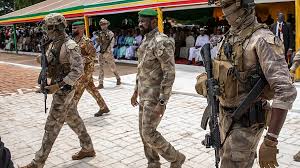
Mali’s military ruler, General Assimi Goita, has addressed the nation for the first time regarding the ongoing fuel crisis, warning of deadly risks faced by citizens and tanker drivers amid a blockade by a jihadi group.
Speaking early this week during a visit to Bougouni in southern Mali to inaugurate a lithium mine, Goita said, “During the escort of the fuel tanker convoy, people are dying; there are ambushes on the roads and tankers are catching fire with people inside them, who are burning to death.”
The crisis began after Jama’at Nusrat al-Islam wal-Muslimin (JNIM), an al-Qaeda-linked militant group, imposed a ban on fuel imports from neighboring countries in early September.
READ ALSO: Mali Crisis: Western Nations Evacuate Citizens as Fuel Blockade Strangles Economy
The move followed government restrictions on fuel deliveries to remote areas earlier this year, aimed at pressuring jihadi strongholds.
The blockade has paralyzed Mali’s fragile economy, leaving hundreds of fuel trucks stranded at the border. While the military has attempted to escort some shipments to the capital, Bamako, militants have ambushed others, and airstrikes have been carried out against JNIM positions.
Goita urged citizens to limit travel to help reduce the impact of the shortage. In Bamako, long queues have formed at gas stations, with some residents spending nights waiting.
The crisis has also forced school closures, prompted embassy advisories for evacuations, and left residents without power for hours.
READ ALSO: U.S. Orders Citizens to Leave Mali as Jihadi Blockade Deepens Fuel, Security Crisis
The blockade represents a significant challenge for Mali’s military junta, which depends on fuel imports from Senegal and the Ivory Coast. JNIM is among several armed groups expanding operations across the Sahel, a semi-arid region stretching from North to West Africa, where insurgency and large-scale attacks are increasing.

Esther Ososanya is an investigative journalist with Pinnacle Daily, reporting across health, business, environment, metro, Fct and crime. Known for her bold, empathetic storytelling, she uncovers hidden truths, challenges broken systems, and gives voice to overlooked Nigerians. Her work drives national conversations and demands accountability one powerful story at a time.