The recurring cases of national grid collapse in Nigeria have highlighted the need for a reliable power source to meet electricity demands by households and businesses across the country. This quest has reignited calls for the development and integration of nuclear power into Nigeria’s energy mix as one potential solution to resolving longstanding electricity challenges. …

The recurring cases of national grid collapse in Nigeria have highlighted the need for a reliable power source to meet electricity demands by households and businesses across the country.
This quest has reignited calls for the development and integration of nuclear power into Nigeria’s energy mix as one potential solution to resolving longstanding electricity challenges.
Recurring Grid Collapses and National Blackout
On Friday, January 23, 2026, Nigeria’s national electricity grid collapsed, causing a nationwide blackout. From over 4,500 megawatts (MW), it plunged to just about 24MW on Friday afternoon as all grid-connected power plants went off, recording zero on the Nigerian Independent System Operator (NISO), Grid Performance Dashboard.
NISO reported that the collapse was due to the simultaneous tripping of multiple high-voltage transmission lines and the disconnection of several power generation units from the grid.
A few days later, another system disturbance occurred, causing a total power outage in significant parts of the country on January 27.
This incident is part of a chronic pattern of instability in the nation’s power sector. Despite billions of naira investment in the power sector, the national grid collapsed about 105 times in 10 years (between 2014 and 2024). In 2024 alone, Nigeria recorded 12 cases of grid collapse and about five major incidents in 2025.
Experts blame the grid failure on ageing infrastructure and inadequate maintenance. In some cases, they also attribute it to what they described as “Supply and Demand Imbalance”, a situation where there is a sudden loss of generation or a surge in demand that overloads the system’s capacity, causing cascading tripping. Loss of generation has also been blamed on gas supply constraints for gas-powered plants and a significant drop in water levels for hydro plants.
READ ALSO:
Calls for Decentralised Power System Intensify as Grid Failure Persists
Nigerians in Darkness again as National Grid Collapses Second Time in 2026
GenCos Debts: Geregu, Niger Delta Power, Others Reach Settlement Agreement as FG Issues ₦501bn Bond
For many Nigerians, grid collapse has become an almost routine disruption—announced by a brief statement from system operators and followed by hours and sometimes, days of erratic power supply. Each episode underscores the fragility of a power system struggling to meet the demands of Africa’s most populous nation, where installed capacity remains largely theoretical and actual generation lags far behind need.
In Lagos, Abuja, Port Harcourt and other parts of the country, the consequences are obvious. Businesses, hospitals and households often rely on costly diesel and petrol power generators, all imposing a significant financial burden on the people and a high cost on business operations. According to energy analysts, the economic losses from unreliable electricity run into billions of naira annually, eroding productivity and discouraging investment.
Nigeria’s electricity generation is dominated by gas and hydro, both of which face persistent challenges. Gas plants are hampered by pipeline vandalism, pricing disputes, and supply constraints, while hydroelectric output fluctuates with rainfall patterns increasingly affected by climate change.

While Nigeria’s installed power generation capacity is 13,000MW, the amount generated and delivered to the national grid ranges between 4,000MW and 5,000MW. According to energy analysts, this represents only a fraction of the electricity required to power Nigeria’s economy and population. They estimate that a minimum of 30,000 MW is needed to sustain the economy.
Renewable sources such as solar are expanding, particularly through mini-grids, but remain insufficient to power large-scale industry or stabilize the national grid on their own.
Adopting a Different Power System Model and the Nuclear Energy Debate
Given the shortcomings in the centralised grid system in Nigeria, experts have, over time, called for decentralisation of the power system to address the chronic inefficiencies, grid collapses and poor access to electricity. The 2023 Electricity Act aims to move Nigeria from a central structure to a two-tier system where states can manage their own electricity markets. Despite over 12 states having gotten approval to manage their electricity markets, they are still under the centralised system.
A notable example of an independent power system is the 188-megawatt IPP plant run by Geometric’s Aba Power in Aba, Abia State. The power facility, which services nine local government areas in Abia State, reportedly delivered uninterrupted electricity during the national blackout caused by the grid collapse.
Apart from independent power projects, there are renewed calls for diversifying Nigeria’s baseload power source that doesn’t rely on gas pipelines or seasonal water levels. This is through the development of nuclear technology for use in generating a significant amount of electricity to power households and businesses.
Proponents of nuclear energy argue that the technology offers a reliable, low-carbon solution capable of providing steady baseload power—something Nigeria’s grid deeply lacks. In his foreword in the Outlook for Nuclear Energy in Africa 2025, Dr Rafael Grossi, Director General, International Atomic Energy Agency (IAEA), said nuclear energy provides continuous baseload power, enhancing grid stability and resilience. Grossi stressed that reliability, which nuclear power offers, is critical for sectors such as infrastructure, agribusiness, healthcare, tourism and manufacturing, and the livelihoods they support.
Nuclear Power Projects Outlook in Africa
There are countries in Africa and emerging economies that are investing in nuclear power as part of their energy transition strategies.
In Africa, the top five countries leading in investment in nuclear energy for electricity include South Africa, Egypt, Ghana, Kenya and Uganda.

According to the IAEA, South Africa currently remains the only country on the continent with an operational commercial nuclear plant. While the Koeberg Nuclear Power Station near Cape Town provides approximately 5% of the nation’s electricity, the country plans to expand its capacity by 2,500 MW. It has also advanced projects on small modular reactors (SMR) with plans to integrate them into the grid by the 2030s.
Egypt, according to the
IAEA, is currently building a four-unit plant (considered the largest nuclear construction project on the continent), expected to be ready by 2028. The reactors done in partnership with Russia’s Rosatom have a combined capacity of 4,800 MW.
Ghana is said to have advanced its regulatory framework and moved into Phase two of the IAEA milestone process, which involves active preparations for contracting and construction.
Kenya has made progress in legislative readiness and site selection for a nuclear power project, targeting an initial capacity of 1,000 MW by 2034, with a focus on both large reactors and SMRs to stabilize its grid, which currently relies heavily on geothermal and hydro power.
Uganda has plans to build a nuclear station with a goal to generate its first 1,000 MW by 2031.
Nigeria’s Nuclear Status
Nigeria has been a member of the IAEA since 1964. It set up the Nigerian Atomic Energy Commission (NAEC) in 1976, and subsequently, the Nigerian Nuclear Regulatory Authority (NNRA), in 1995, to develop nuclear technology to address chronic power challenges.
The federal government unveiled a National Nuclear Power Roadmap and Strategy in 2007, with the goal of integrating nuclear energy into the national grid. Nigeria signed some agreements with France, India, Russia, and South Korea for the development of nuclear power plants. Two sites for large reactors had been identified by NAEC in Geregu, Kogi State and Itu in Akwa Ibom State. Also, the government proposed the construction of four nuclear power plants, each with a capacity of 1,200MW
According to the World Nuclear Association, the long-term goal is for the country to achieve a 4,000 MW capacity by 2050.
There are arguments for and against the development and integration of nuclear energy into Nigeria’s energy mix.
Opposition to nuclear power remains strong in some quarters, fueled by concerns over safety, radioactive waste, high upfront costs, and governance capacity. Also, memories of global nuclear accidents continue to shape public perception, while Nigeria’s own struggles with infrastructure maintenance raise questions about whether such complex facilities can be safely managed.
Minister of Power Adebayo Adelabu, reportedly, advised the government last year against the construction of four large-scale plants. The minister, who described nuclear energy as “the future of power generation” during a meeting with NAEC in Abuja, however, stressed the need for the government to prioritise other energy sources like hydro and gas first. He cited security concerns and maintenance challenges as reasons the option of large nuclear plants should be halted.
Adebayo instead called for the adoption of modular nuclear reactors, which he said would better align with decentralised electricity model being advanced in Nigeria.
Former Minister of Power and chairman of Geometric Power, Prof. Barth Nnaji, said nuclear energy is a useful technology, but shouldn’t be Nigeria’s priority at the current stage of its development.
He also supported the position that Nigeria should focus on addressing foundational issues, such as ageing infrastructure in the power sector and expand its hydro and gas-powered plants to provide electricity.
Environmental groups have also cautioned that investment in nuclear power should not come at the expense of renewables.
Health of Mother Earth Foundation and other civil society organisations focused on environmental sustainability have called on Nigeria and other African nations pursuing nuclear power programme to suspend it, citing operational risks.
Arguments for Nuclear Solution
The Nigerian government has so far taken a cautious tone, emphasizing feasibility studies and long-term planning rather than immediate commitments.
However, repeated grid collapses are intensifying pressure on policymakers to think beyond short-term fixes.
While reacting to the news of the recent national grid collapses, an engineer and Telecommunications consultant, Akin Adedotun, said the situation has called for Nigeria to review its energy policies and consider moving towards developing nuclear power plants for use in electricity supply.
“It is time to revisit nuclear energy for our electricity needs…. Even if it is Small Mobile Reactors and 100% Managed Operation by the Manufacturer,” Adedotun stated in a post on X.
He recalled that Nigeria had, since the 1970s, made efforts to advance nuclear power for electricity generation.
Nuclear advocates argue that a diversified energy mix—combining renewables, gas, hydro, and nuclear—offers the best path forward.
Some analysts argue that nuclear plants can provide a constant, high-output power source, helping stabilize a grid prone to fluctuations and have low-carbon emissions, supporting the environmental sustainability agenda.
Director, Centre for Nuclear Energy Studies, FUTO, Dr Ike Nwachukwu, said adopting the deployment of nuclear energy is a cheaper, reliable and more efficient source of energy that will tackle Nigeria’s power supply challenges.
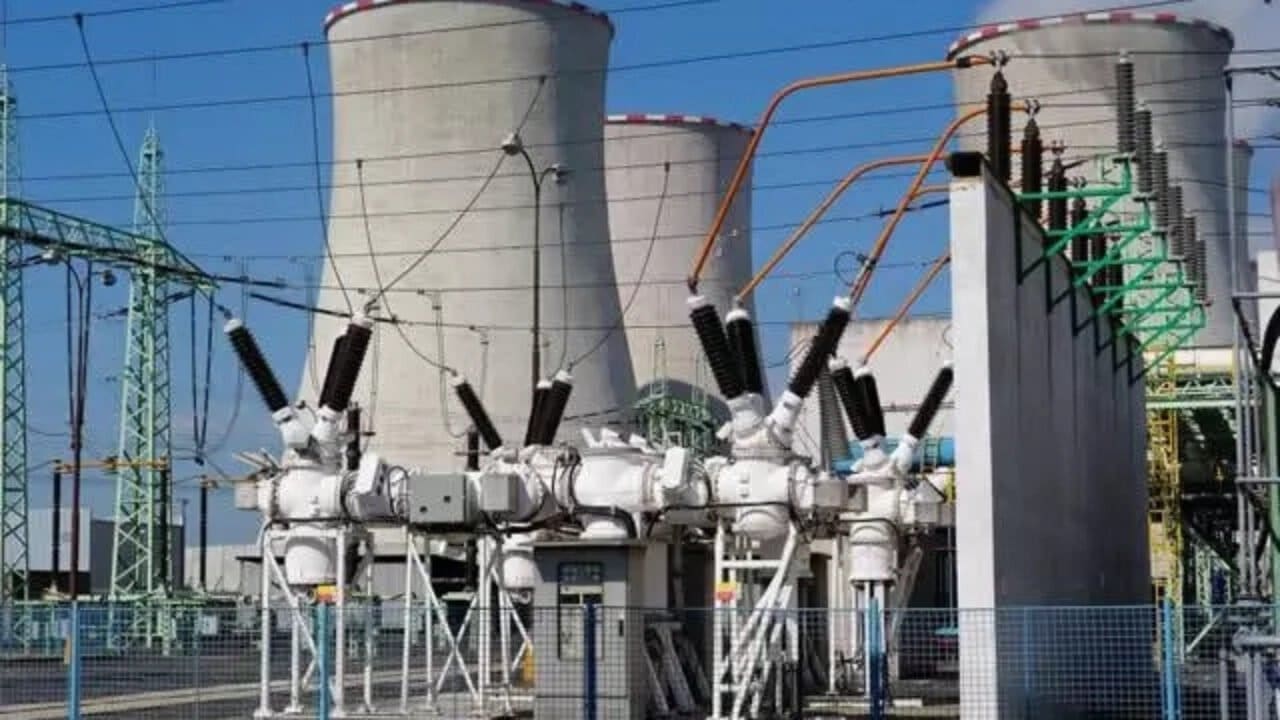
He stressed that if Nigeria, as a growing nation, can tackle its electricity challenges by adopting nuclear energy, it will achieve more and there will be accelerated development in the country.
According to him, nuclear sources offer a better alternative in terms of the transition to a cleaner energy agenda to save the climate from further deterioration.
“Nuclear energy is cheap and it is very reliable,” Nwachukwu stated. “If we have as much energy as we desire, Nigeria will be much more ahead than where we are today.”
For ordinary Nigerians, the debate is less ideological and more practical. “We just want steady light to run our business,” said Adebisi, a shop owner in the Isolo area of Lagos, lamenting the cost of fueling generator.
“Whether it’s gas, solar, or nuclear, what matters is the reliability of electricity,” he added.
As the national grid struggles to regain stability yet again, the question facing Nigeria is no longer whether its power system needs reform, but how bold those reforms should be. With each collapse, calls for nuclear energy grow louder, pushing the country toward a conversation that may finally redefine its electricity future.

Victor Ezeja is a Nigerian journalist skilled in producing insightful news analyses, feature stories, and interviews that simplify complex issues and drive informed public discourse. His work combines rigorous research, balanced reporting, and compelling storytelling to highlight developments shaping industries and society. Victor, who holds a Master's Degree in Mass Communication, specializes in energy, aviation, business, and economic reporting. He can be reached via @VICTOREZEJA on X