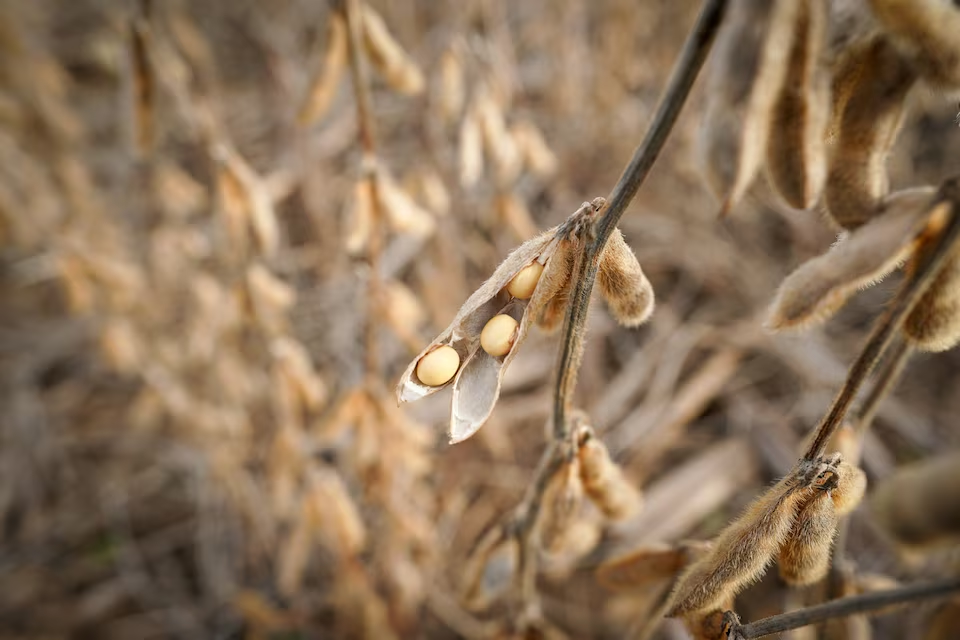
China did not import any soybeans from the United States in September, the first time since November 2018, as escalating trade tensions and high tariffs pushed buyers toward South American suppliers.
According to data from China’s General Administration of Customs, imports from the U.S. fell to zero from 1.7 million metric tons in the same period last year. Analysts attributed the decline to China’s punitive tariffs on U.S. goods and the completion of sales from old U.S. soybean stocks.
“This is mainly due to tariffs. In a typical year, some old-crop beans would still enter the market,” said Wan Chengzhi, analyst at Capital Jingdu Futures.
READ ALSO: U.S. Soybean Farmers Hit as China Cuts Purchases, Turning to South America
Meanwhile, Brazil’s soybean shipments to China surged 29.9% year-on-year to 10.96 million tons in September, accounting for more than 85% of China’s total imports. Argentina’s exports also jumped 91.5% to 1.17 million tons.
China imported a total of 12.87 million tons of soybeans last month the second-highest on record. However, analysts warn that without a U.S.-China trade breakthrough, American farmers could face mounting losses as Chinese crushers continue sourcing from South America.
Johnny Xiang, founder of Beijing-based AgRadar Consulting, cautioned that China could face a “soybean supply gap” between February and April 2026 before Brazil’s new crop season begins.
READ ALSO: China Steps up Argentine Soybean Purchases, Orders 20 Cargoes after Tax Cut
Despite this, U.S. President Donald Trump expressed optimism on Sunday that a soybean deal could soon be reached.
From January to September, China imported 63.7 million tons of soybeans from Brazil, up 2.4% year-on-year, and 2.9 million tons from Argentina, up 31.8%. U.S. shipments for the same period still totalled 16.8 million tons, reflecting a 15.5% annual increase despite the September freeze.

Esther Ososanya is an investigative journalist with Pinnacle Daily, reporting across health, business, environment, metro, Fct and crime. Known for her bold, empathetic storytelling, she uncovers hidden truths, challenges broken systems, and gives voice to overlooked Nigerians. Her work drives national conversations and demands accountability one powerful story at a time.