

The Chairman of the Independent Corrupt Practices and Other Related Offences Commission (ICPC), Dr Musa Adamu Aliyu, SAN, has called on local government officials to uphold integrity, transparency, and accountability, emphasising that corruption extends far beyond the mere theft of public funds.
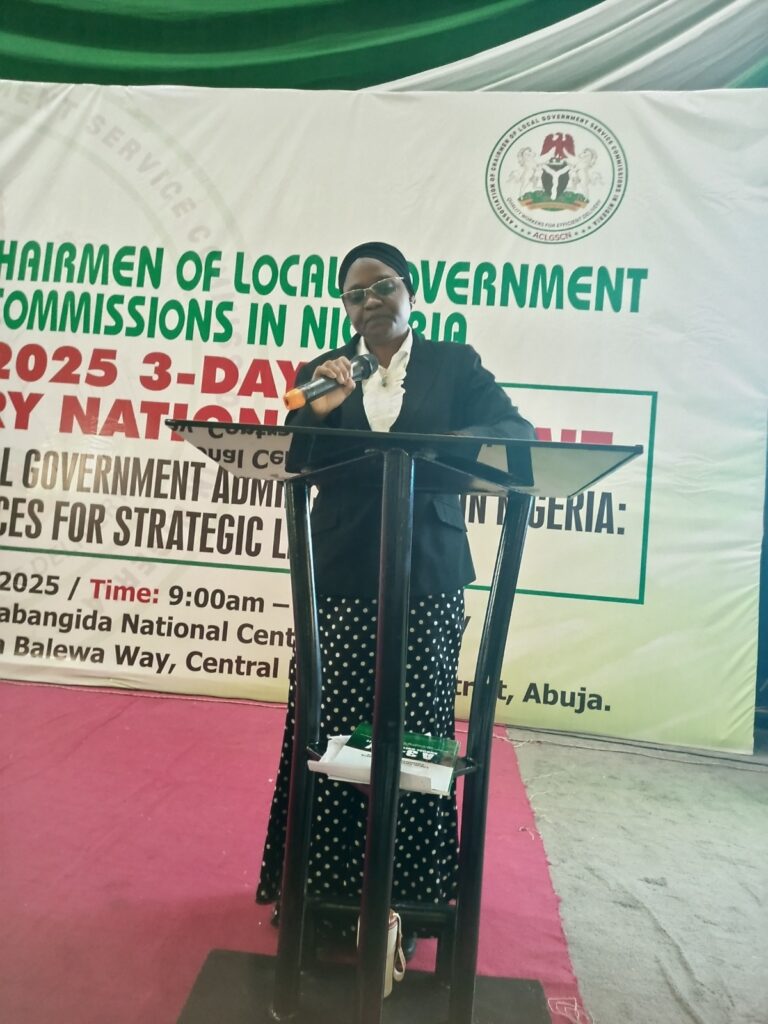
Dr Aliyu made the remarks in Abuja while presenting a paper titled “Understanding Anti-Corruption Laws and Their Implications for Local Government Officials” at the 2025 National Summit of the Association of Chairmen of Local Government Service Commissions. The summit, themed “Strengthening Local Government Administration in Nigeria”, brought together policymakers, local administrators, and anti-corruption experts to discuss reforms aimed at improving governance at the grassroots level.
Speaking through his Special Assistant on Legal Matters, Zainab Nass, Dr Aliyu noted that corruption exists across all sectors of society, including schools, markets, and private institutions. Citing the World Bank, he defined corruption as “the abuse of public office for private gain” and stressed that any deviation from due process constitutes corruption.
READ ALSO: ICPC Seeks Stronger West African Unity on Asset Recovery
“Corruption is not just about stealing money; it is anything that deviates from the rule. It is corruption not to follow due process,” he stated.
Dr Aliyu highlighted past anti-corruption campaigns such as Ethical Revolution, WAIC, and MAMSER, noting their limited success due to weak legal backing and lack of continuity. He described the establishment of the ICPC under the 2000 Corrupt Practices and Other Related Offences Act as a turning point, providing a legal framework for investigating, preventing, and prosecuting corruption.
He outlined the ICPC’s three-pillar mandate: enforcement, prevention, and public education. The Commission has strengthened transparency through initiatives like Corruption Risk Assessments, Systems Studies and Reviews, and Anti-Corruption and Transparency Units (ACTUs) across public institutions.
Dr Aliyu also stressed Nigeria’s alignment with global and regional anti-corruption frameworks, including the United Nations Convention Against Corruption (UNCAC), FATF standards, and the African Union Convention on Preventing and Combating Corruption (AUCPCC).
Addressing local government officials directly, he reminded them that public servants, whether elected or appointed, are legally obligated to maintain ethical conduct. Administrative misconducts, including financial misappropriation, falsification of records, nepotism, and abuse of office, now carry severe criminal penalties.
He cited the 2024 Supreme Court ruling in Attorney-General of the Federation v. Attorney-Generals of Abia State & 35 Others, which invalidated the dissolution of democratically elected local councils by state governors, reaffirming the constitutional autonomy of local governments and their right to direct allocations from the Federation Account.
READ ALSO: ICPC Recovers N271bn, Tracks 1,440 Govt Projects in Northern Nigeria
“We are now in the regime of asset recovery, taking back what was taken. “Local governments must ensure that public funds serve the people, not private interests,” Dr Aliyu said.
Concluding his presentation, the ICPC Chairman urged renewed commitment to probity, effective service delivery, and inclusive grassroots development, emphasising that Nigeria’s national development hinges on how efficiently local governments utilise public resources to improve citizens’ welfare.

Esther Ososanya is an investigative journalist with Pinnacle Daily, reporting across health, business, environment, metro, Fct and crime. Known for her bold, empathetic storytelling, she uncovers hidden truths, challenges broken systems, and gives voice to overlooked Nigerians. Her work drives national conversations and demands accountability one powerful story at a time.