By Esther Ososanya
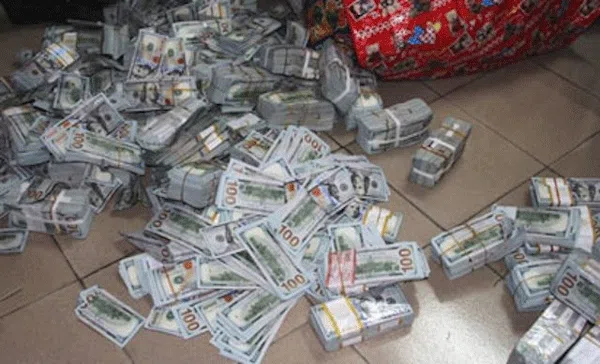
Nigeria may be haemorrhaging more than $18 billion annually to illicit financial flows (IFFs), but the federal government is now drawing a bold red line.
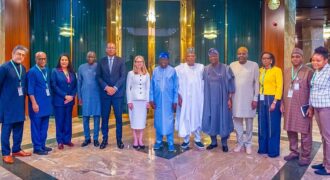
At the 2025 National Conference on Illicit Financial Flows held in Abuja, government officials, tax authorities, global experts, and civil society leaders came together with one shared message: financial secrecy must end.
From tax evasion to profit shifting, Nigeria’s economic stability is under threat, according to stakeholders. Minister of State for Finance, Dr Doris Anite, described the loss as a “silent heist” undermining national development and crippling government revenue needed for public services.
READ ALSO: Rebased GDP Reveals Disturbing Agric Sector Crisis – Prof Ken
“We can no longer afford to look away. The time for stronger action is now,” Dr Anite said.
The Executive Chairman of the Federal Inland Revenue Service (FIRS), Dr Zach Adeleke, added that Nigeria must modernise its tax and financial reporting systems to trace illicit capital movements and ensure full compliance by both local and multinational entities.
As part of President Bola Ahmed Tinubu’s Renewed Hope Agenda, the government is rolling out four new tax reform laws designed to plug revenue leakages and introduce stricter penalties for violators.
Global Problem, Local Solutions
The conference also featured input from regional leaders such as Hon. Irene Ovonji-Odida, a member of the African Union High-Level Panel on Illicit Financial Flows. She emphasised that Nigeria’s problem mirrors a broader African challenge, where billions in public funds disappear through shadow transactions and misinvoicing.
The Comptroller-General of Customs, Bashir Adewale Adeniyi, acknowledged that weak border systems contribute to the scale of the problem. He reaffirmed Customs’ commitment to deploying smarter technology, tighter enforcement, and cross-border cooperation to stem capital flight disguised as trade.
“Illicit flows are not just technical; they are deeply political. This fight requires leadership, willpower, and institutional reform,” said Ovonji-Odida.
Enforcement, Not Just Rhetoric
While speakers applauded the government’s commitment to reform, many urged for speedy implementation and clear accountability. Civil society groups stressed that beyond laws and partnerships, enforcement is what will determine whether Nigeria can finally stem its fiscal haemorrhage.
In a country still battling high debt, rising inflation, and foreign exchange scarcity, stakeholders agreed that reclaiming even a fraction of the stolen billions could unlock critical investments in health, education, and infrastructure.
As Nigeria tightens its fiscal belt, experts say the outcome of this war against illicit financial flows may very well determine how fast—and how far—the nation can grow.

Esther Ososanya is an investigative journalist with Pinnacle Daily, reporting across health, business, environment, metro, Fct and crime. Known for her bold, empathetic storytelling, she uncovers hidden truths, challenges broken systems, and gives voice to overlooked Nigerians. Her work drives national conversations and demands accountability one powerful story at a time.