
By Ubong Usoro
Across leagues and continents, certain jersey numbers carry an air of mystique, pressure, and even superstition. But do these numbers really influence a player’s performance, or is it all in the mind?
Two Super Eagles legends, Henry Nwosu and Garba Lawal, reinforced this perspective in exclusive interviews with Pinnacle Daily.
Garba Lawal: “A good player will always shine, regardless of the number.”

Speaking to Pinnacle Daily, Garba Lawal shared his thoughts on the importance of jersey numbers in football
The ex-Super Eagles legend said, “As a player, it’s natural to have a preferred jersey number — something that feels personal or brings confidence.
“But when you join a new club, especially late, that number might already be taken. Does that mean you’re new to the team? Yes. And if someone else is already wearing, say, the number 10 jersey, you can’t just walk in and demand it — unless you’re Messi.
“Now, if you are Messi, maybe the current holder will happily give it up next season because you’re clearly the standout player. But if you’re not Messi, Pelé, Maradona, or Ronaldinho, then there’s really no need to make a big deal about it.”
Lawal argued that if a player is given number 15, it doesn’t stop him from playing world-class football.
he said If the preferred number is available, let the player take it; if not, let the player pick another and move on.
He said, “In my view, a jersey number doesn’t define a player’s performance. A truly good player will shine no matter what number is on their back.
“Take Zinedine Zidane, for example — he wore number 5 at Real Madrid and number 10 for France, and he was brilliant in both. So for me, jersey numbers aren’t that important.”
Henry Nwosu: “I always wore number 10; it was part of my identity.”

Also speaking to Pinnacle Daily, Henry Nwosu shared a more personal take: “Personally, I don’t know much about all that jersey myths. What I do know is that my number has always been number 10. From my junior team days all the way through to my peak, it was always number 10. I never used any random number.
“Unless it was by mistake, for example, there were times they gave me jersey number 8 or 9 by accident, but once I raised the issue, they corrected it. So, I don’t really know how other players cope when they don’t get their preferred numbers.”
On whether a different number could affect performance, he added, “Well, sometimes it does. I played in the position we used to call ‘inside left’, which these days depends on the system a team is using. The roles have evolved. So whether or not a player wears a certain number sometimes depends on the formation or tactical system in play.
“But honestly, players don’t usually like switching from their natural number. If a senior player wants the number and is already used to it, and I’m not so attached to it, then sure, let him have it. It’s not a big deal. But if I’m the one already known for that number.”
Read Also: Victor Osimhen at a Crossroad
He argued that players don’t usually like switching from their natural number. “If a senior player wants the number and is already used to it, and I’m not so attached to it, then sure, let him have it. It’s not a big deal. But if I’m the one already known for that number, then it stays with me; that’s how it is.”
Jonathan Essien, a TV and radio sports presenter, agrees that numbers matter, but for different reasons.
He said, “A jersey number becomes significant when the person who wore it made history. Players inherit expectations, not just a shirt.”
Essien explained that fans associate numbers with performance. When a player takes Chelsea’s No. 9, they’re expected to score goals like Didier Drogba or Hasselbaink did. When they don’t, scrutiny follows.
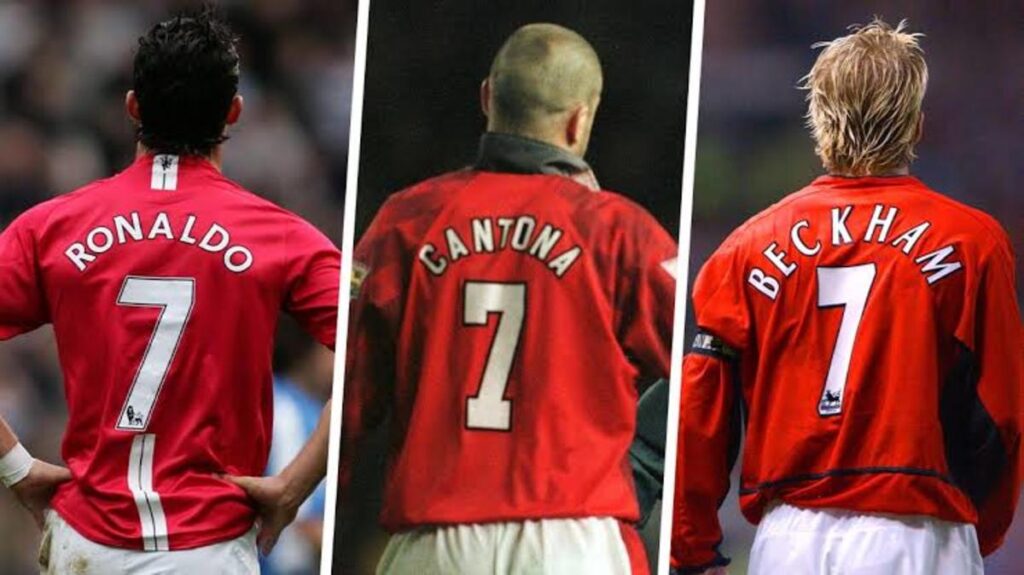
“It’s not that the player is bad, but fans start comparing. That pressure can crush confidence. The same goes for United’s No. 7 or Nigeria’s No. 10.”
He added that mental coaching is just as important as technical training: “Many clubs ignore the mental side. If you give a player a ‘heavy’ number, help them manage the spotlight that comes with it.”
Taiwo Olu: “Legacy pressure is real, even if you don’t believe in curses.”
Football analyst and content creator Taiwo Olu acknowledges the psychological toll iconic shirt numbers can take on players.
He said, “It’s not a curse. It’s the human mind. When people expect you to live up to a legend, it changes how you play.”
Read Also: Club World Cup: Big Games, Empty Stands
Olu posits that some players begin to overthink simple decisions, trying to impress rather than play naturally.
he said, “A winger wearing Manchester United’s No. 7 isn’t just dribbling anymore; they’re thinking, ‘Is this what Beckham would’ve done?’ That’s not healthy.”
He added that teams need to prepare players mentally when assigning legacy numbers:
“You don’t just hand someone the No. 10 because it’s vacant. You need to know if they’re ready, mentally, emotionally, and on the pitch.”