

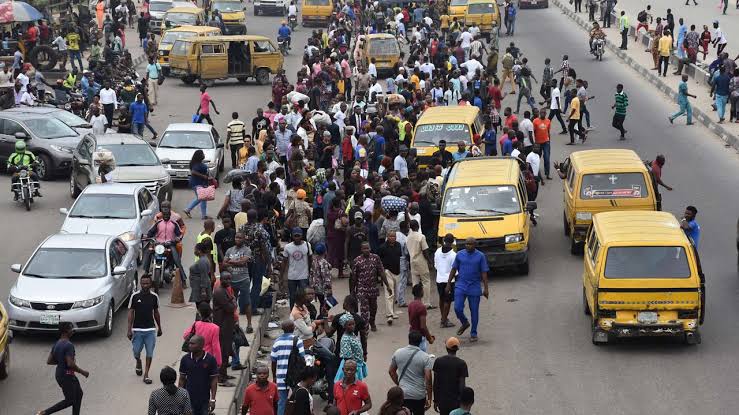
For many Nigerians, the daily commute has become an exhausting test of endurance, as soaring fuel prices continue to reshape livelihoods, businesses, and basic mobility across the country.
The Global Catalyst: Conflict and Crude Surges
While parts of the Middle East are being ravaged by the ongoing conflict involving the United States, Israel, and Iran, developing countries that are import-dependent, including Nigeria, have been feeling the tremors.
For the past four weeks, since the latest escalation of the conflict in the Middle East—a region supplying a significant portion of global crude oil- prices have surged to an all-time high, putting enormous pressure on domestic fuel markets. Crude oil prices have surged above $100 per barrel due to supply disruptions caused by the geopolitical conflict.
Across Nigeria, Africa’s largest oil producer, a cruel paradox is once again playing out. While the nation sits on vast hydrocarbon reserves, its citizens are currently grappling with the soaring cost of Premium Motor Spirit (PMS), commonly known as petrol and also diesel.
From the bustling streets of major cities to the quieter roads of smaller towns, the ripple effects of rising petrol costs are being felt with increasing intensity. Petrol prices have risen by more than 60 per cent in the last one month, from about N900 to between N1,400 and N1,600 per litre.
Drivers Operating at a Loss
Motorists have continued to lament the growing burden posed by the recent development in the energy market. This comes as Nigerians have been grappling with a fragile economy and a high cost-of-living crisis, especially since the removal of fuel subsidies in 2023.
For Thomas Umoro, a ride-hail driver who resides in the Ikorodu area of Lagos, the usual “check engine light” is no longer his biggest fear. Instead, it is the flickering needle of his fuel gauge.
“We are currently facing a terrible situation with the high cost of fuel in the country,” Umoro stated in an interview with Pinnacle Daily.
“We were already facing a difficult situation in our job, given the harsh economy, even before the recent increase in the price of fuel. Now we buy fuel between N1,350 and N1400 per litre. It is quite high,” he lamented.
Umoro stated that there is no commensurate increase in what they charge customers for delivery. “We are currently operating at a loss. Many riders are complaining about the ugly situation,” he further stated.
For commercial drivers, the situation is particularly dire. Many say their earnings have dwindled sharply, even as they are forced to spend more just to keep their vehicles on the road.
Emeka Ogbonna, a commercial driver who operates the Oshodi-Ajah route, expressed frustration over the recent hike in fuel prices. Mr. Ogbonna, who admitted that they have not encountered scarcity, however, lamented that after buying fuel at a higher cost, they often clash with passengers who are most times reluctant to pay increased fares.
“We are currently buying between N1,300 and N1,350, but our problem is that passengers hardly comply with paying higher prices,” Ogbonna stated. “I used to make enough to take care of my family and still save a little. Now, after buying fuel, there is almost nothing left.”
He urged the government to take necessary steps towards addressing the high cost of fuel across the country.
Ayodele Idowu, a commercial bus driver plying the Ogba-Oshodi to Mile 2 route in Lagos, echoed similar frustration driven by high fuel prices.
“Before now, I could buy fuel, give my owner his daily return, and still go home with enough for my children’s upkeep,” Mr. Idowu stated in a chat with Pinnacle Daily on Friday evening at a bustling bus stop. “Now? I am just working to return the bus to the park. The high fuel price is killing us in this business now. We are not the ones fighting the war, yet we are the ones dying.”
The Commuter’s Struggle and Market Inflation
The burden is not limited to those behind the wheel. Commuters—students, civil servants, traders—are grappling with sharply increased transport fares. In many areas, fares have doubled or even tripled, forcing passengers to make difficult choices: cut back on trips, walk longer distances, or sacrifice other essential needs.
Pinnacle Daily’s checks reveal that intra-city transporters have increased fares even for short distances. A trip from Mile 2 to Oshodi, which used to cost between N500 and N600, now fluctuates between N900 and N1200 depending on the time of the day.
The rising fares cause crowded bus stops as some commuters patiently wait for cheaper vehicles, often arriving at their destinations late.
Mrs. Juliana Abugu, a mother of three who works with a private company, said: “Transport fares and cost of other things keep increasing, but salary remains the same.”
“We are paying for a war we have nothing to do with. The Middle East is far away, but my pocket is feeling the heat as if the bombs are dropping here,” she lamented.
For market traders, the story is much the same. The cost of transporting goods to markets has surged, leading to higher prices for food and everyday items. “Everything depends on transport,” a trader at Mushin market stated. “If fuel goes up, everything else follows.”
Experts note that the rising cost of fuel is not just a transport issue—it is an economic one. Increased logistics costs affect supply chains, inflate prices, and place additional pressure on households already dealing with broader economic challenges. Small businesses, in particular, are finding it difficult to absorb the extra costs without passing them on to consumers.
Need for an increase in Domestic refining
Despite the gradual dominance of the domestic fuel market by the 650,000 barrels per day Dangote Refinery, industry analysts and energy experts point out that Nigeria is fully exposed to shocks in the global oil market.
According to the CEO of Dangote Refinery, David Bird, the facility is not immune to volatility in the international oil market as it sources crude feedstock both locally and through imports at international benchmark prices.
Economists warn that the rising energy costs caused by the Middle East crisis could alter the country’s inflation trajectory.
Dr. Muda Yusuf, Chief Executive Officer of the Centre for the Promotion of Private Enterprise, noted that while the development could boost Nigeria’s oil revenue, it, however, poses significant risks of inflation and exchange rate for the economy.
He noted that high fuel prices are causing an increase in transportation, logistics and production costs, renewed exchange rate pressures and escalating food prices.
Dr. Yusuf called on the government to adopt immediate policy measures to cushion the effect. According to him, such measures include ensuring a steady crude supply to domestic refineries to boost local refining.
READ ALSO:
Middle East Tensions: Concerns as Fuel Prices Rise in Nigeria After Oil Price Surge
Dangote Refinery Further Raises Petrol, Diesel Prices as Crude Rises above $110
Dangote Refinery Reduces Petrol Gantry Price to ₦1,200 Despite Oil Supply Disruption
U.S.-Iran War: More Pressure on Domestic Fuel Prices as Oil Rises Above $100
He stressed that the only way to insulate the country from global oil market shocks due to geopolitical tensions is to achieve energy security through having functioning local refineries.
A Call for Strategic Reserves and Resilience
Despite the challenges, many citizens say they are trying to adapt and endure. “We don’t have a choice. We just have to keep moving, no matter how hard it gets,” a commuter waiting at a crowded bus stop said.
As the nation continues to navigate the complexities of fuel pricing and supply, the human toll remains clear, hence the growing call for solutions that can ease the burden on ordinary Nigerians struggling to get from one place to another.
Energy experts have said the current tension should serve as a lesson for Nigerian authorities. Apart from boosting local refining capacity, they also called for the establishment of strategic oil reserves that the country can rely on during a global emergency caused by supply disruption to ensure a steady supply of crude oil and petroleum products for a period of time without being exposed to spot prices and volatility in the global market.
Chinnan Dikwal, Vice Chair African Energy Council, said countries in the G7 have started releasing products from their strategic reserves in response to the shocks created by the conflict.
In an interview with Channels Television, Dikwal expressed concern that Nigeria currently does not have any strategic petroleum reserve that it can deploy in times of emergency. He called on both government and private sector players to channel investments towards building infrastructure to achieve energy security.
In the short term, he urged the government to deploy the revenue from the oil windfall into programmes that could ease the burden faced by Nigerians as a result of soaring energy costs.
For now, the road ahead remains uncertain, and for countless motorists and commuters, every journey comes at a higher cost.

Victor Ezeja is a Nigerian journalist skilled in producing insightful news analyses, feature stories, and interviews that simplify complex issues and drive informed public discourse. His work combines rigorous research, balanced reporting, and compelling storytelling to highlight developments shaping industries and society. Victor, who holds a Master's Degree in Mass Communication, specializes in energy, aviation, business, and economic reporting. He can be reached via @VICTOREZEJA on X