

Since the return to democratic rule in 1999, Nigeria’s four-year presidential term, renewable once, has become the political norm. Incumbents often view the first term as a pathway to a second, making re-election a major factor in political alliances, appointments, spending, and, at times, the timing of reforms.
Under Section 135 of the 1999 Constitution, the presidential term is four years, with a president permitted to seek re-election subject to constitutional eligibility limits. In practice, however, the first term is rarely treated as the complete presidential mandate, as administrations often begin preparing for the next election before completing their initial four years.
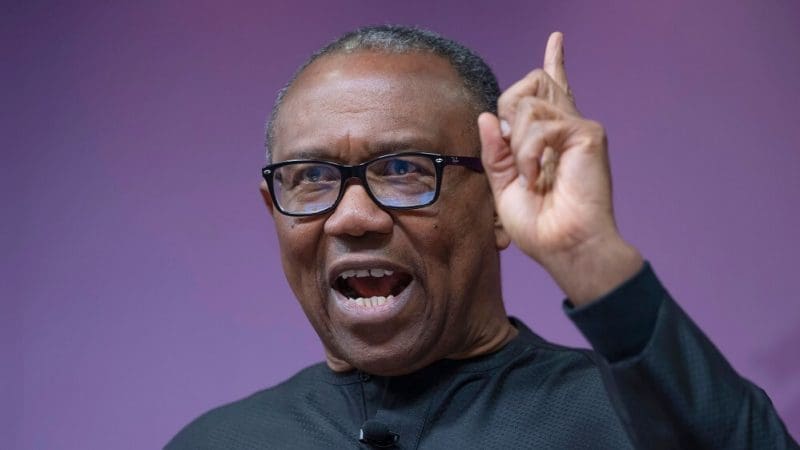
The Nigerian Democratic Congress (NDC) presidential candidate, Peter Obi, has challenged this tradition by pledging that, if elected in 2027, he would serve only one term.
Obi said he would spend “four years”—full stop—in office and not seek an additional day, arguing that four years is enough to demonstrate the direction of his administration.
The proposal has attracted controversy, praise, and suspicion, with critics describing him as desperate, particularly after his running mate, Rabiu Kwankwaso, confirmed that Obi had signed a written agreement committing to a single four-year term.
RELATED NEWS:
- Xenophobia: FG Evacuates 269 More Nigerians from South Africa amid Deadline
- Oshiomhole Questions Obi’s One-Term Promise
- Obi Signed Written Pact to Serve One Term—Kwankwaso
- Obi Vows to Quit After One Term, Presidency Dismisses Promise
The pledge is, however, viewed by many as unusual in Nigeria’s political system, where politicians generally seek the two terms permitted by the Constitution, and has generated further debate given Obi’s Igbo background and longstanding concerns about political marginalization in the Southeast.
Obi’s proposal raises a broader question: Can a president make a significant and lasting impact within four years, given the complexity of Nigeria’s political, economic, and institutional challenges?
Nigeria’s Presidential Tenure: Two Terms, One Term, and the Case for Continuity
Since 1999, Nigeria has experienced both two-term presidencies and administrations that ended after one elected term. Olusegun Obasanjo and Late Muhammadu Buhari served eight years each, while Late Musa Yar’Adua died during his first term and Jonathan completed one elected term before losing re-election in 2015. Jonathan’s tenure shows that major reforms can be initiated within four years, including power-sector and agricultural reforms, GDP rebasing, infrastructure projects, and electoral reforms.
Yar’Adua’s Niger Delta Amnesty Programme and electoral reforms also demonstrated that policies introduced during a shorter tenure can influence subsequent administrations.
Jonathan’s concession to Buhari in 2015 further strengthened Nigeria’s tradition of peaceful electoral succession, although his administration was weakened by insecurity, corruption concerns, and the Chibok abduction of 276 girls. These experiences provide context for the argument that a president does not necessarily need eight years to leave a lasting impact.
Obasanjo and Buhari: Reforms, Achievements, and the Failures That Shaped Their Legacies
Obasanjo and Buhari each had eight years in office, providing more time for policy continuity, infrastructure, and institutional reforms.
Olusegun Obasanjo’s 1999–2007 administration helped consolidate democracy, secured major debt relief, and established anti-corruption institutions such as the EFCC and ICPC while pursuing economic and telecommunications reforms. However, his tenure was marred by corruption allegations, political interference, and the controversial failed third-term bid to extend his presidency beyond the constitutional two-term limit.
Late Muhammadu Buhari’s 2015–2023 administration delivered major infrastructure projects and pursued anti-corruption and asset-recovery efforts. However, persistent insecurity, two economic recessions, rising inflation, unemployment, and poverty weakened his record. His government also faced criticism over human rights, slow decision-making, perceived nepotism, and its failure to fully deliver on its security and anti-corruption promises.
Africa’s Two-Term Model and Global One-Term Examples
The two-term presidential model remains dominant across Africa, but struggles over term limits show how leaders can attempt to extend their time in power. Zimbabwe, the Central African Republic, and Cameroon illustrate different forms of prolonged rule or weakened term limits, reinforcing concerns about the concentration of political power.
Globally, countries such as Mexico, South Korea, and the Philippines operate single, non-renewable presidential terms, while Togo has adopted a different six-year presidential model under its 2024 constitutional changes. These examples show that one-term presidencies can work under different constitutional systems, making the wider institutional framework as important as the length of a president’s tenure.
Adjeh: Nigerians Cannot Completely Rule Out One-Term Presidency
A senior lawyer and former chairman of the NBA Bwari Branch, Monday Adjeh, expressed reservations about the proposed one-term arrangement involving Peter Obi and Rabiu Musa Kwankwaso, pointing to Nigeria’s history of political promises that were later abandoned.
According to him, Nigerians have heard similar promises from political leaders in the past, but many failed to keep their word when circumstances changed.
“Those who have been given all those promises from Adam till now, have they been able to meet up with that same promise?” Adjeh asked.
He cited former President Muhammadu Buhari as an example, recalling that Buhari had previously indicated that he would not seek the presidency again after losing an election but later returned to contest.
Adjeh also referred to former South African President Nelson Mandela, who, unlike the experience in Nigeria, maintained his commitment to leaving office after one term despite pressure to continue.
“I’m sorry, I can’t go and eat my word,” Adjeh said, recalling Mandela’s position before he left office.
He, however, cautioned against completely dismissing the possibility that Nigerian politicians could honor a one-term agreement. Adjeh said the country still has responsible citizens capable of protecting their integrity and keeping their word.
‘A Year Is Enough to See a Path of Good Governance’—Adjeh
On whether four years would be sufficient for an administration to implement the sweeping reforms promised by the opposition, Adjeh argued that the duration would be less important if the right leadership could rebuild Nigeria’s institutions.
He described Nigeria’s problems as “a monster that nobody can solve” but maintained that effective leadership could quickly begin to change the country’s trajectory.
“If we can have the right leadership leading us in this country, a year is even more than enough for us to see a path of good governance,” he said.
Adjeh argued that the key to addressing Nigeria’s problems is to make public institutions work in accordance with the law.
“The moment we are able to get our institutions right, the moment our institutions are ready to work in accordance with the provision of the law, every other thing will take shape,” he said.
Prof. Fage Doubts Obi’s One-Term Pledge, Warns of Accountability Crisis
Professor Kamilu Sani Fage, a political science professor at Bayero University Kano, has expressed doubts about Peter Obi’s pledge to serve only one term if elected president under his proposed arrangement with Rabiu Musa Kwankwaso.
Fage said while a president with the political will could begin making significant changes within four years, he does not consider Obi’s one-term promise realistic given Nigeria’s political complexities. He described the pledge largely as a political campaign strategy, arguing that politicians often make promises to secure votes that may become difficult to sustain once they attain power.
He said the Constitution, which allows a president to seek two terms, could make it difficult for Obi to voluntarily leave after four years. He also pointed to the pressure within the South-East, where there is a strong perception of political marginalisation and a desire for an opportunity to govern Nigeria, arguing that such pressure could make it difficult for an Igbo president to give up the opportunity of seeking a second term.
Prof. Fage also rejected the idea that Nigeria should adopt a one-term presidency as the best way to ensure effective governance. He argued that democracy depends on accountability and that elections give citizens the power to reward good performance with re-election or reject poor performance.
According to him, giving a president an automatic longer tenure without the possibility of re-election could weaken accountability and create incentives for corruption and abuse of power.
“They wouldn’t do better. I think they would have the tendency just to loot the system. Corruption would be very high. Dictatorial tendencies would be very high,” he said.
Prof. Fage urged Nigerians to look at democratic experiences elsewhere, particularly in Africa, where leaders have sometimes used incumbency to alter constitutions and extend their stay in power. He cited examples including Cameroon, Uganda, and Zimbabwe, where leaders have remained in office for extended periods.
He warned that a leader who initially promises to serve only one term could similarly use the advantages of incumbency to change the constitutional rules once in power.
For Prof. Fage, the focus should therefore remain on strengthening democratic accountability rather than creating political arrangements that primarily serve the interests of political elites.

Rafiyat Sadiq is a political, justice, and human rights reporter with Pinnacle Daily, known for fearless reporting and impactful storytelling. At Pinnacle Daily, she brings clarity and depth to issues shaping governance, democracy, and the protection of citizens’ rights.