

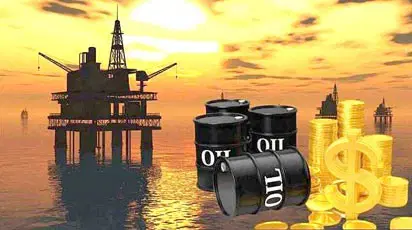
Global oil prices climbed sharply to nearly $117 per barrel on Monday as tensions in the Middle East intensified, with the United States reportedly considering ground military operations against Iran.
The surge follows renewed missile exchanges between Israel and Iran, heightening fears of a broader regional conflict that could further disrupt global energy supplies.
Iran expanded its offensive by launching strikes on a water desalination facility in Kuwait, while also grappling with internal power disruptions after its own electrical infrastructure was hit over the weekend. Saudi Arabia confirmed intercepting multiple ballistic missiles, underscoring the widening scope of the crisis.
The escalating conflict has already begun to ripple across the global economy, triggering fuel shortages in parts of Asia and causing volatility in international stock markets. Oil prices have reacted swiftly, with the U.S. benchmark crude rising past $100 per barrel, while Brent crude surged close to $117.
Analysts warn that the situation could worsen significantly if Washington proceeds with military action. Energy expert Tamas Varga of PVM Energy noted that a U.S. ground invasion of Iran, particularly targeting strategic oil assets such as Kharg Island, or a complete shutdown of the Strait of Hormuz, could push oil prices toward unprecedented levels, potentially nearing $200 per barrel.
Oil prices have not exceeded $150 per barrel since the 2008 global commodity boom. However, since the onset of the current conflict, Brent crude has risen by nearly 60 percent, while U.S. West Texas Intermediate has increased by more than 50 percent.
READ ALSO:
- Why Nigeria may not Benefit from Oil Price Surge
- Nigeria Misses Oil Target as Output Drops 9% in February
- Dangote Refinery Reduces Petrol Gantry Price to ₦1,200 Despite Oil Supply Disruption
- US-Iran Conflict May Force CBN to Rethink Rate-Cut
In a recent interview, U.S. President Donald Trump indicated interest in seizing Iran’s key oil export infrastructure, drawing parallels with previous U.S. actions in Venezuela. Despite the hardline stance, he expressed optimism that diplomatic efforts could eventually bring the conflict to an end.
On the diplomatic front, Pakistan has stepped in as a mediator, hosting foreign ministers from Saudi Arabia, Turkey, and Egypt in Islamabad for urgent talks aimed at de-escalating the crisis.
However, skepticism remains high in Tehran, with Iranian officials accusing Washington of using diplomacy as a cover while simultaneously reinforcing its military presence in the region, including deploying an amphibious assault ship carrying thousands of Marines.
Meanwhile, fighting has also intensified beyond Iran’s borders. Israeli operations in southern Lebanon against Hezbollah have resulted in casualties on both sides, including soldiers and a United Nations peacekeeper, highlighting the growing regional spillover.
On the ground in Iran, civilians continue to bear the brunt of the conflict. Residents in Tehran report relentless nighttime bombardments, with one local describing the strikes as so intense that “it felt like the entire city was shaking.”
The crisis has further escalated with Iran’s move to restrict access to the Strait of Hormuz, a critical maritime corridor that previously handled a significant share of global oil and gas shipments. Any prolonged disruption to this route could have far-reaching consequences for global energy markets.
Despite ongoing diplomatic engagements, hostilities show little sign of easing, leaving markets and governments on edge over what could become one of the most consequential geopolitical crises in recent years.

Esther Ososanya is an investigative journalist with Pinnacle Daily, reporting across health, business, environment, metro, Fct and crime. Known for her bold, empathetic storytelling, she uncovers hidden truths, challenges broken systems, and gives voice to overlooked Nigerians. Her work drives national conversations and demands accountability one powerful story at a time.