

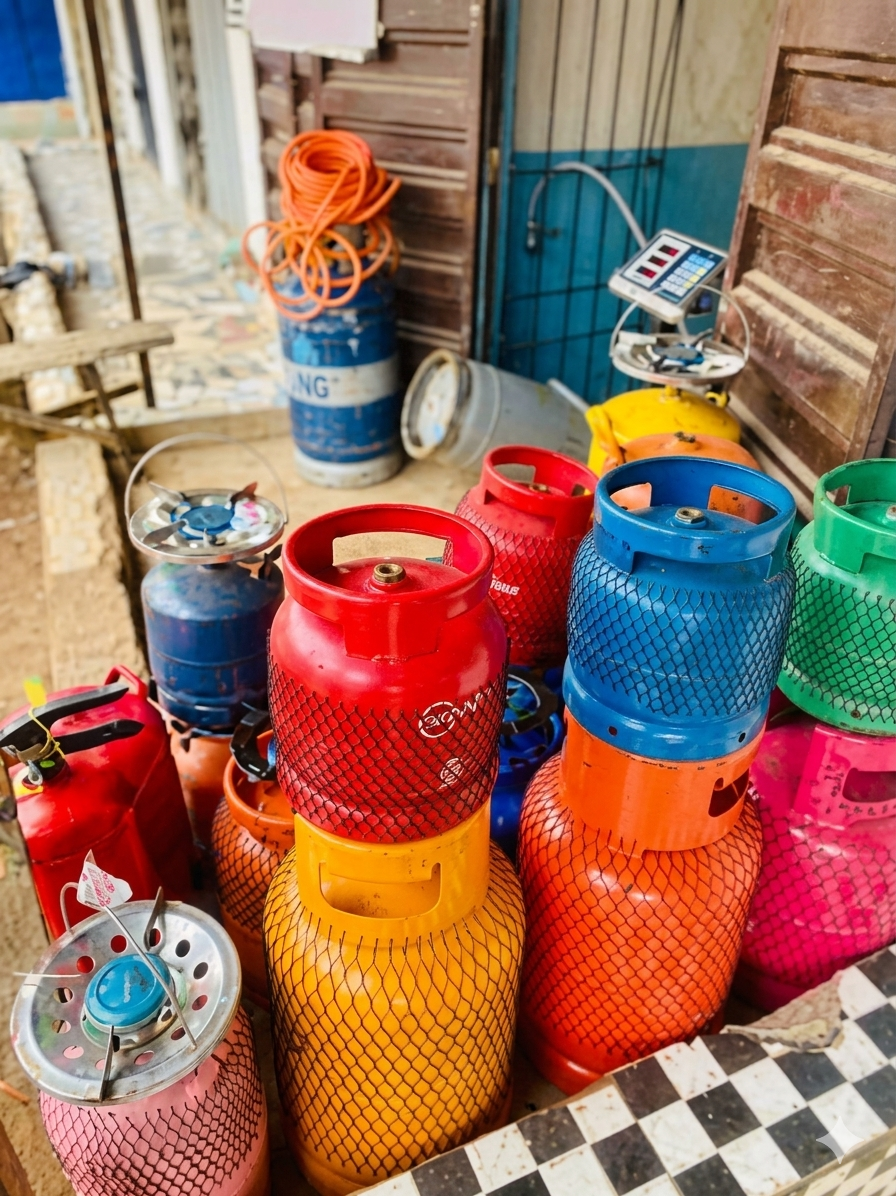
Households and small businesses across Nigeria are battling another round of hardship as the price of Liquefied Petroleum Gas (LPG), popularly known as cooking gas, has surged to about ₦1,600 per kilogramme in many parts of the country.
This sharp increase, representing a 23 per cent jump from the average rate of about ₦1,300/kg just a month ago, means households are now paying between ₦8,000 and ₦20,000 to refill standard 5kg and 12.5kg cylinders, respectively.
Supply Shortage amid Rising Demand
Reports indicate that only three major facilities—Dangote Refinery, Ardova Plc, and Navgas—currently hold commercial stocks of LPG, as supplies at other depots have dried up nationwide.
Data from the Nigerian Midstream and Downstream Petroleum Regulatory Authority (NMDPRA) shows that the country had only 13 days of LPG sufficiency in April, with daily consumption (4,818 metric tonnes) outstripping daily supply (4,545 metric tonnes).
More households and businesses are switching to cooking gas as an alternative to expensive petrol, diesel, and inconsistent electricity, putting immense pressure on the limited supplies available.
The crisis is further fueled by global geopolitical tensions (such as the crisis in the Middle East) and a weaker Naira. Since LPG is a globally traded commodity often priced in US Dollars, these factors increase the landing cost of both imported and locally produced gas.
Retail Market Realities and Depot Closures
Prices at LPG retail outlets in major cities, including Lagos, Abuja and Port Harcourt, vary between ₦1,400 and ₦1,600 per kilogramme depending on location and logistics costs.
While some retail outlets in Lagos sell at ₦1,600, some gas depots sell between ₦1,200 and ₦1,300.
“We have been selling ₦1,400 per KG, but currently we do not have,” an LPG seller at IBWAS filling station along Isolo road, Lagos, told Pinnacle Daily correspondent on Saturday.
The attendant, who didn’t want to be named, said they have run out of stock and await supply to resume selling to the public.
Another trader operating an LPG refill shop in Ilasamaja, who preferred to remain anonymous, said many retailers who have exhausted their stocks are having difficulty getting fresh supplies because many gas depots are not selling.
She alleged that some of the depot owners deliberately shut down to gauge the market trends and know the next step in setting their prices.
“We have been selling ₦1,600 per kg for some weeks now,” she stated. “We don’t know what Nigeria is turning into. Currently, some retailers do not have gas. Some depots are closed. They said they do not have gas now. Maybe some of them are waiting to see what the market will be like in the coming days.”
While many retailers in parts of Lagos are selling between ₦1,400 and ₦1,600 per kg, Pinnacle Daily observed that the Mobil filling station along Awolowo Way, Ikeja, sold ₦1,220 per kg as of Monday, May 18.
NBS Data shows a Steady Upward Trend
The cooking gas price surge is part of a steady upward trend. Data from the National Bureau of Statistics (NBS) for March 2026 already showed significant monthly increases, a trend that has accelerated into May. The LPG (Cooking Gas) Price Watch for April 2026 shows that the average retail price for refilling a 5kg cylinder of LPG increased on a month-on-month basis by 12.60 per cent from ₦6,799.18 in February to ₦7,655.73 in March. Also, the average retail price for refilling a 12.5kg cylinder of LPG rose month-on-month by 15.62 per cent from ₦16,997.94 in February to ₦19,652.83 in March.
As prices vary significantly by location, the average price for a 5kg cylinder was as high as ₦9,212.21 in Kaduna and as low as ₦6,295.40 in Bauchi. Lagos, being closer to suppliers, generally has lower prices, but residents there are still paying between ₦1,300 and ₦1,500 per kg within the month.
RELATED NEWS:
- Fresh Concerns as Cooking Gas Price Rises
- Middle East War Hits Nigerian Kitchens as Cooking Gas Price Rises to ₦1,500/kg
- Dangote Refinery Slashes ex-Depot Price of Cooking Gas to ₦760/kg
- How Middle East War is Deepening Nigeria’s Food Crisis
- Dangote Refinery Slashes Aviation Fuel Price
Impact on Consumers and Households
The latest price surge has triggered fresh concerns among consumers, energy experts, and operators in the downstream petroleum sector, who warn that the rising cost of cooking gas could have a serious negative impact on households already battling the high cost of living in the country.
For many Nigerians already grappling with soaring food inflation, rising electricity tariffs and transportation costs, the development has added another burden to household spending.
“I refilled my 12.5kg cylinder for ₦20,000 this week. A few months ago, it was around ₦12,000 to ₦14,000,” lamented Maureen Nwosu, a trader in Lagos. “Everything is becoming unbearable. Soon, many families will return to charcoal because gas is no longer affordable.”
A mother of three, Mrs Adeyinka, lamented that the price surge has made her unable to fill her cylinder as usual. “I managed to buy only three kg after being told that gas is now ₦1,600. Let me manage this one for some days, hoping that the price would come down,” Adeyinka stated, while leaving a gas refill shop on Sunday evening.
For a citizen earning the national minimum wage of ₦70,000, a single 12.5kg cylinder refill consumes about 28 per cent of their monthly salary.
Small Businesses Feel the Pinch
Small businesses that depend heavily on cooking gas are also feeling the pressure. Restaurants, roadside food vendors, bakeries and catering services say operating costs have surged sharply in recent weeks.
In a chat with Pinnacle Daily, Chinonso Odu, who runs a restaurant in the Mushin area of Lagos, said: “We are no longer battling with only the high cost of food items but also gas. It is not funny. We may be forced to increase the price of food as it is becoming unbearable.”
With inflationary pressures persisting across critical sectors of the economy, many Nigerians fear that the continued rise in cooking gas prices could deepen the cost-of-living crisis and further erode household purchasing power in the months ahead.
Infrastructure Deficits
Some marketers attributed part of the supply squeeze to reduced product availability from domestic gas processing plants and delays in cargo deliveries.
Others argued that inadequate investment in storage facilities, transportation networks and cylinder distribution infrastructure continues to hinder market stability.
While Nigeria LNG Limited has announced it is redirecting all its cooking gas production to the domestic market, the move has so far been unable to close the supply gap. Industry operators warn that if the supply situation does not improve, retail prices could climb toward ₦2,000 per kilogramme.
The Path Forward
Economic analysts believe the rising cost of LPG reflects broader structural challenges in Nigeria’s energy sector, including dependence on imports, weak infrastructure and foreign exchange volatility.
They called on the Federal Government to implement policies that would encourage increased domestic production, improve gas processing capacity and support investments across the LPG value chain.
Stakeholders also urged authorities to consider targeted interventions that could cushion the impact on low-income households and sustain the country’s clean energy transition agenda.

Victor Ezeja is a Nigerian journalist skilled in producing insightful news analyses, feature stories, and interviews that simplify complex issues and drive informed public discourse. His work combines rigorous research, balanced reporting, and compelling storytelling to highlight developments shaping industries and society. Victor, who holds a Master's Degree in Mass Communication, specializes in energy, aviation, business, and economic reporting. He can be reached via @VICTOREZEJA on X