

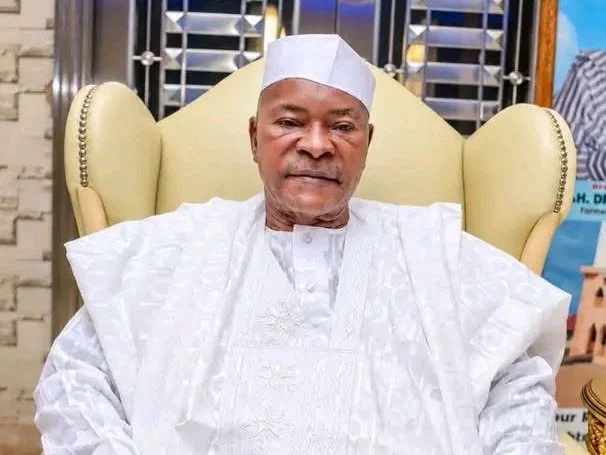
Tributes have continued to pour in for former Kogi State Governor, Alhaji Ibrahim Idris, popularly known as “Ibro”, following his death in the United Kingdom at the age of 77.
His death on Sunday, September 20, 2026, brought to an end the life of a businessman-turned-politician who spent nearly nine years at the centre of Kogi State’s political affairs.
His death has drawn condolences from President Bola Tinubu, Kogi State Governor Ahmed Usman Ododo, former Governor Yahaya Bello, Senator Natasha Akpoti-Uduaghan and other political leaders, groups and institutions across the state.
The Kogi State Government has also declared three days of mourning, directed that the national and state flags be flown at half-mast and announced that Idris will receive a state burial.
From Business to Government House
Born in 1949 in present-day Kogi State, Idris built a business career before entering politics.
He founded Ibro Trading Company and developed interests in construction, furniture manufacturing and hospitality. His business activities included a furniture factory in Sokoto and the Ibro Hotel.
His transition into politics eventually took him to the Kogi State Government House in 2003.
RELATED NEWS:
- Nigerian Veteran Actor Olu Jacobs Dies at 84
- Eagle Online Publisher Dotun Oladipo Dies at 56
- Former Kagame Bodyguard Dies After 12 Years in Prison
Running on the platform of the Peoples Democratic Party, Idris defeated the then-incumbent governor, Prince Abubakar Audu, in the 2003 governorship election and was sworn in on May 29 that year.
His administration would go on to become one of the longest in Kogi’s history.
The Election Battle That Interrupted His Tenure
Idris won re-election in 2007, but the result was later nullified following a legal challenge connected to the exclusion of Audu, the All Nigeria Peoples Party candidate, from the election.
The Court of Appeal upheld the decision in February 2008, leading to the brief assumption of office by Clarence Olafemi, then Speaker of the Kogi State House of Assembly, as acting governor.
A fresh governorship election was subsequently held on March 29, 2008.
Idris won the re-run and returned to office, remaining as governor until January 2012, when he handed over to Captain Idris Wada.
The political and legal battles surrounding the election became one of the defining episodes of his time in office. His nearly nine years in government also made him one of the longest-serving governors in Kogi’s political history.
What His Administration Left Behind
The assessment of Idris’ administration has often centred on infrastructure, healthcare, education and housing.
The Kogi State Government, in its condolence message, said his administration recorded interventions in infrastructure, education, healthcare and other critical sectors.
Senator Natasha Akpoti-Uduaghan, in her tribute, specifically referenced projects associated with the administration, including the International Market, Specialist Hospital, Confluence Stadium, Greater Lokoja Water Scheme, housing projects, road construction and investments in education.
Accounts of his administration have also highlighted the 400-bed Specialist Hospital in Lokoja, school infrastructure and housing projects across the state.
Prince Abubakar Audu University, Anyigba, also joined in mourning Idris. The institution’s Vice-Chancellor described his death as a loss to Kogi and Nigeria, recalling that Idris served as visitor to the institution, then known as Kogi State University, during his years in office.
Tinubu: ‘A Significant Loss’
President Bola Tinubu described Idris’ death as a significant loss to Kogi State and Nigeria.
In a condolence statement issued by his Special Adviser on Information and Strategy, Bayo Onanuga, Tinubu said Idris devoted a substantial part of his life to public service and the development of Kogi.
The President also acknowledged his contribution to Nigeria’s democratic development and described his years in office as an important chapter in the political and developmental history of the state.
Tinubu prayed for the repose of Idris’ soul and for strength for his family.
Ododo Orders Three Days of Mourning
For the current Kogi administration, Idris’ death has prompted an official period of mourning.
Governor Usman Ododo described the former governor’s death as a profound loss to Kogi and Nigeria.
Ododo said Idris’ administration contributed to infrastructure, education, healthcare and institutional development in the state.
He subsequently declared three days of mourning and announced that Idris would receive a state burial, with the state government taking responsibility for the burial arrangements and expenses.
Ododo and former Governor Yahaya Bello also visited Idris’ family in Abuja following news of his death.
Natasha: ‘His Departure Creates a Significant Vacuum’
Senator Akpoti-Uduaghan described Idris as a major figure in Kogi’s political history and the PDP, saying his years in public service contributed to the political development of the state.
She said his death was particularly painful because Kogi and the PDP could still have benefited from his experience and knowledge of the state’s political evolution.
“His departure creates a significant vacuum,” the senator said, adding that his contributions would remain part of Kogi’s historical narrative.
She also described Idris as representing a generation of political leaders whose relationships and experiences helped shape Kogi politics.
Yahaya Bello Recalls the Man Behind the Office
Former Kogi Governor Yahaya Bello also mourned Idris, focusing on his personal qualities beyond his political office.
In a condolence message, Bello described the late governor as calm and peace-loving, saying he valued relationships and preferred understanding to confrontation.
Bello said those who knew Idris personally would remember his kindness, counsel, generosity and friendships, beyond the titles he held in public life.
The former governor joined the growing calls for prayers for Idris and commiserated with his family, friends and associates.
A Political Era Comes to an End
His nearly nine years in office covered a period of major political contests, legal battles and changes in the state’s political landscape. He governed during the formative years of the Fourth Republic and remained an influential political figure after leaving office.
For his supporters, his administration is remembered through infrastructure and institutional projects. For political observers, his tenure remains significant because of the electoral and constitutional battles that surrounded his return to office in 2008.
For the people who knew him personally, however, the tributes have gone beyond politics.
He was a businessman, politician, father, grandfather and elder whose influence extended beyond the Government House.
His death has now brought together political figures from different sides of Kogi’s political divide in mourning a man who occupied a central place in the state’s political story for decades.
As Kogi begins its official mourning period, the debate over Ibrahim Idris’ political legacy will continue. But for now, the focus is on a former governor whose career was deeply woven into the political history of the state he governed.
The family is expected to announce further details of the burial arrangements.

Rafiyat Sadiq is a political, justice, and human rights reporter with Pinnacle Daily, known for fearless reporting and impactful storytelling. At Pinnacle Daily, she brings clarity and depth to issues shaping governance, democracy, and the protection of citizens’ rights.