


Presidential pardons should attract commendation and relief because they exist to correct miscarriages of justice, where wrongful convictions, weak investigations, or biased judgements rob innocent citizens of their freedom.
In contrast, President Bola Ahmed Tinubu’s recent mass pardon of 175 convicts has ignited controversy and raised questions about the moral and political intent behind the gesture.
The Controversial Clemency
The details of the presidential pardon and clemency released by the State House this month revealed that drug-related crimes accounted for the largest share of beneficiaries, with 29.2 per cent.
Others included illegal mining (24 per cent), homicide (13.5 per cent), and fraud or corruption (12.3 per cent).
Smaller categories included hijacking (5.8%), firearms offences (2.3%), robbery or theft (2.3%), kidnapping (1.8%), and human trafficking (1.8%). The rest fell under minor offences.
Out of the 175 pardoned convicts, 41 were illegal miners, 28 were drug traffickers, and 22 were murderers, according to Bayo Onanuga, the presidential adviser on media and public information.
READ ALSO: Tinubu Grants Presidential Pardon to Macaulay, Vatsa, 173 Others
According to Onanuga, the presidency’s decision was influenced by factors such as old age, good conduct, remorse, and participation in educational or vocational programmes, including enrolment in the National Open University of Nigeria (NOUN).
President Tinubu also posthumously corrected what he called a “colonial injustice” against nationalist Sir Herbert Macaulay.
Outrage, Suspicion, and Defence
While the presidency insists the move was constitutionally backed by Section 175 of the 1999 constitution (as amended), the decision has drawn fierce criticism from political leaders, legal experts, and civil society organisations.
Former Vice President Atiku Abubakar, former Kaduna State Governor Nasir el-Rufai, and the Human Rights Writers Association of Nigeria (HURIWA) were among the first to denounce the action.
READ ALSO: Tinubu’s Mass Pardon ‘Emboldens Criminality’ – Atiku
Atiku described the pardon as “reckless and morally indefensible”, warning that it emboldens criminals.
“It is particularly worrisome that 29.2 per cent of those pardoned were convicted for drug-related crimes at a time when our youths are being destroyed by narcotics,” he said. “Even more disturbing is the moral irony of this act coming from a president whose own past remains clouded by unresolved issues relating to drug forfeitures in the United States.”
El-Rufai, on his official X account, mocked the decision, describing it as “a class reunion of cartel alumni”.
“For a president once accused of forfeiting $460,000 to U.S. authorities in a drug-linked case, pardoning drug dealers feels less like compassion and more like solidarity,” he wrote.
Similarly, the Human Rights Writers Association (HURIWA) said the pardon “makes a mockery of the justice system” and “amounts to abuse of presidential privilege”.
The African Democratic Congress (ADC) also condemned the move, warning that it undermines Nigeria’s anti-drug campaign and tarnishes its international image.
“We wonder what Nigeria stands to gain from releasing convicts serving life sentences after barely two years,” ADC said. “This act only worsens our drug crisis and projects us as unserious about justice.”
Former senator Dino Melaye, on his official X account, described the decision as “unprecedented in history”, alleging that about 70 drug offenders were among those freed.
“No other government in the world has granted such a large-scale pardon to drug convicts,” he wrote. “Tinubu’s action has made nonsense of NDLEA’s work since inception. He might as well scrap the agency.”
“It is A Rape of Justice” — Presidential Aide
Even within the presidency, dissenting voices have emerged.
Josef Onoh, the Special Adviser to the President on Policy Communication (South East), urged the president to revoke the pardon for Maryam Sanda, who was convicted of killing her husband, and for other drug traffickers.
“It is morally wrong to extend mercy to such offenders. It is a rape of justice capable of damaging Nigeria’s international reputation,” Onoh said, stressing that the move violates the principles of the rule of law and international norms.
Speaking in an interview with Pinnacle Daily, Barrister Monday Adjeh said the presidential pardons of individuals convicted of drug-related crimes, homicide, and corruption expose the irony of a government that claims to be fighting social ills while simultaneously pardoning individuals guilty of such offences.
“It portrays irony for a government to claim it’s fighting drugs and corruption, yet releases those convicted for the same crimes,” he said. “It shows we are not a serious nation.”
Adjeh noted that such acts erode public trust in justice institutions and discourage legal professionals who devote years to securing convictions.
“You spend years prosecuting, and the same offenders walk free by presidential signature. That kills the morale of lawyers and judges,” he said.
While describing the pardon as an “invitation to commit more crimes”, Barrister Adjeh said, “People will think they can always find someone powerful to secure them a pardon. That destroys the moral foundation of justice.”
“We use taxpayers’ money to investigate, prosecute, and convict these individuals, and then the same government turns around to release them. What image are we presenting to the world?”
Adjeh stressed that while the president has the constitutional power to grant pardons, such discretion should be exercised with fairness and purpose.
He urged the government to focus on granting clemency to political detainees who were falsely detained and prisoners of conscience rather than convicted criminals.
‘Abuse of Force’ — Onyekpere
Also speaking to Pinnacle Daily, Eze Onyekpere, the Lead Director of the Centre for Social Justice, said the pardon signals a ‘dangerous message’.
“They want some level of corruption. It’s bringing down the morale of the EFCC and ICPC,” he said. “And of course, it’s endangering the lives of the adult population.”
“Some of the freed convicts were notorious kidnappers operating across two or three states.
“What is the guarantee they won’t go back to crime? And what happens to their victims’ families still seeking justice?” he asked.
Onyekpere called the action “an abuse of force, not an act of morality”.
“The president exercised power for power’s sake, not to improve security or correct injustice,” he said.
He referenced the case of Maryam Sanda, who was convicted of killing her husband but was reportedly among those pardoned.
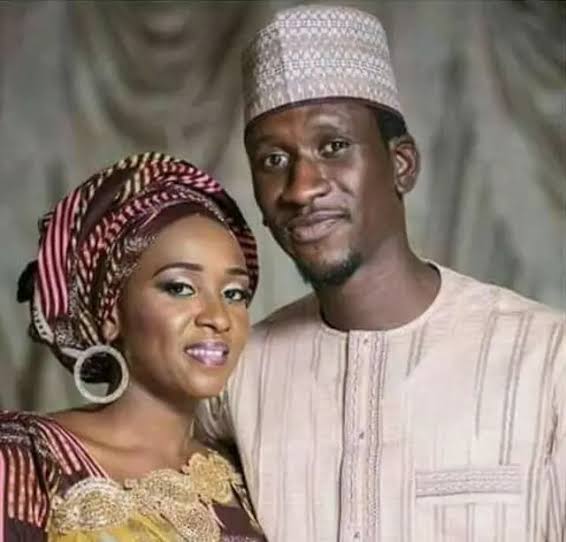
Although he opposes the death penalty, Onyekpere argued that serious offenders should have served “10 to 20 years” before any pardon.
“How will families of murder victims feel seeing their loved ones’ killers walk free? It sends the message that you can get away with anything if you know the right people,” he said.
Nigeria’s Global Image at Stake
Onyekpere further warned that the decision could worsen Nigeria’s international reputation.
“Nigerians are already under suspicion abroad. Now they’ll ask if you’ve ever been convicted or pardoned and for what. A pardon should restore dignity in Nigeria; it only deepens mistrust,” he said.
But while the Tinubu administration insists the mass pardon was guided by compassion, rehabilitation, and constitutional procedure, critics say it exposes double standards and political bias.
The debate now centres on whether the act was a gesture of national healing or a signal that Nigeria’s war on drugs, corruption, and violent crime has lost its moral compass.

Rafiyat Sadiq is a political, justice, and human rights reporter with Pinnacle Daily, known for fearless reporting and impactful storytelling. At Pinnacle Daily, she brings clarity and depth to issues shaping governance, democracy, and the protection of citizens’ rights.