

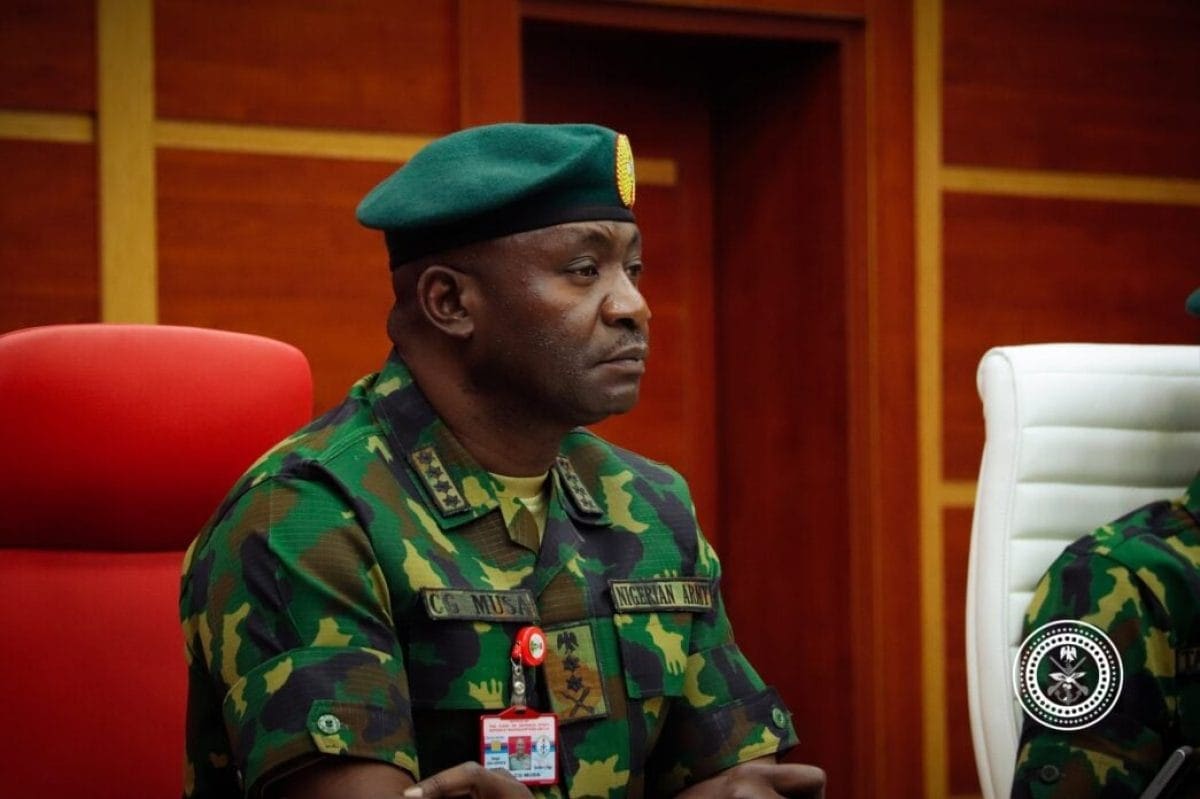
Before the Senate confirmed former Chief of Defence Staff, General Christopher Musa, on Wednesday as Minister of Defence, the Red Chamber witnessed hours of tense exchanges and a stark preview of the hardline security doctrine Gen. Musa intends to introduce into Nigeria’s fight against terror.
Musa’s confirmation came through a unanimous voice vote after more than three hours of questioning at the Committee of the Whole, with Senate President Godswill Akpabio presiding and announcing the approval.
General Musa’s Hardline Security Position
The retired general delivered some of the strongest critiques yet of existing counterterrorism strategies. He rejected negotiations with bandits as “counterproductive” and criticised the reintegration of repentant Boko Haram fighters, insisting such programmes embolden terrorist groups rather than weaken them.
He called for tougher punitive measures and faster prosecution of arrested terrorists, describing the current judicial process as “far too slow.”
Musa, whose appointment follows the resignation of Mohammed Badaru Abubakar, also warned that Nigeria’s borders remain dangerously porous, enabling criminal infiltration. He urged increased funding for military operations, noting the country still imports most of its essential military hardware.
Deep Dive into Security Failures and Military Preparedness
His position resonated with several senators, but General Musa didn’t just bow and go like the routine tradition in the senate, a privilege usually reserved for former military chiefs and certain categories of nominees.
Tension peaked when Senator Sani Musa suggested that the nominee should be allowed to “take a bow and go,” arguing that national security issues had been thoroughly discussed during previous executive sessions.
READ ALSO: Tinubu Nominates Christopher Musa as Defence Minister
General Musa was put on his toes by some senators and backed by the senate president, Godwill Akpabio, who demanded full scrutiny amid escalating insecurity nationwide and an explanation on what he has to offer Nigerians, particularly at a time when terrorism and kidnappings are at their peak.
“This is not a time for bow and go,” Akpabio declared. “Our constituents are asking questions. Our children, brothers, and sisters are in the bush. Even Donald Trump is on our neck.”
Akpabio stressed the urgency of Musa’s appointment.
“Trump is on our neck,” he said. “We must ask the questions Nigerians and victims of kidnappings want answered. Let him tell Nigerians what he has to offer.”
For over three hours, Musa dismantled long-standing policies, from deradicalisation programmes to backdoor negotiations with bandits.
The Kebbi School Abduction and Sensitive Security Leaks
Akpabio questioned Musa over alleged military orders directing troops to withdraw before the mass abduction of schoolchildren in Kebbi, asking who leaked sensitive operational information involving a senior military officer.
Deputy Senate President Barau Jibrin argued that insurgency had been receding until the “infamous statement” by former U.S. President Donald Trump exacerbated tensions. He praised President Bola Tinubu for stabilising areas such as Monguno.
“When people talk in Nigeria, they behave as if nothing is moving,” Barau added.
Musa’s Firm Policy Blueprint: No Negotiations, Better Governance
Musa stressed that “No negotiation with criminals. Nigeria must stop ransom payments, and states must not engage in deals that compromise national security.”
He argued that military force alone cannot defeat insecurity.
“Good governance, justice and equity are key,” he said. “Security is local. We must carry the people along. We need a unified national database. Only 25–30% of this war is kinetic; the rest is governance.”
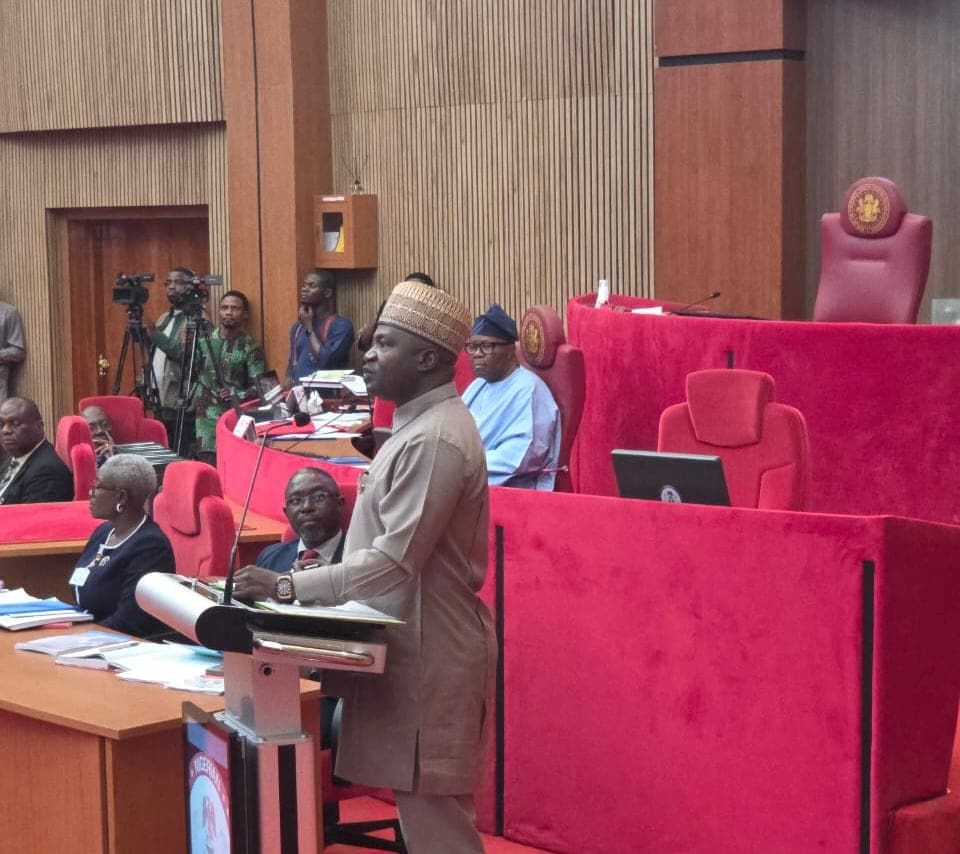
Musa also said improved technology, perimeter fencing, and community cooperation can end mass school kidnappings.
Musa emphasised that Nigeria’s borders remain dangerously open, allowing foreign fighters and traffickers to slip in unchecked. He pressed the Senate for higher defence spending, noting that essential equipment is still mostly imported.
Senate Confirms Gen. Musa As CDS
By the time Akpabio called for a voice vote, senators who earlier opposed full questioning had shifted not because Musa reassured them, but because he forced them to confront uncomfortable truths about a security architecture many privately admit is failing.
Despite tensions, the Senate closed ranks and confirmed him. Akpabio congratulated Musa and urged him to lead a more decisive campaign against rising banditry and terrorism.
The Task Ahead
Musa steps into the Defence Ministry at a moment of heightened insecurity and deepening public frustration. Attacks by bandits, insurgents, and criminal networks continue across multiple regions, with communities increasingly expressing distrust in both military strategy and government assurances.
His confirmation hearing revealed the weight of expectation on his shoulders. Musa must translate his uncompromising rhetoric into measurable results while navigating political pressures, funding gaps, bureaucratic resistance, and the operational limits of the armed forces.
The coming months will test whether his tough-security doctrine can shift Nigeria’s trajectory or whether the country will continue its cycle of reforms that promise much but deliver little.
Tinubu Hails Speedy Confirmation
President Bola Ahmed Tinubu praised the Senate for swiftly confirming Musa, describing the appointment as timely and critical.
“His appointment comes at a critical juncture in our lives as a nation. God bless the Federal Republic of Nigeria,” the President said in a statement posted on X.
Key Achievements and Career Highlights
Before his nomination by President Tinubu and Confirmation by the Senate, General Musa’s 39-year military career, which began in 1986, includes major operational and administrative leadership roles.
- Strategic Leadership: As Chief of Defence Staff (June 2023–October 2025), he strengthened cooperation among the armed forces.
- Operational Command: Theatre Commander, Operation Hadin Kai, linked to major gains against Boko Haram.
- International Collaboration: Improved intelligence sharing and joint training with foreign partners.
- Modernisation Drive: Advocated advanced weaponry, aerial surveillance, and cyber defence capability.
- Human Rights Focus: Prioritised professionalism, troop welfare, and civil-military relations.
- Awards: OFR, Colin Powell Meritorious Award for Soldiering, Nelson Mandela Exemplary Leadership Award.

Rafiyat Sadiq is a political, justice, and human rights reporter with Pinnacle Daily, known for fearless reporting and impactful storytelling. At Pinnacle Daily, she brings clarity and depth to issues shaping governance, democracy, and the protection of citizens’ rights.