

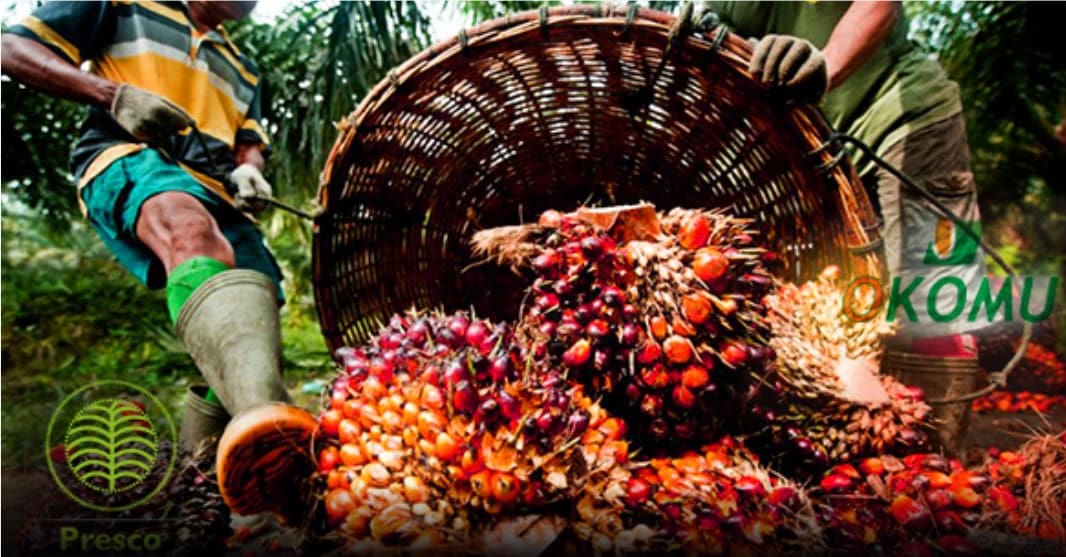
Presco and Okomu Oil Palm Company posted strong growth in the first quarter of 2026, but their performance shows a clear difference in how each company manages debt and runs its operations.
A review of the Q1 financial results by Pinnacle Daily shows that Presco emerged stronger in efficiency and debt control.
The company grew revenue to ₦100.86 billion and increased profit to ₦49.26 billion, while also reducing its cost of sales.
This helped it achieve higher profit margins than Okomu across key measures.
More importantly, Presco made a major move to cut its debt, reducing long-term borrowings sharply and repaying ₦177.79 billion within the quarter.
Its total equity stood at ₦477.07 billion, giving it a stronger financial base and a lower debt burden relative to its size.
Okomu also recorded growth, with revenue rising slightly to ₦58.95 billion and profit reaching ₦23.60 billion.
The company improved its efficiency by cutting production costs, which lifted its gross profit.
However, it relies more heavily on debt compared to its equity.
READ ALSO:
- CPPE Calls for Targeted Approach to Enforcing New Tax Laws
- Five Key Issues That Shaped Zenith Bank Performance in 2025
- Presco, Okomu Oil Close 2025 with Record Profits Despite Cost Pressures
- Entertainment, Agriculture: Nigeria’s Key Economic Drivers in 14 Months
Its total debt stood at about ₦24.90 billion against equity of ₦72.41 billion, giving it a higher debt-to-equity ratio than Presco.
How Presco Outpaces Okomu in Profit Efficiency
The efficiency gap between Presco and Okomu is clear in their performance ratios, which show how well each company converts revenue into profit.
Presco recorded a higher gross profit margin of 90.5 per cent compared to Okomu’s 80.2 per cent, meaning it kept more money after direct production costs.
This advantage continued at the operating level, where Presco posted a 71.0 per cent margin against Okomu’s 60.2 per cent, reflecting tighter control over expenses.
At the bottom line, Presco also outperformed with a net profit margin of 48.8 per cent, compared to Okomu’s 40.0 per cent, showing it ultimately generated more profit from its sales.
These figures highlight Presco’s stronger cost management and overall efficiency during the quarter.
Currency Losses, Rising Costs Pressure Both Firms
Despite the growth, both companies faced pressure from exchange rate losses and rising expenses.
Okomu recorded a foreign exchange loss of ₦1.24 billion, while Presco’s losses were much higher at ₦6.37 billion.
Presco was also hit by a large foreign currency translation loss, which reduced its overall comprehensive income despite higher profits.
Operating and tax costs also increased. Okomu’s expenses rose significantly, while Presco’s tax bill nearly doubled to ₦19.99 billion.
These pressures reflect the tough business environment, especially currency volatility.
Efficiency Gap Widens
Presco’s stronger cost control and leaner operations gave it an edge as it was able to generate more profit from each naira of revenue compared to Okomu, while maintaining a strong cash position of ₦136.54 billion.
Both companies also built up inventory during the quarter, a common strategy in the sector to prepare for lower production periods later in the year.
Export sales drop Amid External Risks
Operations outside Nigeria had mixed results. Okomu’s export sales dropped sharply, forcing it to depend more on the local market.
Presco’s Ghana business also contributed less revenue than the previous year and exposed the company to currency risks, which led to significant losses when foreign earnings were converted.
While both companies remain profitable, Presco’s aggressive debt reduction and stronger operational efficiency put it in a better position to handle economic shocks, while Okomu faces higher reliance on borrowing and external risks.

Alex is a business journalist cum data enthusiast with the Pinnacle Daily. He can be reached via ealex@thepinnacleng.com, @ehime_alex on X