

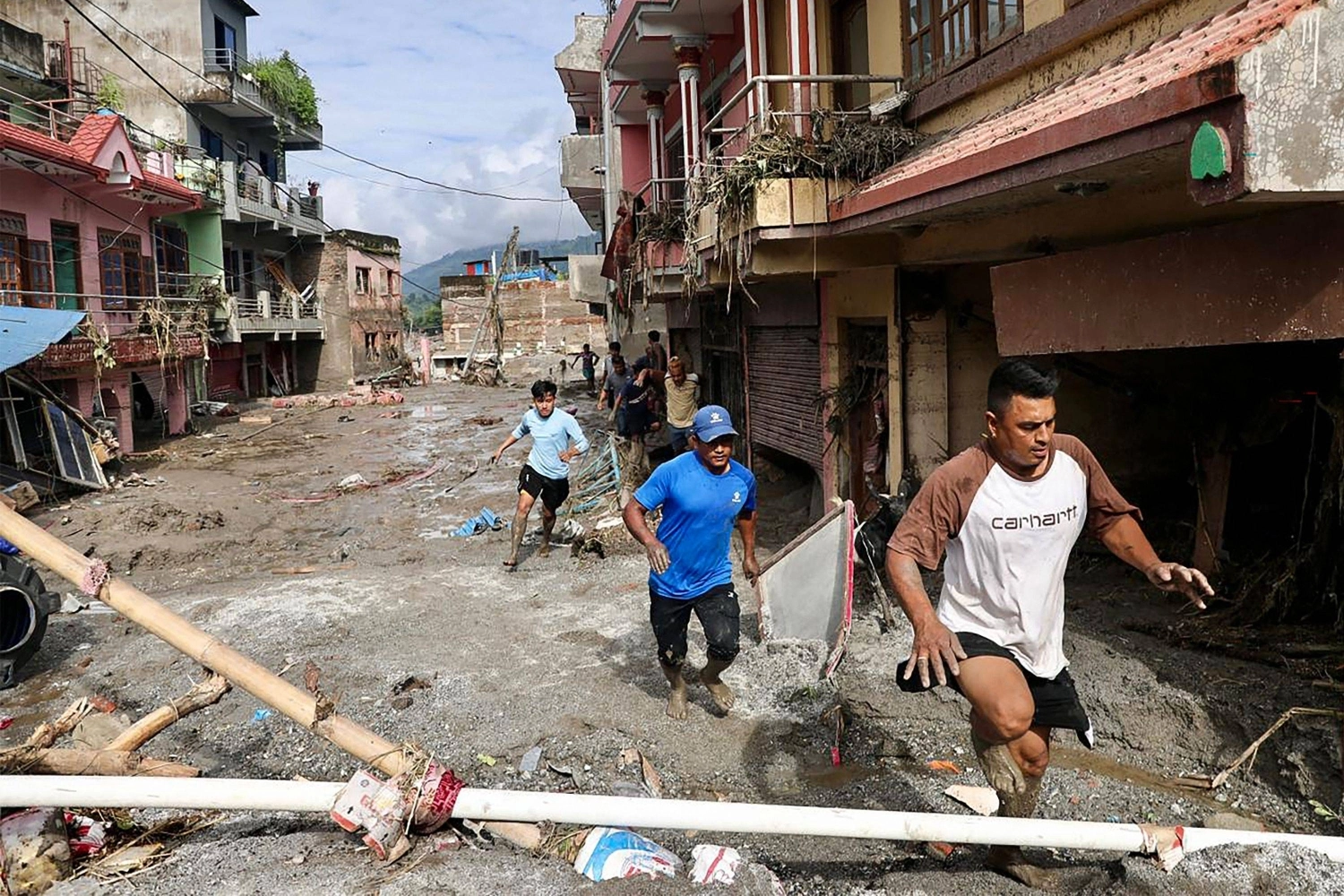
Nepal is on high alert for more flooding as the Himalayan border region, already devastated by flash floods, has been described as turning into “swampland” amid continuing rainfall.
A BBC report quoted officials saying that 626 people have died, while at least 2,426 others remain missing following the devastating floods along the Nepal-Tibet border on Wednesday.
Nepal’s Foreign Minister, Shisir Khanal, has appealed to foreign governments and international organisations to provide freezers to help preserve recovered bodies until families can be located and the remains identified.
Emergency teams are facing difficulties reaching some of the worst-affected communities as rainfall continues.
Families of missing persons, including foreign nationals and tourists, are also waiting for information about their loved ones.
Risk of Another Flood
The situation has raised concerns about another possible disaster after rescue teams on the Chinese side of the border were withdrawn on Friday.
RELATED NEWS:
- 241 Killed, Nearly 460,000 affected in 2025 Floods — NEMA
- 27 States at High Risk of Flash Flooding
- When the Rain Falls, Fear Spreads: Inside Lagos Flood Crisis
- Lagos Residents Count Losses as Flood Disrupts Businesses, Submerges Homes
The withdrawal followed the formation of a lake behind accumulated debris. Officials estimate that about three million cubic metres of additional water could flow into the lake over the next three days, increasing fears of another breach.
Nepal’s Prime Minister said all authorities were operating at full capacity, with search and rescue operations and relief for families who lost their homes and possessions receiving priority.
How the Disaster Started
The disaster began when a huge section of glacier and rock collapsed in the Himalayas.
The avalanche crashed into a river near the Nepal-Tibet border, triggering a powerful surge of water, mud, ice and debris that swept downstream.
The torrent destroyed roads, bridges and buildings, leaving widespread devastation across affected communities.
Nepal is a landlocked country in South Asia, located between India and China. Its capital is Kathmandu, and the country is home to Mount Everest, the world’s highest mountain.
Flood Described as ‘Tsunami’
Sujeeta Mathema, Executive Director of ActionAid Nepal, described the flash floods as being closer to a “tsunami” than a conventional flood.
Speaking during an interview with BBC Breakfast, Mathema said roads and bridges had been completely swept away.
She added that authorities were still uncertain about how many people could be trapped under mud or inside tunnels and buildings.
International Aid Arrives
International assistance is beginning to reach the affected areas, with the Red Cross launching a $31 million emergency appeal.
India, the United States and the European Union are also providing supplies and financial assistance to support relief operations.
However, for thousands of families affected by the disaster, the search continues as they wait for news of missing relatives and hope that rescue teams can reach those still trapped.

Rafiyat Sadiq is a political, justice, and human rights reporter with Pinnacle Daily, known for fearless reporting and impactful storytelling. At Pinnacle Daily, she brings clarity and depth to issues shaping governance, democracy, and the protection of citizens’ rights.