

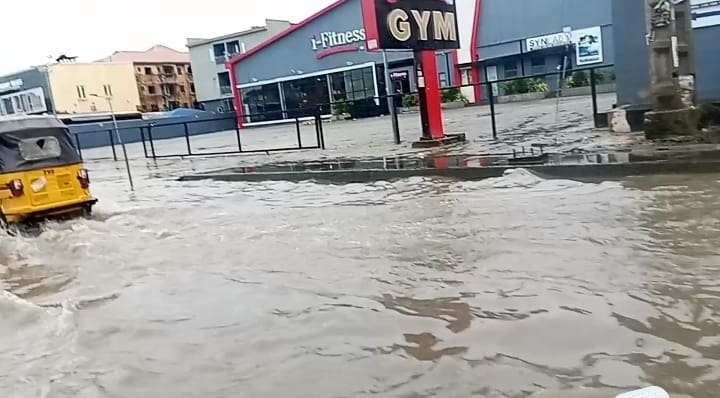
The last hymn had barely faded from her mind as Miss Chinwe Okorie stepped out of the commercial tricycle that Sunday evening of June 28, 2026. The young graduate, who works with an insurance company in Lagos, had spent the day worshipping at church, grateful for the refreshing rainfall that had cooled the city’s sweltering heat.
But as she approached Palm Avenue in Mushin, the familiar neighbourhood looked strangely different. Streets had disappeared beneath muddy water. Residents stood outside, pointing helplessly at submerged compounds. At first, she assumed the flood had only blocked the access road to her home. However, she was wrong.
The moment she pushed open the gate leading to her two-bedroom apartment, reality hit with devastating force. Brown, foul-smelling floodwater had swallowed her apartment almost to the window level. Her mattress floated; the refrigerator lay partially submerged. Her laptop, bags of clothes, shoes, furniture, books and important personal documents—including certificates —had all been soaked in dirty water.
“I couldn’t believe what I was seeing,” she recalled in an interview with Pinnacle Daily. “Everything I had worked for was inside that house. I just stood there shocked because there was nothing I could do.”
For Miss Okorie, it marked the day heavy rainfall transformed years of hard work into heartbreaking loss. She said the flooding was caused by a nearby drainage that was blocked by refuse dumped in it by some residents over time.
Her story is one of thousands of residents across Lagos affected by flash floods in the state over the past month.
Across Lagos, every dark cloud now carries more than the promise of rain. It brings anxiety, uncertainty, and, for many families, the fear of losing everything overnight.
A City Living in Fear of the Next Downpour
Over the past month, successive heavy rains have caused widespread flash floods across several parts of Lagos, leaving roads impassable, homes submerged, businesses crippled and commuters stranded for hours.
Areas including Mushin, Oworonshoki, Agege, Iyana Ipaja, Ajegunle, Surulere, Lekki, Ikorodu, Alimosho, Isolo, Oshodi, Ketu, Ojodu, Ibeju-Lekki, Victoria Island, Ikoyi and parts of the Lagos Island axis have all experienced varying degrees of flooding, exposing once again the city’s persistent struggle with managing stormwater.
For many residents, the rainy season has become a period of survival rather than relief from the heat.
Parents wake before dawn to monitor weather forecasts. Traders worry whether customers will venture out. Motorists pray their vehicles do not break down in floodwaters. Tenants fear returning home to waterlogged apartments.
“What scares us most isn’t even the rain anymore,” said Mrs Chekwube Ogbonna, a resident of Ibeju-Lekki. “It’s what we’ll meet when we get home.”
Mrs Ogbonna, a mother of four, said her children no longer go to school every weekday, and on the days they attend, they must walk through dirty floodwater. “It is a sad situation we are facing here. Even my husband, who is a commercial bus driver, no longer goes to work every day because of the flood,” she lamented.
Videos shared online showed various parts of Lekki, Ajah, Ibeju-Lekki and communities under Eti-Osa LGA that were submerged in water. Residents wade through knee-deep water every day to go to work and come back.
“I no longer take my vehicle home because my area is flooded. I pack somewhere, a distance away from home after work,” said Emeka Okoh, a commercial bus driver who resides in Betu community of Ibeju-Lekki Local Government Area.
In a video shared on X, a lady was seen inside a water-logged residence in Lekki lamenting that it is a house she pays N10 million every year that has been flooded. “I pay 10 million Naira per year for my apartment in Lekki Phase 1, and everywhere is still flooded this morning, 12th of July,” the lady stated.
Also, another video shared by an online personality and content creator, Lucky Udu, showed some small-scale business operators defying the odds to display their goods in a flooded environment in Lekki recently.
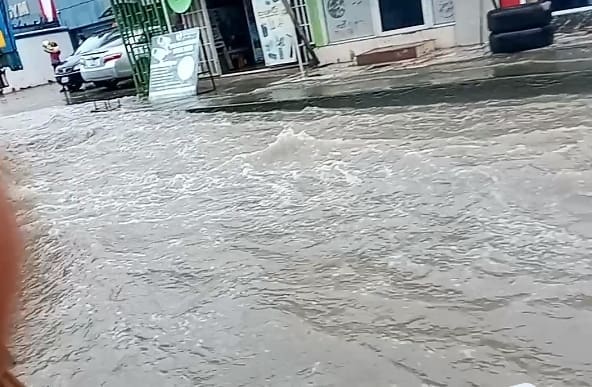
Environmental experts say Lagos’ flooding challenge has become more complicated than excessive rainfall alone.
As one of Africa’s fastest-growing megacities, Lagos continues to witness rapid urban expansion. Wetlands that once absorbed stormwater have increasingly given way to residential estates, commercial buildings and paved surfaces.
Concrete now covers much of the city, leaving rainwater with few natural channels through which to drain.
Climate experts also point to increasingly intense rainfall events associated with changing weather patterns. Rather than moderate rainfall spread across several days, storms now dump enormous volumes of water within a few hours, overwhelming existing drainage systems. The result is familiar: streets become rivers within minutes.
Human Activities Worsen the Crisis
While nature plays a role, human behaviour is believed to have significantly amplified the problem.
Drainage channels across many communities remain clogged with plastic bottles, nylon bags, discarded food packs, old tyres and other solid waste.
Illegal structures erected along drainage alignments restrict the free flow of stormwater.

In several neighbourhoods, canals that should evacuate rainwater have narrowed considerably because of encroachment and indiscriminate refuse dumping.
Each heavy rainfall, therefore, exposes years of poor environmental practices.
While acknowledging that Lagos, being a coastal state, is prone to flooding, the Commissioner for Environment and Water Resources, Tokunbo Wahab, also attributed the problem to poor environmental practices such as dumping refuse in drainage, blocking of water channels, and illegal dredging and land reclamation by estate developers.
Transportation Nightmare
Flooding has also become a major transportation challenge.
Major highways and inner roads frequently become impassable after prolonged rainfall, trapping commuters inside buses for several hours.
Commercial drivers often abandon flooded routes altogether, forcing passengers to trek long distances.
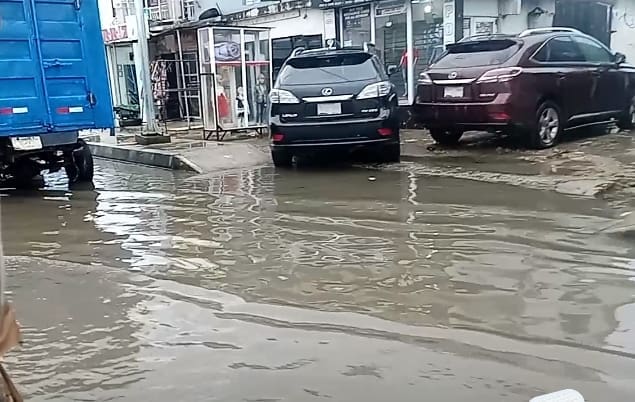
Ride-hailing fares surge dramatically during heavy rain, placing additional pressure on already strained household incomes.
“We spent hours on traffic going home last week due to flooding in Victoria Island,” said Josephine Ihejirika, who works in Victoria Island.
Businesses suffer reduced productivity as workers arrive late or fail to report at all because of flooding.
Schools equally record lower attendance whenever severe flooding occurs.
Public Health Risks
Floodwater carries dangers beyond property destruction, damaging roads and submerging homes.
Lagos State Commissioner for Health, Prof. Akin Abayomi, said floods disrupt access to healthcare, schools, workplaces, and essential services.
While highlighting the public health emergency posed by flooding, the commissioner warned that contaminated floodwater often mixes with sewage, refuse and industrial waste, exposing residents to infections including cholera, typhoid fever, diarrhoeal diseases and skin infections.
He noted that Mosquito breeding also increases after flooding, raising concerns over malaria transmission.
According to him, floodwater also exposes residents to risks of snakebites and electrocution from submerged electrical installations.
Observers note that children remain particularly vulnerable as many unknowingly play in contaminated water.
READ ALSO:
- Lagos Residents Count Losses as Flood Disrupts Businesses, Submerges Homes
- Lagos Flooding: Stop Dumping Refuse in Drainage Channels, Umahi Tells Lagos Residents
- Bad Roads, Flood Risks Expose Gaps in Edo Infrastructure Spending
For families whose homes become submerged, prolonged exposure to damp conditions can also trigger respiratory illnesses and mould-related health complications.
“The impact falls hardest on those already most vulnerable: older persons, young children, pregnant women, nursing mothers, and people living with disabilities,” the Health commissioner stated.
Government Response
Successive administrations in Lagos have invested in drainage expansion, canal dredging, and flood control infrastructure. However, analysts believe that the magnitude of the recent disaster, especially the heavy rainfall, seems to have overwhelmed existing infrastructure, coupled with increasingly poor environmental practices such as improper waste disposal and blockage of water drainage channels.
Urban planners argue that infrastructure development must match the realities of a city now accommodating well over 20 million residents.
Others advocate stricter enforcement of environmental regulations, improved urban planning, protection of wetlands and greater investment in modern stormwater management systems.
Earlier in the month, the commissioner for environment said his team embarked on the removal of contraventions and drainage restoration works at the Ajiran and Agungi axis in Eti-Osa LGA. According to him, “Within 48 to 72 hours of reopening the Ajiran channel to the Lagoon and the Ikota River, we have seen a remarkable improvement in stormwater discharge, bringing real relief to residents of Agungi, Ajiran Village, and neighbouring communities.”
He said the area is a major discharge outlet for Lekki Phase I into the Lagoon, stressing that any obstruction would create significant environmental challenges.
The Lagos State governor, Babajide Sanwo-Olu, on Wednesday visited some communities in Eti-Osa LGA devastated by recent flooding to ascertain the extent of the disaster.
The governor, who was accompanied by Deputy Governor Obafemi Hamzat, Commissioner for Environment and Water Resources Tokunbo Wahab and other members of the Lagos State Executive Council, inspected Ogombo, Monastery Road-Sangotedo, Gbetu, Iwerekun and other affected communities in the Eti-Osa East LCDA.
In a post on his X handle, Governor Sanwo-Olu said he saw major drainage channels blocked by plastic waste and household refuse. He threatened that anyone caught dumping refuse indiscriminately will be prosecuted in accordance with the law.

While disclosing that he has directed the relevant agencies to intensify drainage clearing operations and provide support to affected communities, the governor urged residents to stop dumping waste in drainage channels and follow safety advisories during this period of heavy rainfall, adding that “Protecting Lagos is a shared responsibility.”
Residents of Ogombo community, who spoke in a video shared by Channels Television, said the flooding in the area has forced them to use canoes for movement, decrying high fares charged by the operators.
They called on the government to come up with a permanent solution to the disaster.
The governor said the state government is constructing a major drainage channel along Chevron Drive to tackle recurring flooding on the island.
In a post on Thursday, the Commissioner for Environment said that following the governor’s inspection visit to the communities affected by flood in Eti-Osa and Ibeju-Lekki LGAs, the state Government has deployed a swamp buggy to the Ogombo canal to begin the clearing and desilting of the drainage channel.
According to him, “The intervention is aimed at widening and deepening the canal to improve the free flow of stormwater, enhance drainage capacity, and accelerate the recession of floodwaters in the affected communities.”
Last month, the state government rolled out measures to tackle the environmental challenge. This includes approval of the dredging and maintenance of 28 additional primary drainage channels.
Public Health Emergency Response
On his part, the Commissioner for Health said the ministry’s focus has gone beyond treating illness to strengthening disease surveillance in affected communities, promoting safe water and sanitation practices, and monitoring for outbreaks of waterborne diseases.
Abayomi said they have designed new healthcare facility blueprints that integrate climate adaptation and resilience measures tailored to Lagos’s annual flooding and worsening weather.
According to him, features of the blueprint include:
“Low-carbon, naturally cooled designs elevated above projected flood levels.
“Improved local drainage and green roofs to manage stormwater while harvesting rainwater.
“Strict infection prevention compliance to ensure safe, hygienic operations during crises.
“Integrated solar power systems to guarantee uninterrupted healthcare delivery during grid outages.”
“These facilities are designed to protect communities and remain operational for decades,” he added.
The health commissioner urged residents to “avoid contact with floodwaters whenever possible, drink only safe or treated water, maintain good hand hygiene, switch off electricity before entering flooded homes, and seek immediate medical attention for diarrhoea, vomiting, fever, or other signs of illness.”
Living With Uncertainty
For many residents affected by flooding across the state, recovery remains a daily struggle. Emotionally, the experience has left scars that may linger long after the floodwaters recede.
Now, every weather forecast predicting heavy rainfall fills them with apprehension.
Until lasting solutions emerge, the first sound of heavy raindrops on Lagos rooftops will continue to signal not comfort, but a familiar and growing fear.

Victor Ezeja is a Nigerian journalist skilled in producing insightful news analyses, feature stories, and interviews that simplify complex issues and drive informed public discourse. His work combines rigorous research, balanced reporting, and compelling storytelling to highlight developments shaping industries and society. Victor, who holds a Master's Degree in Mass Communication, specializes in energy, aviation, business, and economic reporting. He can be reached via @VICTOREZEJA on X